
Classroom lesson ยท Yangykala Canyon ยท ๐Ÿ‡น๐Ÿ‡ฒ Turkmenistan

Yangykala Canyon

Dramatic pink and red cliffs carved by an ancient sea

Photo ยท Wikimedia Commons

What is it?

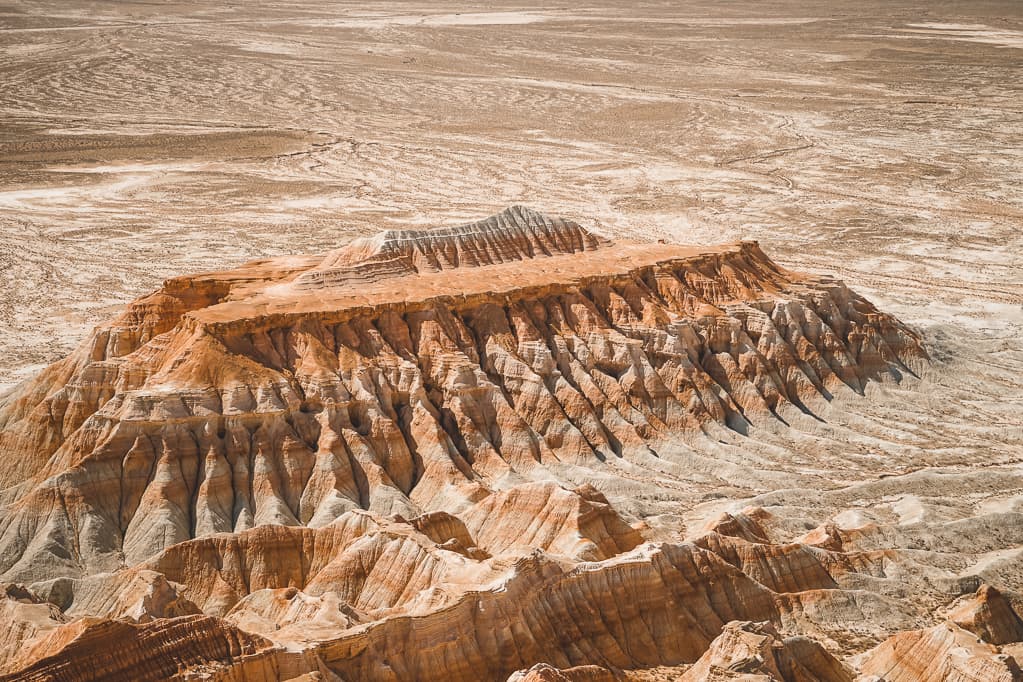
Yangykala Canyon in north-western Turkmenistan is a spectacular series of cliffs and gullies whose walls glow pink, orange, red and white depending on the time of day. The canyon was carved millions of years ago when this area was the floor of an ancient sea. Today it looks like a natural painting stretching for kilometres across the flat steppe.

Tell me more

The cliffs at Yangykala rise up to about 100 metres from the flat plain around them. The different coloured bands in the rock are layers of sediment โ€” sand, shells and mud โ€” that were laid down one by one when the sea covered this land millions of years ago. Over time the water withdrew and wind and rain sculpted the rock into the shapes you see today.

Because the canyon is so remote and rarely visited, the silence there is very striking. Visitors say that apart from the wind, the only sounds are birds calling from the ledges. The rock changes colour as the sun moves, shifting from pale yellow in the morning to deep red and purple at sunset.

Fossils of ancient sea creatures โ€” shells, corals and the bones of long-extinct fish โ€” have been found in the canyon walls. Each layer is a page in a very old book telling the story of a completely different Turkmenistan, one that existed long before humans arrived.

The area around Yangykala is part of a wild and wind-swept landscape called the Ustyurt Plateau. Herds of gazelles sometimes cross the plain near the canyon, and eagle owls nest in the cliff faces. There are no visitor facilities โ€” people who make the journey carry everything they need with them.

In the classroom

Walk your class through this in 15 minutes.

Talk together

Discussion prompts

  1. 01The canyon floor was once the bottom of a sea. What does that tell us about how much the Earth can change over millions of years?
  2. 02Scientists can read the history of the Earth in rock layers. What do you think it would be like to find a fossil in a cliff wall?
  3. 03Yangykala is very remote and has no facilities. Would you prefer visiting somewhere wild and difficult to reach, or somewhere easy to get to? Why?
  4. 04The rock looks different colours at different times of day. Can you think of something else that changes colour depending on the light?
Try this

Classroom activity

Create a striped rock-layer diagram on paper using coloured pencils or paint. Each stripe represents a different period: label one 'ancient sea floor', one 'beach sand', one 'river mud'. Add a tiny fossil in one layer. Write the age of each layer (e.g. '50 million years ago').