
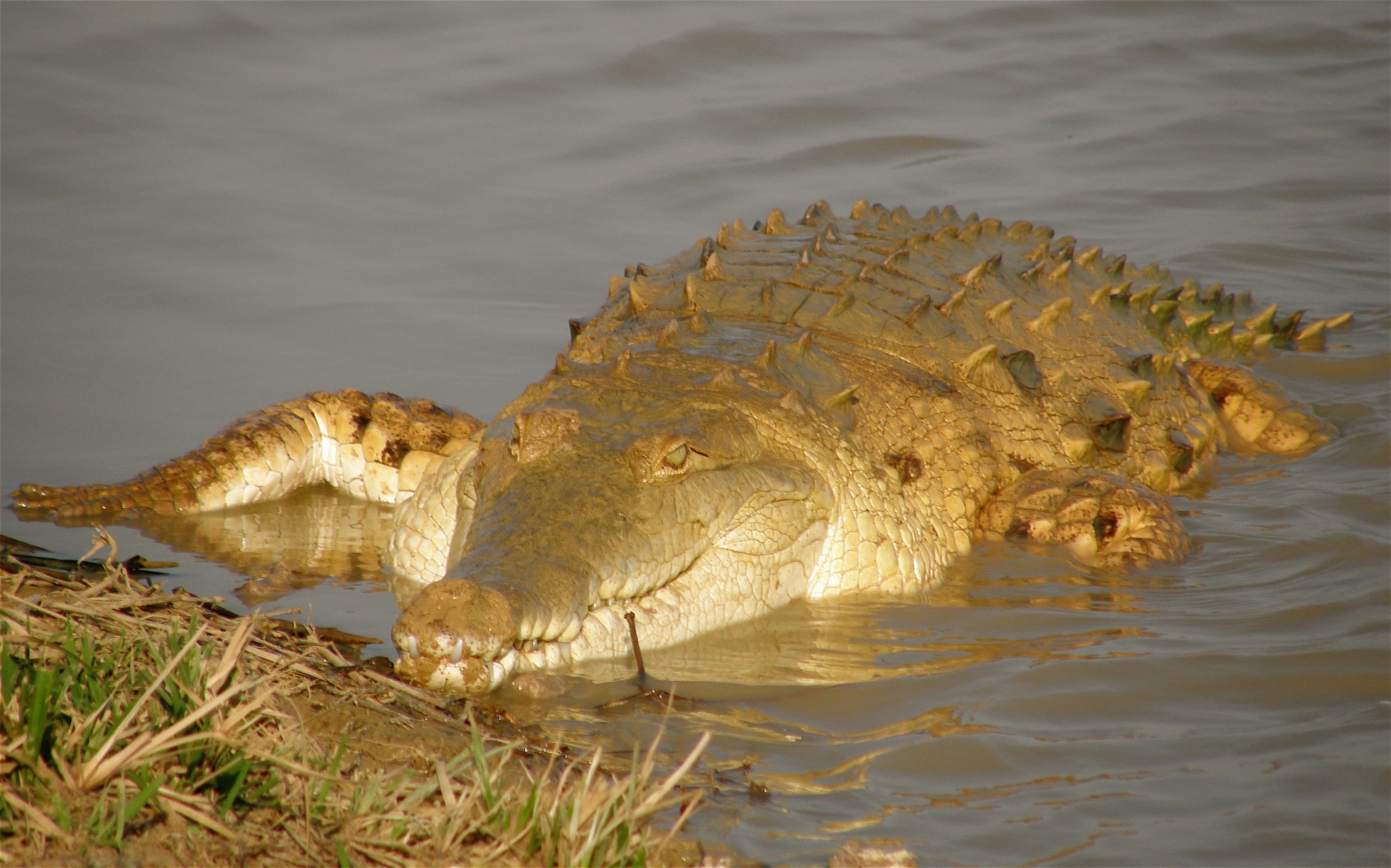
Orinoco crocodiles are sandy-yellow with dark patches, which helps them blend into the colour of the riverbanks. They spend a lot of time motionless on sandbars, opening their mouths wide to cool down. (Crocodiles don't sweat - opening the mouth helps the heat escape.)
Mothers are very protective parents. After laying eggs in a sandy nest, the female stays close and listens carefully. When her babies start to peep from inside the eggs, she gently digs them out, scoops them up in her huge mouth, and carries them to the water - very carefully, without hurting them.
Scientists love studying them because they are so rare. Conservation projects in Venezuela hatch eggs in safe places and then release the young crocodiles back into the river when they are big enough to look after themselves. Slowly, the numbers are starting to grow.
Orinoco crocodiles have an important job in their river. By eating sick or dead fish, they keep the river clean and healthy. Lots of plants and animals depend on this big quiet animal more than they realise.