
Classroom lesson Β· Wildlife Β· πŸ‡ΎπŸ‡ͺ Yemen

Arabian Leopard

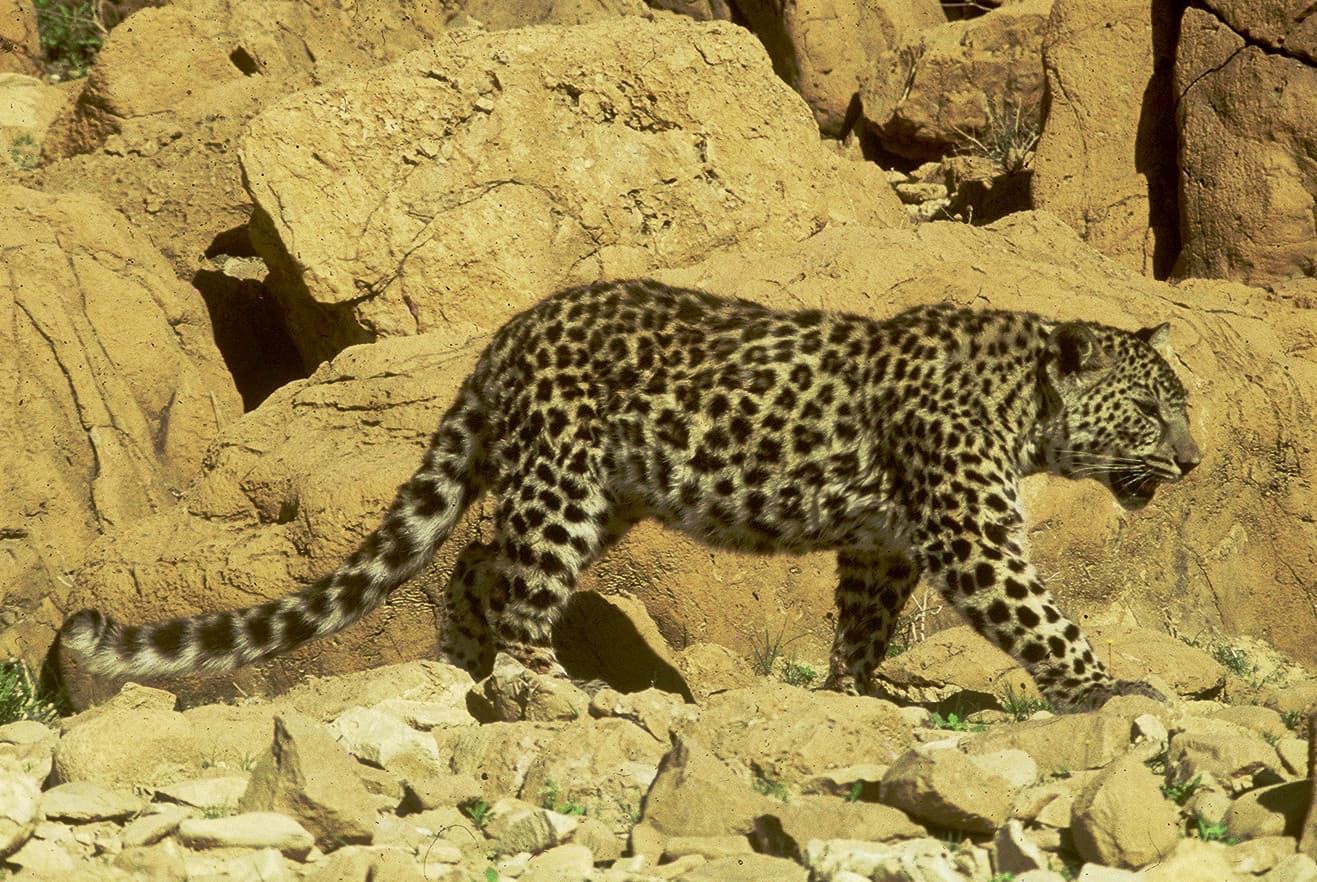
One of the world's rarest big cats β€” a master of mountain camouflage

Photo Β· Wikimedia Commons

What is it?

The Arabian leopard is a beautiful and extremely rare big cat that lives in the mountain ranges of the Arabian Peninsula, including parts of Yemen. It is the smallest of all leopard subspecies, with a pale golden coat spotted with dark rosettes β€” perfect camouflage among the rocky mountain ledges where it hunts.

Tell me more

Arabian leopards are skilled climbers and incredibly patient hunters. They can wait completely still on a rocky ledge for a very long time before pouncing on prey. Their pale coat, which is lighter than African leopards, blends almost perfectly with the sandy-coloured rocks of the Arabian mountains, making them very hard to spot.

These leopards are mainly active at dusk and dawn β€” the cooler parts of the day in the hot mountain climate. They hunt animals like ibex (wild mountain goats), hares, and smaller animals. A leopard can carry a catch heavier than itself up a steep rock face, keeping the food safe in a tree or on a high ledge.

The Arabian leopard is considered critically endangered, which means scientists think they are among the rarest large mammals in the world. Camera traps set up in the mountains sometimes capture rare photographs of these secretive cats, giving researchers precious information about their movements and behaviour.

Conservation programmes in several Arabian countries are working hard to study and protect the remaining Arabian leopard population. Learning about where they live, what they eat, and how they behave helps scientists create the right conditions for the population to recover.

In the classroom

Walk your class through this in 15 minutes.

Talk together

Discussion prompts

  1. 01The Arabian leopard's pale coat helps it hide in rocky mountains. What might a leopard look like if it lived in a snowy forest instead?
  2. 02Why do you think it helps scientists to photograph wild animals with camera traps rather than following them on foot?
  3. 03If you were designing a nature reserve for Arabian leopards, what features would you include?
Try this

Classroom activity

Camouflage challenge! Give each student a small paper leopard cut-out. Using colouring pencils, decorate it so it blends into one chosen background (rocky cliff, sandy ground, dry grass). Pin all the leopards onto a large display of different backgrounds. Can classmates spot all the hidden leopards?