
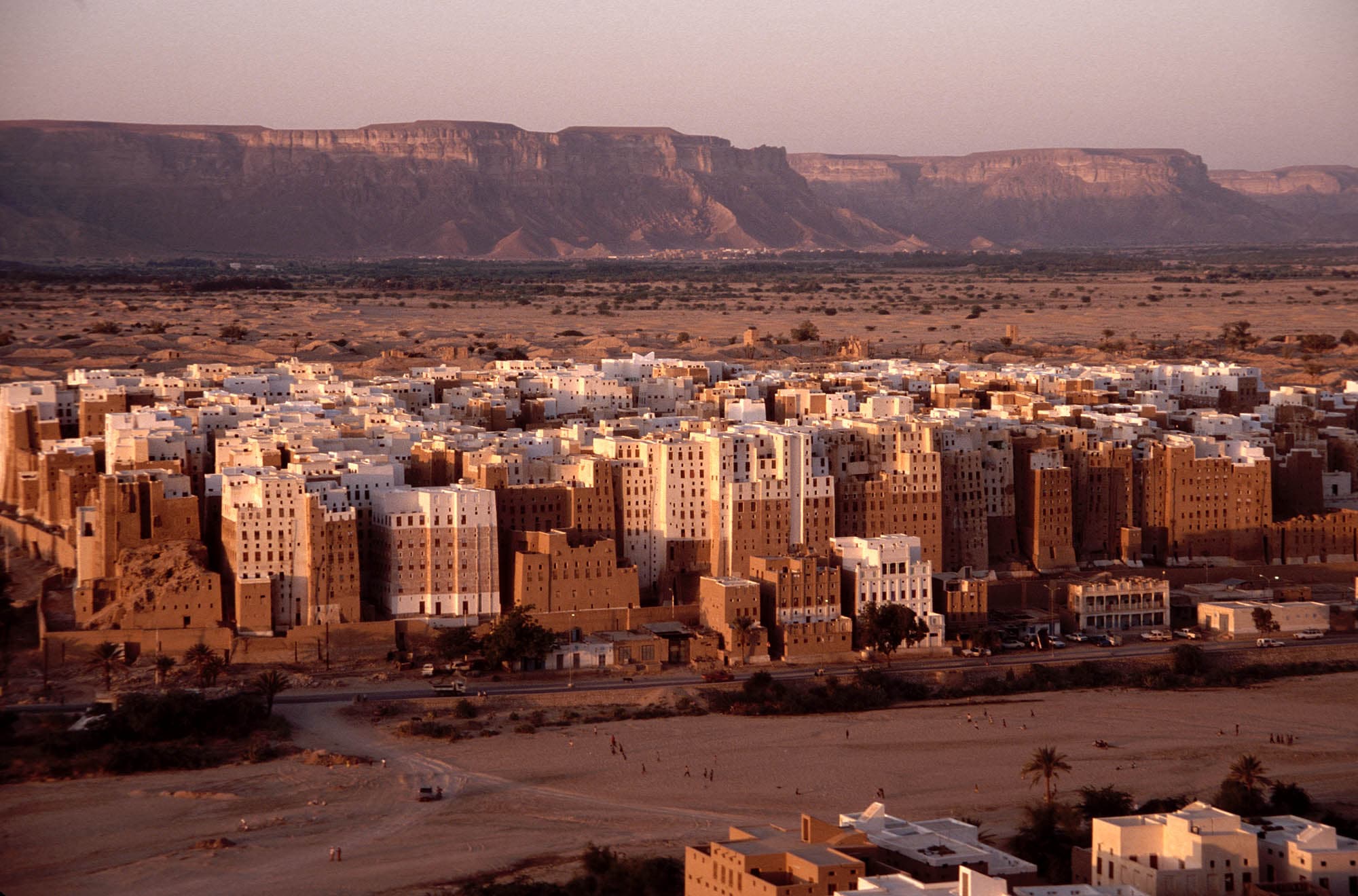
A wadi is a valley that was carved by a river a very long time ago. In Hadhramaut, the wadi is enormous - up to 160 kilometres long and flanked by sheer sandstone cliffs that can be hundreds of metres high. The people who settled here learned how to find underground water even in the dry desert, which allowed whole towns to grow.
The villages look like they grew out of the cliffs themselves because the mud-brick buildings are the same orange-red colour as the rock. Some villages are built right at the foot of the cliffs, so the buildings and the canyon wall seem to merge together. Palm trees grow near the underground water sources, giving the villages a green heart in the middle of all that sandy orange.
The Hadhramaut region is also known for its skilled traders and sailors. For centuries, people from these valley towns travelled as far as India, East Africa, and Southeast Asia to trade, bringing back spices, cloth, and ideas. Many communities in those faraway places still celebrate the culture of their Hadrami ancestors today.
Farmers in Hadhramaut grow dates, mangoes, and vegetables by using ancient irrigation channels to bring underground water to their fields. The date palms are especially important - Yemeni dates are considered among the finest in the world.