
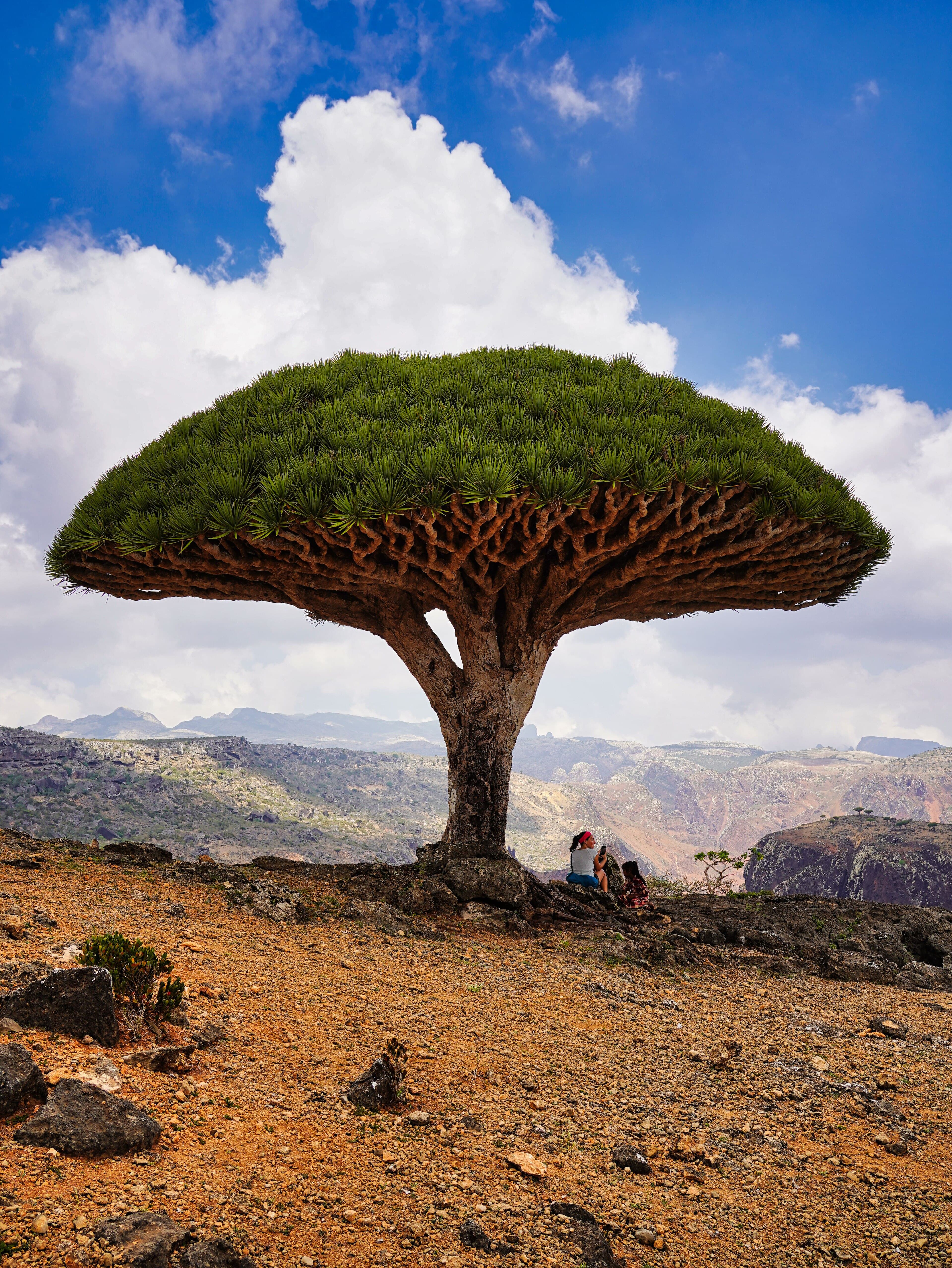
The tree's strange umbrella shape is not just for looks - it is a clever survival trick. In the hot, dry landscape of Socotra, the dense, shady canopy acts like a giant parasol, keeping the ground beneath cool and moist. The leaves also catch droplets of mist from sea breezes and drip water down to the roots below. The shape is the tree's own water-collection system.
Dragon's blood trees can live for hundreds of years. Scientists can estimate their age by counting the number of times the canopy branches - each split represents a period of flowering and growth. Some of the trees on Socotra are estimated to be over 300 years old, standing on the same hillside for centuries.
The red sap has been famous for at least 2,000 years. Ancient Romans used it as a dye for cloth and as a varnish for violins. Some musicians still use it today to polish stringed instruments. Traders once sailed across the ocean just to collect this valuable red resin from Socotra.
The dragon's blood tree is now carefully protected because its habitat - the high plateaus of Socotra - is fragile. Scientists and local communities work together to make sure the trees keep growing and that new seedlings survive to replace old trees when they eventually fall.