
Classroom lesson Β· Wildlife Β· πŸ‡ΎπŸ‡ͺ Yemen

Egyptian Vulture

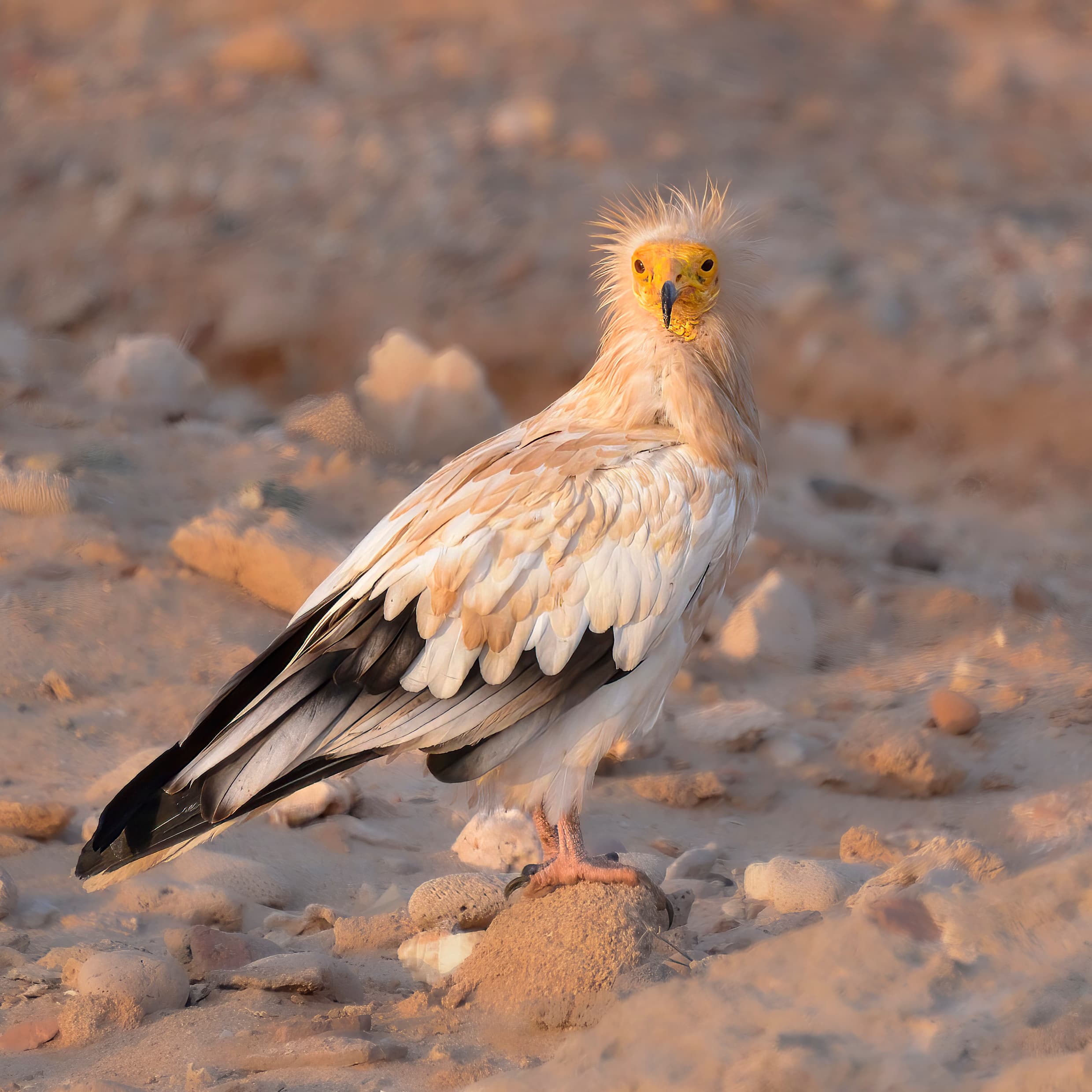
A clever white-and-black bird that uses tools to crack eggs

Photo Β· Wikimedia Commons

What is it?

The Egyptian vulture is a medium-sized bird of prey with striking black-and-white feathers and a bright yellow face. It lives across a wide range from southern Europe to India, but Yemen is an important home and migration stop for this remarkable bird. Egyptian vultures are famous among scientists because they are one of the very few birds in the world known to use tools.

Tell me more

Most impressively, Egyptian vultures have learned to crack open ostrich eggs β€” which are the largest eggs in the world and have a very thick shell β€” by picking up stones in their beak and hurling them at the egg until it breaks. This is one of the clearest examples of tool use ever seen in a bird. Scientists were amazed when they first observed it.

Egyptian vultures are scavengers, which means they eat animals that have already died. This might not sound glamorous, but it is an extremely important job. By clearing away dead animals, vultures help keep the environment clean and stop diseases from spreading. Every healthy ecosystem needs scavengers.

These vultures migrate long distances. Birds that spend the summer in Europe fly south over the Middle East β€” including Yemen β€” on their way to spend winter in Africa. Yemen sits right on this migration route, so large numbers of Egyptian vultures can be spotted in the skies above the country at certain times of year.

The Egyptian vulture gets the yellow colour on its face from the pigments in the food it eats. The brighter the yellow, the healthier the bird β€” so a vivid yellow face is actually a signal to other vultures that this is a strong, healthy individual. It is a bit like wearing a badge.

In the classroom

Walk your class through this in 15 minutes.

Talk together

Discussion prompts

  1. 01Egyptian vultures use stones as tools. Can you think of other animals that use objects as tools? What does this tell us about animal intelligence?
  2. 02Vultures are sometimes called 'nature's cleaners'. Why is having cleaners in an ecosystem important?
  3. 03The yellow on the vulture's face signals health. Humans also use visual signals to communicate β€” can you think of some examples from everyday life?
Try this

Classroom activity

Run a 'tool use' experiment! Place a small object inside a container that cannot be reached by hand (a ball inside a tall thin cylinder). Challenge students to retrieve it using only other objects in the classroom. Discuss the strategies they used and compare them to the vulture's stone-throwing technique.