
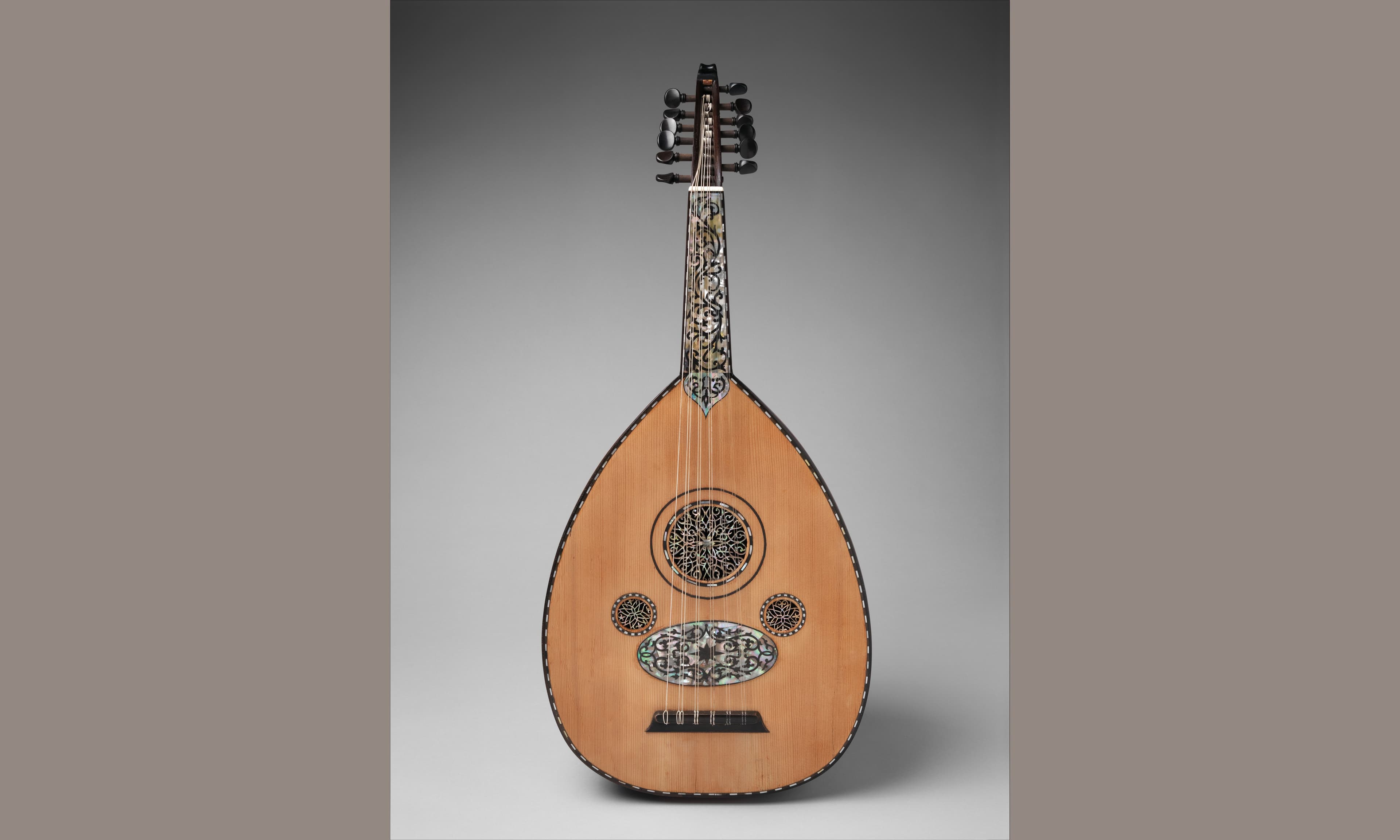
The oud looks a little like a guitar but has a much rounder, deeper body - almost like half a watermelon. It has no frets (the little metal bars across a guitar neck), which means the player can create a much wider range of notes and subtle slides between them. This gives oud music its distinctive flowing, melting sound.
The body of a fine oud is made from thin strips of carefully bent wood, glued together to form the curved shell. Master craftsmen in Yemen and across the Arab world dedicate years to perfecting the art of oud-making. A beautifully made oud can have intricate geometric patterns inlaid around the sound hole.
Yemeni oud playing has its own regional style - slightly different from Egyptian or Iraqi playing. Yemeni songs often have a distinctive rhythm with poetic lyrics about the sea, mountains, and the beauty of the landscape. The tradition of composing and singing to the oud has been passed from musician to musician for centuries.
The oud is thought to have travelled from Arabia to Europe through Moorish Spain about 1,000 years ago, where it became the 'lute' - and the lute eventually inspired the design of the modern guitar. So every time someone plays a guitar today, there is a distant connection to this ancient Yemeni instrument.