
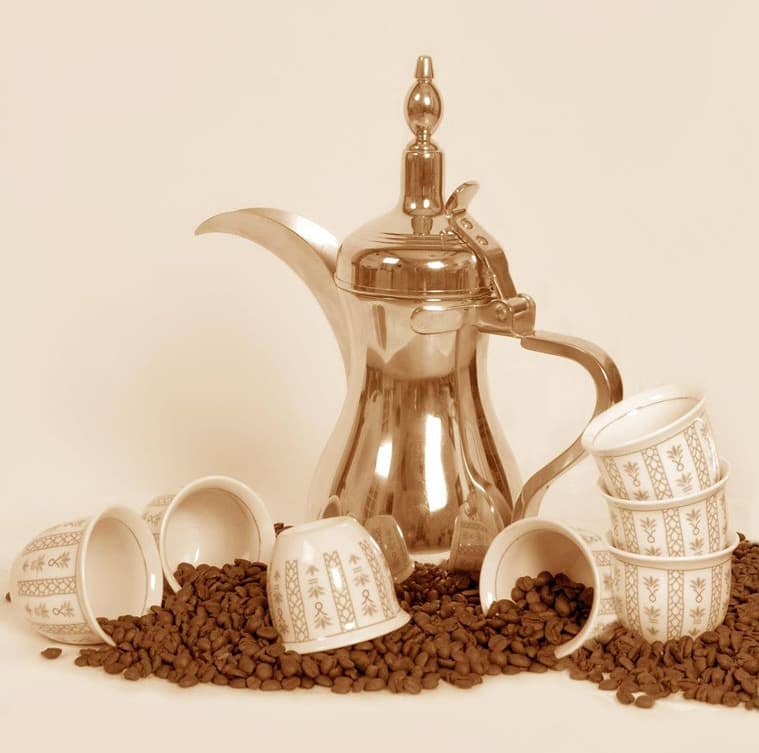
The story of coffee begins in the highlands of Ethiopia, where the coffee plant grows wild, but it was in Yemen that people first started drinking coffee as a brewed beverage - probably around 600 to 700 years ago. Sufi scholars in Yemen are said to have drunk coffee to help them stay awake for long night-time prayers and study sessions. From Yemen, coffee spread to Cairo, Istanbul, London, and eventually to the whole world.
The port city of Al-Makha - which Europeans called 'Mocha' - was the world's first great coffee export centre. For about 200 years, nearly all the world's traded coffee went through this one Yemeni port. That is why 'mocha' became a word associated with coffee, and why so many coffee names and flavours still carry a hint of Yemen in their history.
Yemeni coffee is prized for its distinct flavour - often described as fruity, winey, and complex, quite different from mass-produced coffee. The beans are still grown on high mountain terraces without heavy machinery, picked by hand, and dried in the sun, using methods that have barely changed in centuries.
At the Yemeni Coffee Festival, visitors can taste many different varieties of Yemeni coffee, watch traditional preparation methods, and meet the farmers who grow each bean on specific mountain terraces. The festival celebrates not just the drink, but the whole culture of Yemeni coffee - the farming, the trading, the hospitality, and the centuries of history that go with every cup.