
Classroom lesson · Wildlife · 🇦🇩 Andorra

Alpine Marmot

The chubby whistler of the mountain meadows

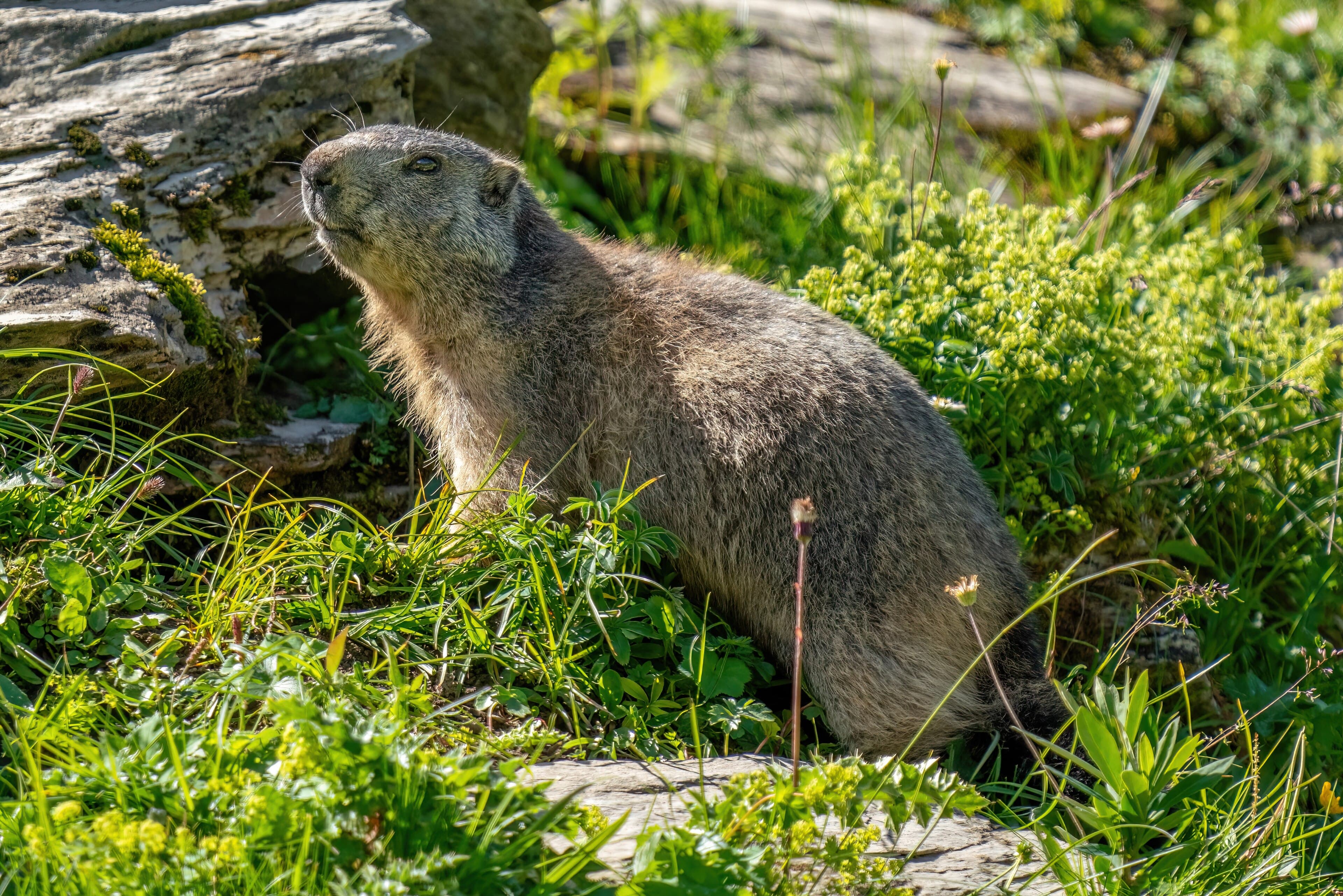
A plump alpine marmot sitting upright on a rocky meadow in the Pyrenees

Photo · Wikimedia Commons

What is it?

The alpine marmot is a large, round, furry animal that lives in the mountain meadows of Andorra and the wider Pyrenees. It looks like a very big squirrel — in fact it belongs to the same animal family — and it is famous for its loud, sharp whistle that it uses to warn its family group when it senses danger nearby. If you hear a sudden, piercing 'wheep!' echoing across a mountain meadow, a marmot has probably spotted you.

Tell me more

Marmots are sociable animals that live in family groups of up to twenty individuals. They dig a system of tunnels and burrows under the meadow, with separate chambers for sleeping, storing food and sheltering from bad weather. The main chamber where the family spends winter is lined with dry grass to keep it warm. From above ground, you can often spot the entrances to their burrows as neat round holes among the rocks.

One of the most remarkable things about alpine marmots is their winter sleep. When autumn arrives and temperatures drop, the whole family group bundles together deep in their burrow and enters a deep sleep called hibernation that lasts for six or seven months. During hibernation, their heart rate drops from around 120 beats per minute to just three or four beats per minute, and their body temperature falls close to freezing. They live off the fat they built up by eating all summer.

In summer, marmots are busy from morning to late afternoon, mostly eating — grasses, roots, flowers, berries and seeds. They need to eat as much as possible to build up enough body fat to survive hibernation. You can often spot them sitting upright on a boulder at the edge of their meadow, looking out for eagles and chamois. When danger is near, the marmot on lookout sends a piercing whistle, and the whole colony dives for their burrows in seconds.

In the classroom

Walk your class through this in 15 minutes.

Talk together

Discussion prompts

  1. 01Marmots hibernate for six or seven months. That is more than half a year! What would you miss most if you slept that long? What might you be glad to miss?
  2. 02The marmot on lookout duty whistles to warn the group. Can you think of other animals — or humans — that use a special signal to warn their community?
  3. 03Marmots eat as much as possible in summer to survive winter. How is that similar to or different from how your family stores or prepares food?
Try this

Classroom activity

Hibernation maths: a marmot hibernates for about 200 days. If it wakes up on the 1st of April, count back 200 days on a large class calendar to find when it went to sleep. What season was that? Then work out how many weeks it slept. As a class, discuss: what events happened in your school year while the marmot was asleep?