
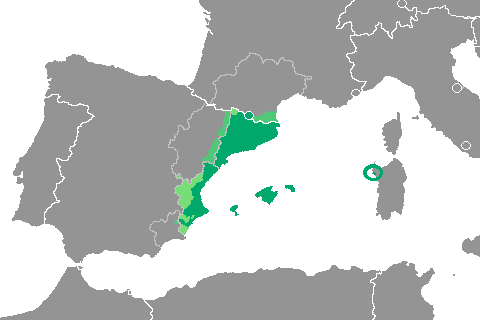
Catalan grew from the Latin that Roman settlers brought to the area more than 2,000 years ago. Over centuries it developed its own grammar, vocabulary and spelling rules - just as English grew from older Germanic and French influences. By the Middle Ages, Catalan was used by poets, storytellers and merchants across a large part of the western Mediterranean. Many Catalan words for everyday things look quite different from their Spanish equivalents: for example, 'water' is 'l'aigua' in Catalan and 'el agua' in Spanish.
In Andorra, children are taught in Catalan from their very first day at school. Because the country is small and sits between Spain and France, many Andorrans also speak Spanish and French, and often understand all three languages comfortably by the time they are teenagers. Growing up with several languages gives the brain lots of extra practice at switching between different systems - something language researchers say is very good for the brain.
Catalan has a rich tradition of songs, stories, dances and poetry. The language sounds musical to many ears - it has a rhythm that Catalan speakers say feels natural for singing. The sardana, Andorra's famous circle dance, is always accompanied by songs sung in Catalan. Place names across Andorra - like Escaldes, Encamp and Canillo - all come from old Catalan words and often describe something about the landscape.