
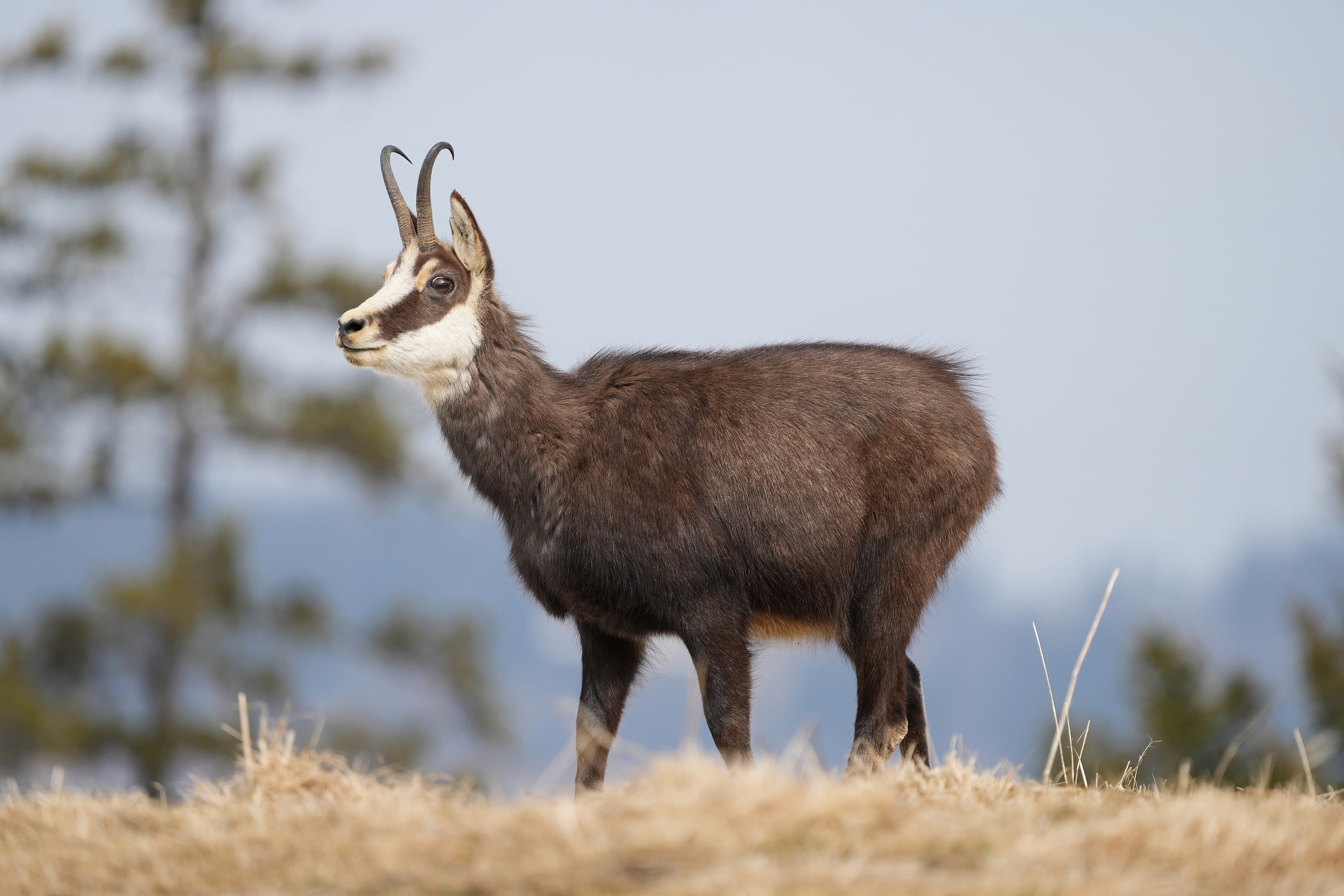
Chamois hooves have two toes that can spread apart on wide surfaces or squeeze together on narrow ledges. The underside of each hoof is like a rubber pad that grips wet or icy rock. This lets chamois run, jump and scramble across cliff faces that would be completely impossible for a human without climbing equipment. They can leap gaps of several metres and land safely on tiny ledges.
In summer, chamois graze in the high alpine meadows above the tree line, eating grasses, herbs and wildflowers. When winter comes and snow covers the high ground, they move lower down into the forests, where they can find lichens and bark to eat. This seasonal movement up and down the mountain is called transhumance - the same pattern that Andorran shepherds followed with their flocks for thousands of years.
Young chamois are called kids and they are born in late spring, when the mountain meadows are full of fresh green grass. Within just a few days of being born, a chamois kid can already follow its mother across rocky terrain. By the end of their first summer, young chamois are already nimble and confident on the steep slopes. Chamois live in small groups, and older animals keep watch for eagles or other predators while the rest of the group feeds.