
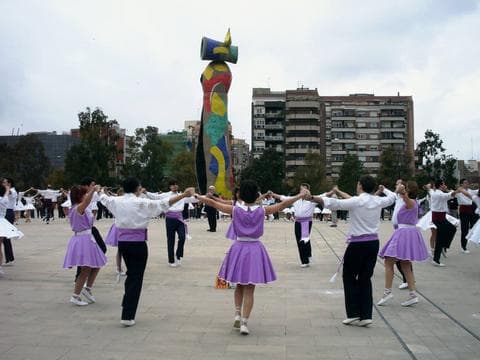
The music for the sardana is played by a cobla, a band of about eleven musicians playing traditional instruments including a type of oboe called a tenora, trumpets, trombones and a small drum. The music alternates between slow, graceful sections and faster, livelier parts, and the dancers adjust their steps to match. When a new tune begins, people often stop, adjust the circle and then start again from the beginning.
What makes the sardana special is that it is completely open - anyone watching can step into the circle at any time. When someone new joins, the whole circle expands to make room. The dance is not a performance by trained dancers for an audience; it is a shared activity where the doing is more important than the watching. Even children who have never danced the sardana before can usually pick up the basic steps within a few minutes.
The sardana has been part of Catalan and Andorran culture for hundreds of years. It is danced at town fairs, summer festivals, National Day celebrations and sometimes just on a Sunday afternoon in a town square. Some people see it as a symbol of togetherness - the circle has no beginning and no end, and every person in it is equal, holding the hands of the people on either side.