
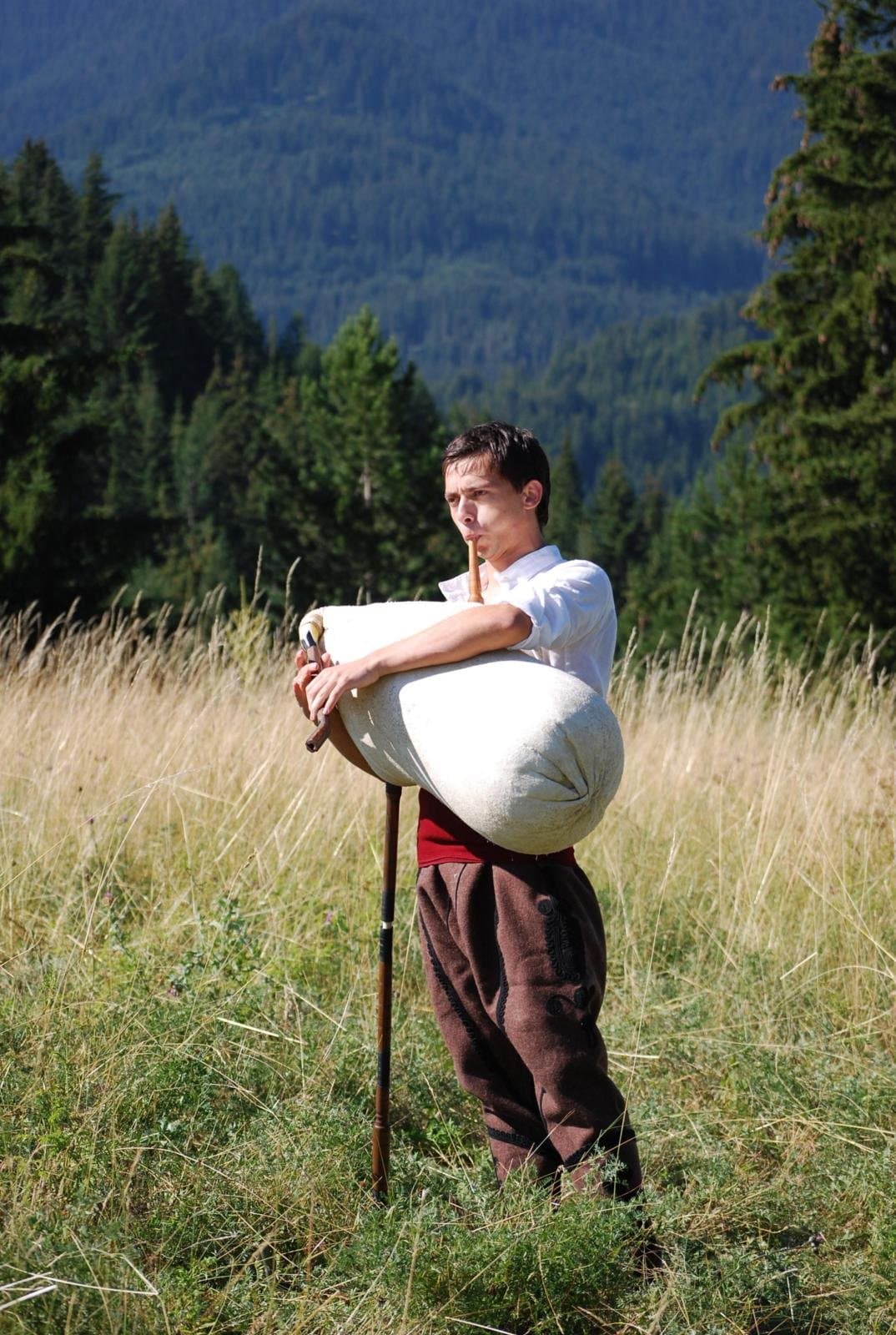
A gaida is made from a whole goatskin bag, a wooden chanter pipe with finger holes for the melody, and a drone pipe that plays one constant low note underneath. The player blows air into the bag through a blowpipe, then squeezes the bag under their arm to push the air through the pipes. This means the gaida can produce sound continuously - even while the player takes a breath.
Bulgarian gaida music is famous for its unusual rhythms. Instead of regular beats of equal length, Bulgarian folk music often uses rhythms like 7/8 or 11/16 - groups of beats that feel uneven to ears more used to Western music. Dancing to these rhythms takes real practice, but once you learn to feel the pulse, it is incredibly exciting.
Gaida players traditionally performed at village celebrations: weddings, harvest festivals, and name-day parties. A good gaida player was enormously respected in their community. The best players could improvise - making up new melodies on the spot - and the most famous players became legendary figures in Bulgarian folk memory.
Today the gaida is celebrated as a symbol of Bulgarian folk culture. There are gaida-making workshops, competitions for young players and international folk festivals where gaida players from different regions of Bulgaria perform together. The instrument is being passed down to new generations who are proud to play it.