
Classroom lesson ยท Festival ยท ๐Ÿ‡ง๐Ÿ‡ฌ Bulgaria

Horo Circle Dance

Bulgaria's traditional dance where everyone joins hands

Photo ยท Wikimedia Commons

What is it?

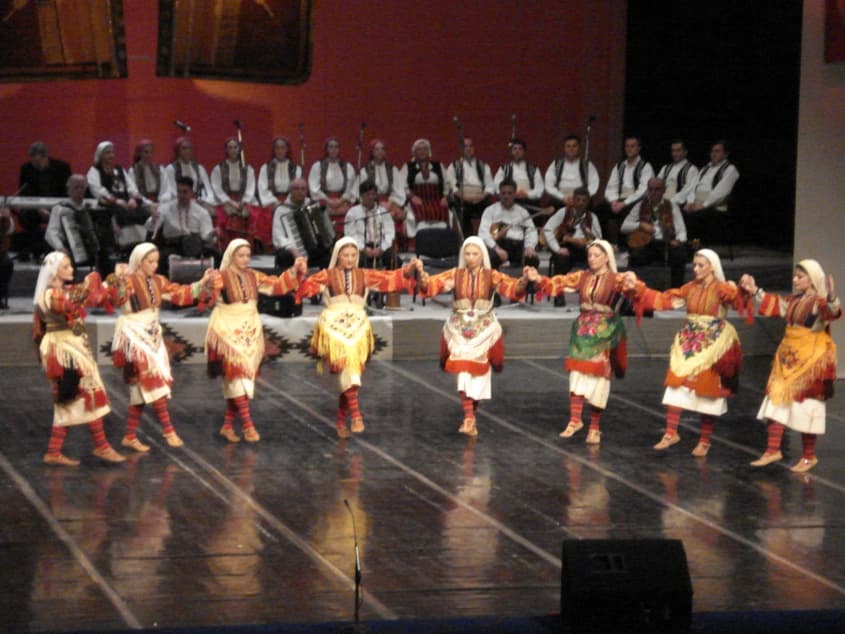
Horo is a traditional Bulgarian folk dance where people stand in a line or a circle, join hands or hold each other by the shoulders, and move together to lively music. It is one of the most important parts of Bulgarian culture โ€” danced at weddings, festivals, village celebrations and national holidays. When a horo gets going, more and more people join in, and the circle grows and grows.

Tell me more

There are hundreds of different horo dances across Bulgaria, each region having its own steps, rhythms and costumes. Some are fast and energetic, with high kicks and stamps; others are slow and dignified, with small, precise steps. The common thread is that everyone moves together โ€” in horo, no one dances alone.

The footwork in horo can be very complex. Dancers must match their steps to unusual rhythms โ€” the same 7/8 and 11/16 time signatures used in gaida music. Beginners often start with simpler dances and gradually learn more complicated ones as they practise. Being able to dance a difficult horo well is a source of real pride.

Traditional horo costumes are elaborate and beautiful. Women wear embroidered dresses with aprons decorated in regional patterns; men wear white shirts with waistcoats and sashes. Each region's costume has slightly different colours and embroidery designs, so experts can tell where a dancer comes from just by looking at their outfit.

Horo is not just a dance โ€” it is a form of community building. Standing in a circle, holding hands with people of all ages, and moving together creates a strong sense of belonging. At large outdoor celebrations, a horo can include hundreds of people snaking across an open field, led by the most experienced dancers at the front.

In the classroom

Walk your class through this in 15 minutes.

Talk together

Discussion prompts

  1. 01In horo, everyone joins hands and moves together. How is dancing in a group different from dancing by yourself? Which do you prefer and why?
  2. 02Different regions of Bulgaria have different versions of horo. Why do you think the same basic dance might develop so differently from place to place?
  3. 03Horo makes people feel like part of a community. Can you think of other activities that bring large groups of people together and make them feel connected?
Try this

Classroom activity

Try a simple version of horo in class: everyone stands in a line and holds hands. Follow a simple pattern โ€” two steps right, one step back โ€” repeated. Try it slowly first, then a little faster. How does it feel to move in time with the people around you? Write two sentences about what you noticed.