
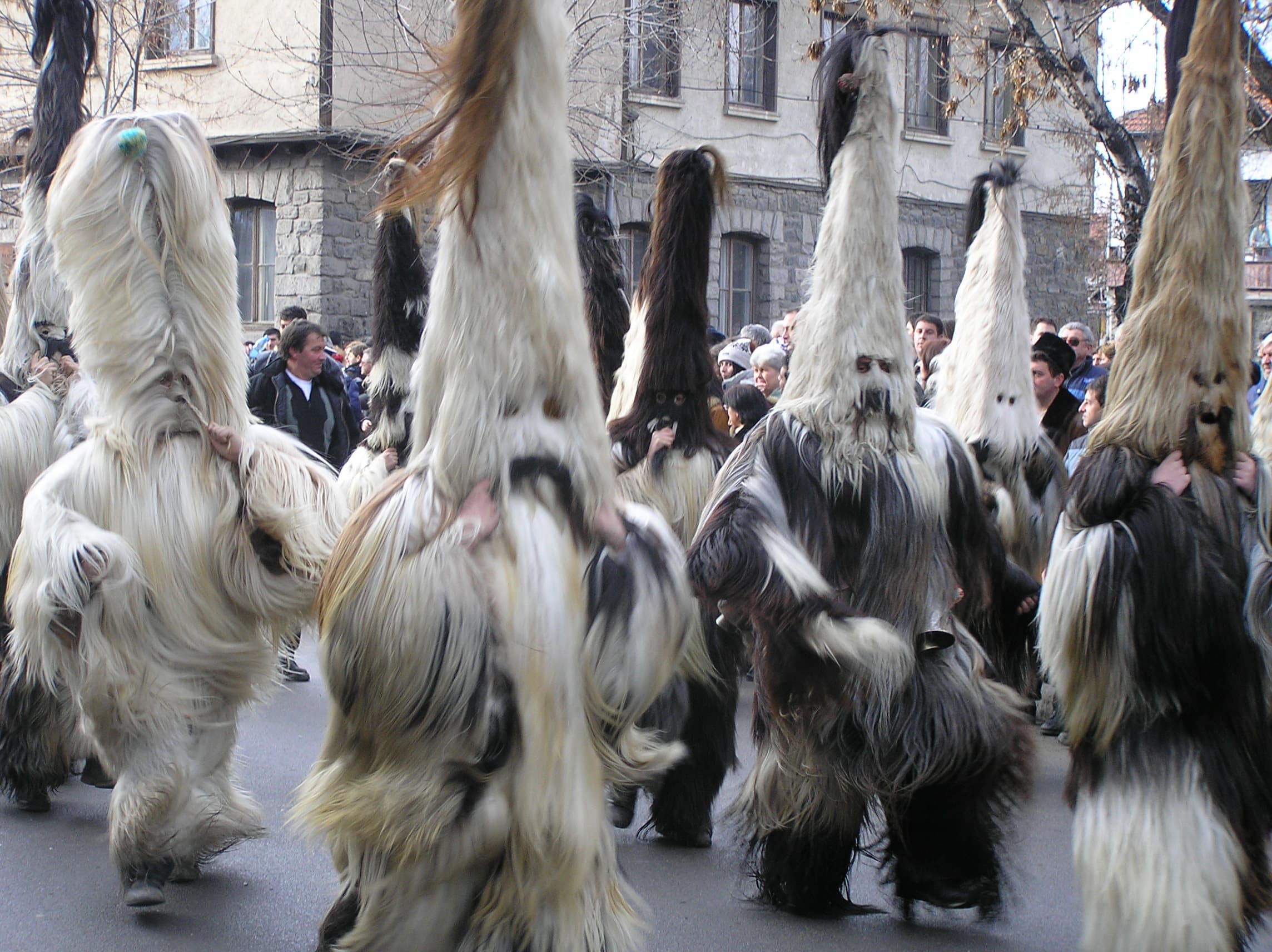
The costumes are extraordinary works of craftsmanship. Each mask is carved by hand from wood and can take weeks or months to make. The masks have wild expressions - big eyes, long noses, horns, feathers and painted colours. No two are exactly alike, and skilled mask-makers are celebrated in their communities as true artists.
The bells worn around the kukeri's waist are also specially made. They are large and heavy - some performers carry dozens of kilograms of bells - and the crashing, jangling sound they make as the kukeri stomp, jump and spin fills the whole street. The noise alone is enough to make younger children both excited and a little wide-eyed.
Kukeri parades happen in villages and towns across Bulgaria, mostly in January and February. The performers dance through the streets in procession, sometimes stopping to perform a short ritual for households that want good luck for the coming year. In the town of Pernik, a huge international masquerade festival called Surva brings kukeri groups from across Bulgaria and from many other countries.
The kukeri tradition is very old - it may go back thousands of years to ancient rituals connected with agriculture and the changing seasons. Today it is celebrated as a proud part of Bulgarian folk heritage. Children often watch the parade from their parents' arms, dazzled by the enormous costumes and the thundering bells.