
Classroom lesson · Ugali & Boko Boko · 🇧🇮 Burundi

Ugali & Boko Boko

The satisfying, filling staple dishes at the heart of Burundian meals

Photo · Wikimedia Commons

What is it?

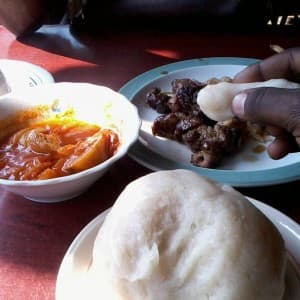
Ugali is a thick, smooth porridge made from maize flour and water that is eaten across much of East Africa. In Burundi it is cooked until it is stiff enough to pinch into a small ball and dip into a sauce. Boko boko is a similar dish made from crushed wheat or sorghum, often cooked into a soft, comforting porridge.

Tell me more

To make ugali, maize flour is stirred into boiling water over the heat, and a cook keeps stirring until the mixture becomes thick and pulls away from the sides of the pot. It takes strong arms and a lot of stirring. The result is dense and slightly stretchy — perfect for scooping up bean stew, vegetable sauce, or grilled fish.

Boko boko is especially popular for breakfast or as a warming meal in the cooler highland areas. It can be made thin and soupy or thick and stiff, depending on what people prefer. Both ugali and boko boko are filling, inexpensive, and provide good energy for a long day of farming, fishing, or going to school.

Meals in Burundi are usually eaten together as a family. Dishes are placed in the centre of the table and everyone reaches in to share. Eating together is an important part of family life, and it is considered polite and kind to make sure everyone at the table has enough before helping yourself to more.

In the classroom

Walk your class through this in 15 minutes.

Talk together

Discussion prompts

  1. 01Ugali is eaten across 30 countries in Africa, each with a different name. Can you think of a dish that exists in lots of countries but has different names or recipes in each one?
  2. 02Eating together as a family is very important in Burundian culture. Do you have a special meal or time when your family eats together?
  3. 03Why do you think simple, filling foods like ugali have been so important for so long?
Try this

Classroom activity

Make a simple 'porridge comparison' chart. Research four porridge-like dishes from around the world (e.g., ugali from Burundi, polenta from Italy, congee from China, grits from the USA). For each one, write: what grain it is made from, what country it comes from, and one thing that makes it different. Present your findings to the class.