
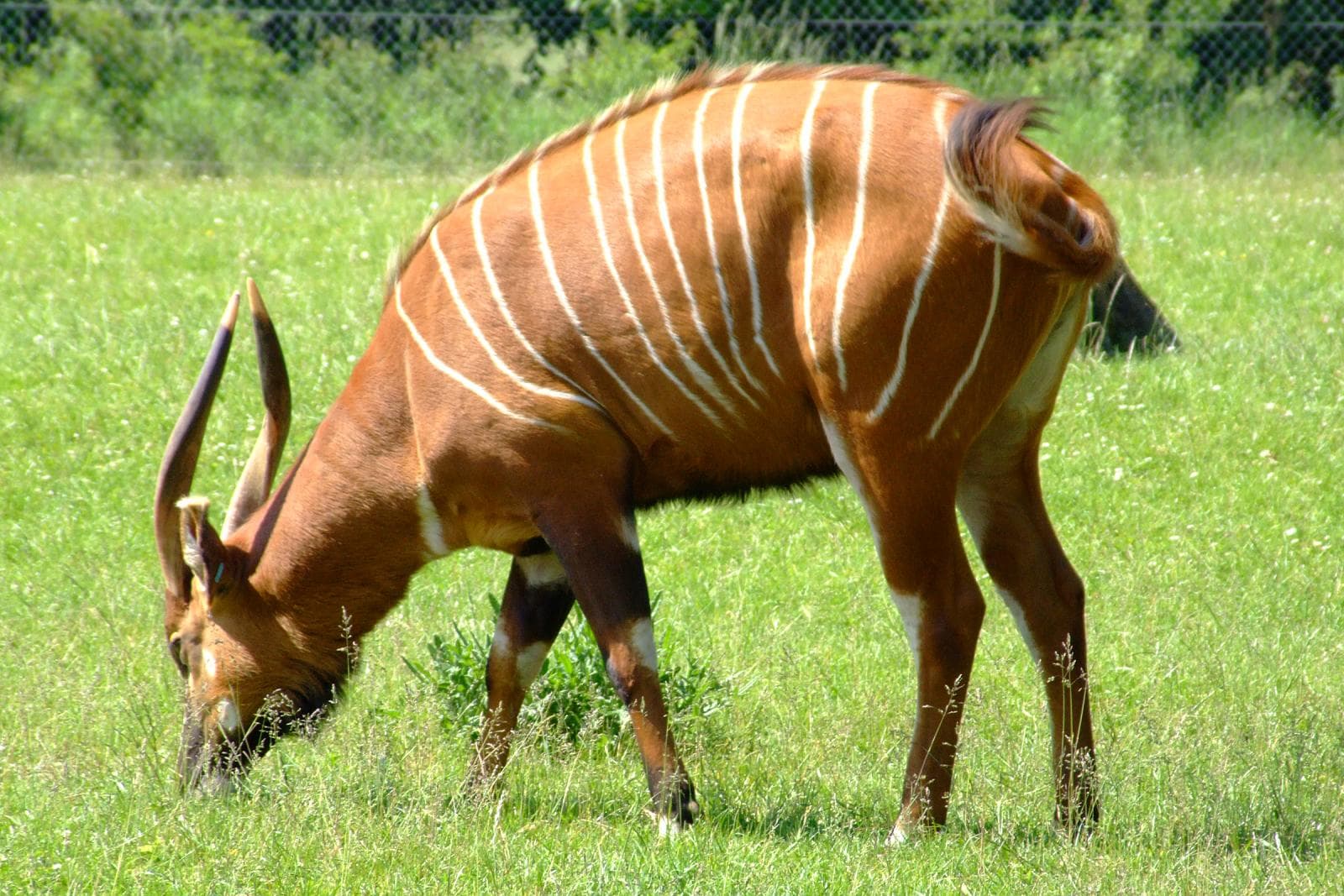
Both male and female bongos have long, spiralling horns that twist elegantly upward. This is unusual - in most antelope species only the males have horns. The bongo's horns can grow up to nearly a metre long. When a bongo moves through thick undergrowth, it tilts its head back so the horns lie flat along its neck, letting it slip through gaps between branches without getting caught.
Bongos are shy and cautious animals. They are most active at dawn and dusk - the gentle hours between dark and full daylight. During the hottest part of the day they rest in the shade of the forest, keeping very still and quiet. Their striped coats make them extremely hard to see among the dappled shadows of the forest floor.
Bongos eat leaves, bark, grasses, roots and fruit. Like forest elephants, they sometimes visit mineral-rich clearings to eat clay and salty earth. They are excellent swimmers and will cross rivers without hesitation, their large hooves helping them balance on slippery riverbanks.
In the Central African Republic, bongos live in the rainforests of the southwest, including in and around Dzanga-Sangha. They are rarely seen but rangers and BaAka trackers know how to read the wide, cloven hoof prints they leave in soft mud near streams.