
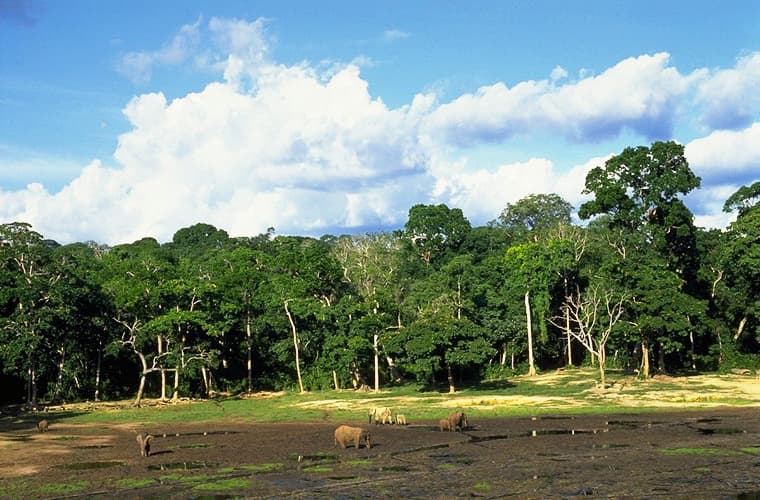
The rainforest is so thick and tall that it feels like being inside a giant green cathedral. Enormous trees stretch 40 to 50 metres into the sky, and their leafy tops - called the canopy - form a roof that shades the forest floor below. Rain drips through layer after layer of leaves before it ever reaches the ground.
Inside Dzanga-Sangha there is a very famous clearing in the forest called Dzanga Bai. Scientists and forest rangers call it the 'village of elephants' because dozens of forest elephants come here every day to drink the mineral-rich water and eat the salty clay. It is one of the best places on Earth to watch wild elephants - and they are there almost every single day.
The BaAka people have lived in this rainforest for a very long time. They know the names of hundreds of plants and animals, and they sing beautiful songs called polyphonic music - where different voices weave together like threads in a cloth. UNESCO has listed their singing as an important part of the world's cultural heritage. The BaAka also know how to move quietly through the forest and read signs in leaves and tracks that most visitors would never notice.
Dzanga-Sangha is part of a larger region called the Sangha Tri-National Park, shared with Cameroon and the Republic of the Congo next door. Three countries working together to protect one huge forest means that animals like elephants and gorillas have an enormous safe home to roam across.