
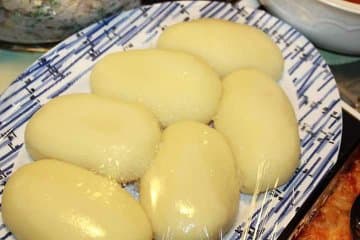
Cassava is an extraordinary plant. It grows in poor, sandy soils where many other crops struggle, it survives dry seasons, and its big starchy roots can be left in the ground for months and harvested when needed. This makes it one of the most reliable food crops in the world. The roots are peeled, boiled, pounded in a large wooden mortar with a heavy pestle, or grated and fermented to make fufu.
Making fufu by hand is hard work. The cooked cassava is pounded rhythmically in a tall wooden mortar - one person holds the mortar steady while another lifts the heavy pestle and brings it down again and again. The pounding turns the cassava into a smooth, elastic dough. The sound of pounding cassava in the early evening is one of the familiar sounds of life in many Central African towns and villages.
Fufu is eaten by hand and always with a sauce or stew. In the Central African Republic, popular accompaniments include kanda ti nyma (a peanut and meat stew), leafy green sauces, fish stew with tomatoes, and palm nut soup. The fufu is never eaten alone - it is the vehicle for scooping up the rich flavours of the dish alongside it.
Cassava leaves are also edible and very nutritious. They are pounded into a dark green paste and cooked into a sauce called saka-saka or pondu. This means the whole cassava plant can be eaten - the roots become fufu and the leaves become the sauce to go with it.