
Classroom lesson · Wildlife · 🇨🇫 Central African Republic

Manovo-Gounda St. Floris

A UNESCO national park on the edge of the great African savanna

Photo · Wikimedia Commons

What is it?

Manovo-Gounda St. Floris is a huge national park in the north of the Central African Republic, recognised as a UNESCO World Heritage Site. It stretches from open grasslands and wetlands in the south up to sandstone mountains and plateaus in the north. This park is one of the most important wild places in all of central Africa.

Tell me more

The park covers nearly 1.8 million hectares - that is bigger than the entire country of Lebanon. Inside its borders you can find three very different types of landscape: rolling savanna grasslands that turn golden in the dry season, low-lying floodplains where rivers spread wide and hippos wallow, and rocky upland cliffs where baboons perch and look out over the plains below.

Manovo-Gounda is home to an extraordinary list of animals. Elephants, lions, leopards, cheetahs, African wild dogs, black rhinoceros, bongo antelopes and giant eland all live here. The park sits along ancient migration routes that animals have followed for thousands of years, moving between water sources as the seasons change.

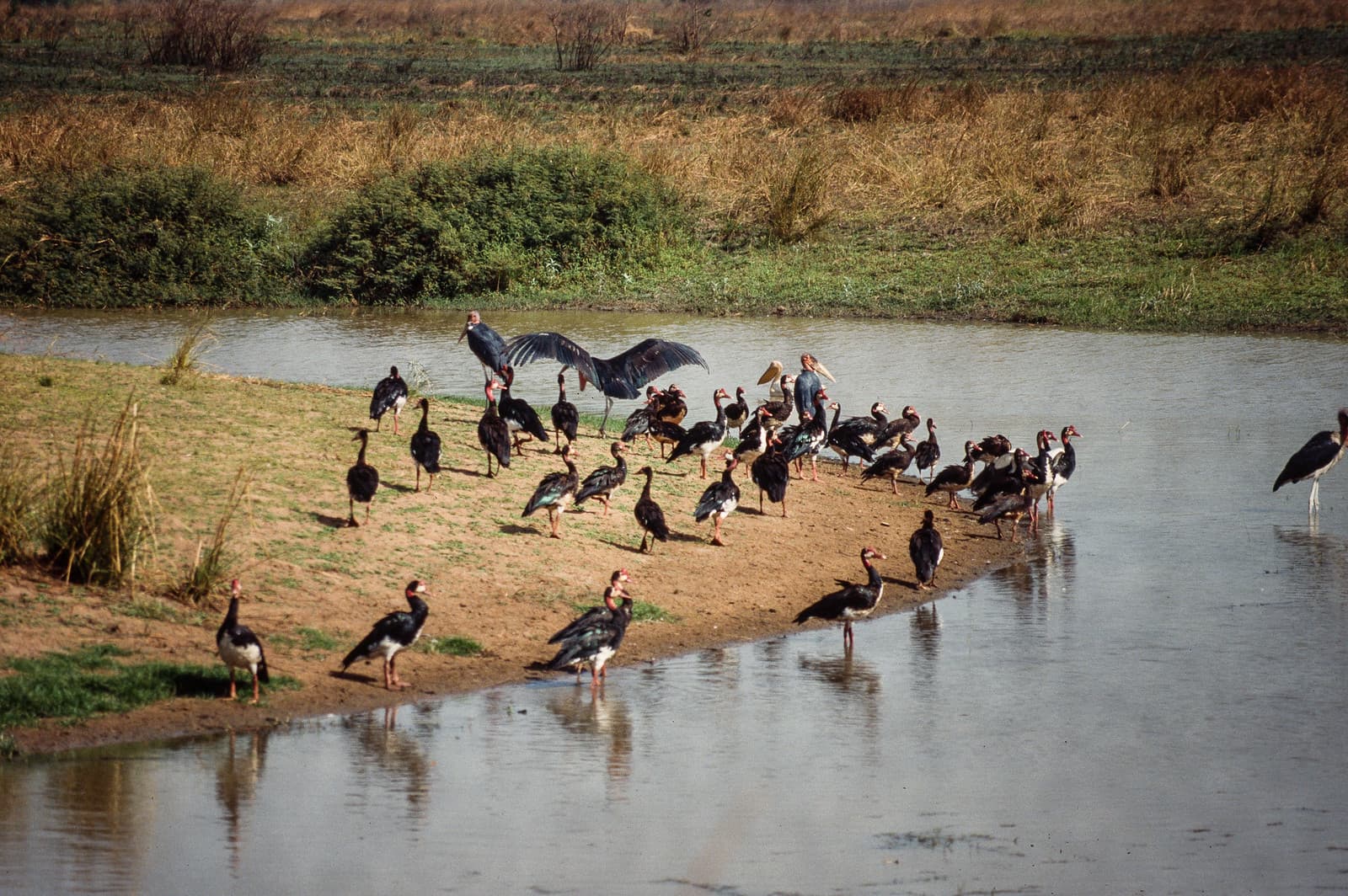
The park is also a brilliant place to watch birds. More than 320 different bird species have been recorded here. The skies fill with crowned cranes performing their dancing displays, secretary birds striding across the grass, and huge saddle-billed storks wading through the shallows in search of fish.

The rivers inside the park are full of life too. Nile crocodiles bask on muddy banks, and hippos grunt and splash in the deeper pools. At the edges of the floodplains, herds of waterbuck and kob antelopes gather in the evenings to drink.

In the classroom

Walk your class through this in 15 minutes.

Talk together

Discussion prompts

  1. 01The park has three very different landscapes inside it. How do you think animals choose which part to live in?
  2. 02Why do you think it matters to have huge protected wild areas where no farming or building is allowed?
  3. 03Many animals in this park migrate - they move with the seasons to find food and water. Do people ever move for similar reasons? Can you think of examples?
Try this

Classroom activity

On a large piece of paper, create a map of the park's three zones: savanna (golden yellow), floodplains (blue-green) and rocky plateau (grey-brown). Draw at least two animals into the correct zone for each habitat. Add a compass rose and a simple legend.