
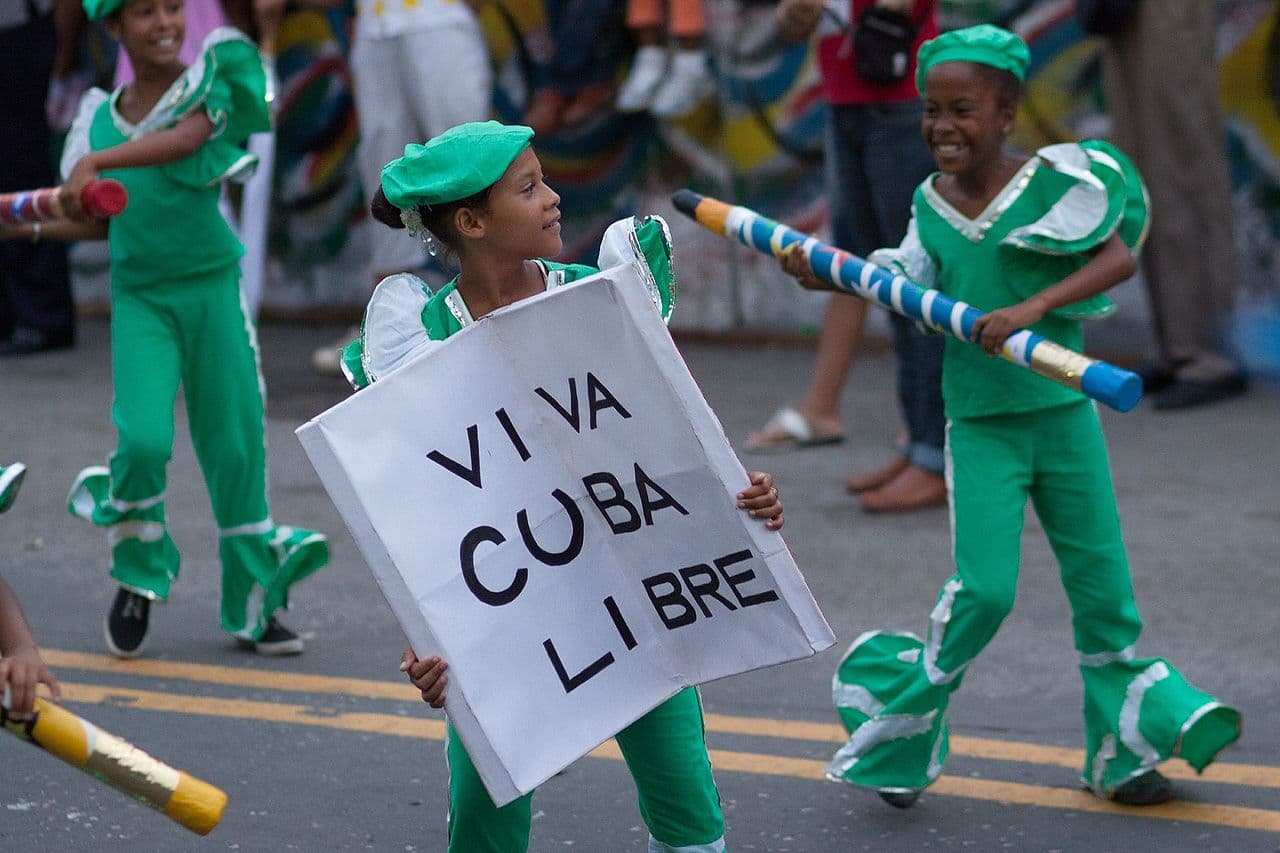
The Carnaval has roots that stretch back hundreds of years, to the festivals that enslaved African communities were permitted to hold during certain days of the Catholic calendar. They brought with them their drumming traditions, dances and masked celebrations, which mixed over time with Spanish and Caribbean influences to create the extraordinary festival that exists today. Every comparsa (parade group) has a different style, colour scheme and musical rhythm.
The comparsas practice for months before the festival. Each group has their own conga drum section, brass players, singers and dancers in matching elaborate costumes that can take seamstresses an entire year to make. The costumes are constructed from feathers, sequins, bright fabric and mirrors, and they can be so large and ornate that wearing them is a feat of strength as well as artistry.
The festival does not just happen on a stage - it takes over the entire city. Restaurants move their tables outside, neighbours decorate their balconies and thousands of people line the streets to cheer for their favourite comparsa. Children dress up too and join neighbourhood parades. The noise and colour and energy continue late into every night for the full two weeks of the celebration.