
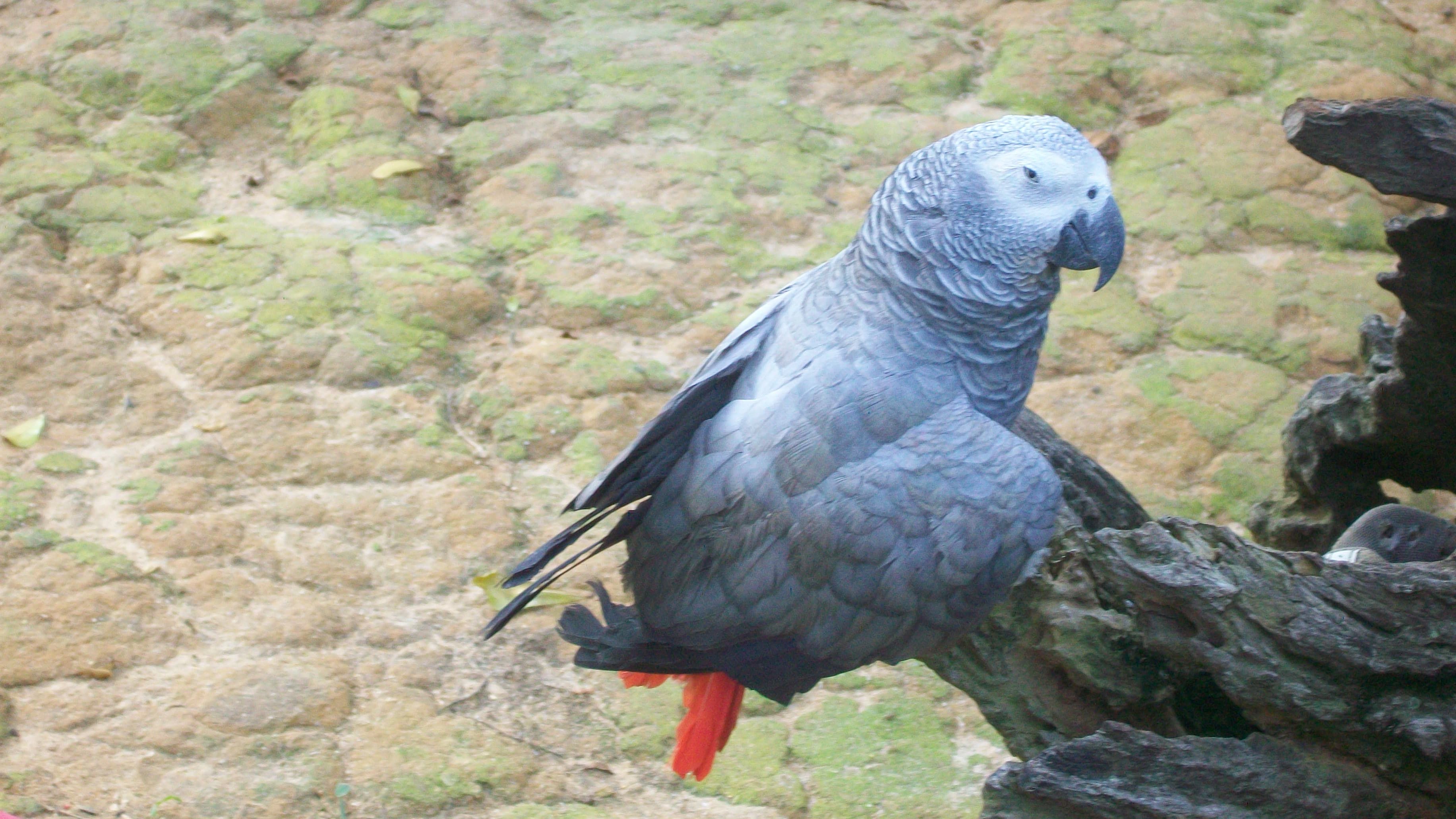
African grey parrots live in the forest canopy, where they are expert at finding fruit, nuts, and seeds. They use their strong, hooked beaks to crack open tough shells and their clever feet to hold food while they eat - a bit like using hands. They are very social birds and usually live in large flocks, chattering and calling to each other constantly through the trees.
Scientists studying African grey parrots have been amazed by how clever they are. One famous parrot named Alex, studied by a scientist called Dr. Irene Pepperberg for over 30 years, could identify colours, shapes, and materials, count to six, and even tell the difference between 'same' and 'different'. He showed that birds can have thinking skills that we once thought only mammals possessed.
In the wild, African greys are important for spreading seeds through the forest. They carry fruit in their beaks, and seeds that fall from their mouths or pass through them sprout into new trees. They are also very long-lived: wild African greys can live 40 to 60 years, meaning one parrot can help plant trees for decades.
The forests of Bioko Island and Río Muni provide ideal habitat for African grey parrots, with tall trees for nesting and plenty of fruit. Conservation work in Equatorial Guinea aims to protect these forests to keep not just parrots but the whole community of creatures that depends on the same trees.