
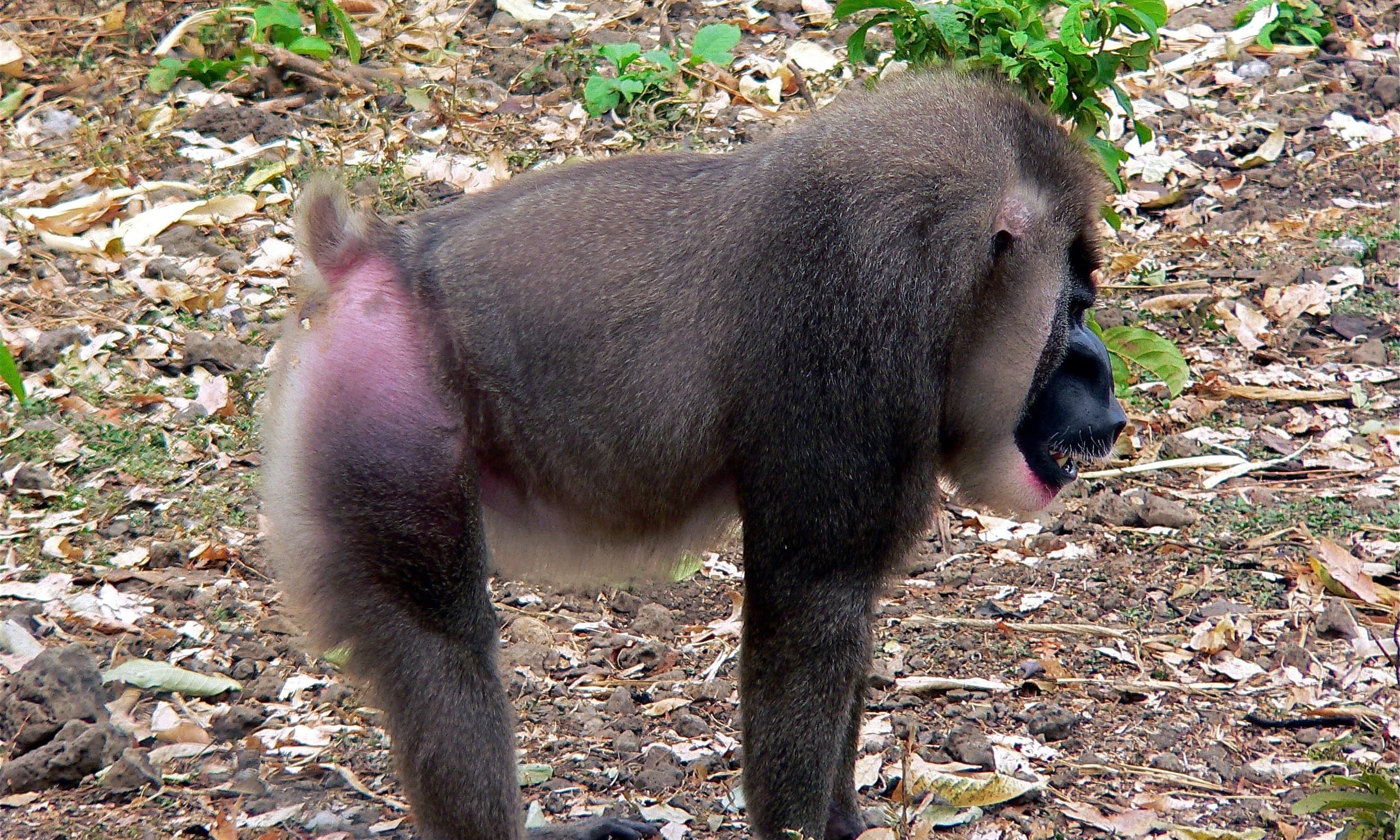
A male drill can weigh up to 50 kilograms, making it one of the biggest monkeys on Earth - about the same weight as a ten-year-old's bicycle! But despite their size, drills are shy and usually try to move away quietly when they sense people nearby. They travel through the forest in groups that can contain dozens of individuals, with one or two large males keeping watch.
The most striking thing about a male drill is its bottom! It is brilliantly coloured in shades of pink, red, blue and purple - scientists believe this is how drills signal their health and strength to other members of the group. Females, which are much smaller than males, choose partners partly based on how vivid these colours are.
Drills eat a wide variety of forest foods: fruit, seeds, leaves, mushrooms, and occasionally small lizards or insects. Because they move through the forest eating and dropping seeds, they help many trees spread to new places. Scientists call this 'seed dispersal', and animals that do it are extremely important for keeping the forest healthy.
Bioko Island is one of the last remaining strongholds for drills in the wild. Researchers visit the island specifically to study them and help protect them. Local communities are increasingly involved in monitoring drill populations, and some villages have set aside land where drills can move safely without disturbance.