
Classroom lesson · Festival · 🇬🇶 Equatorial Guinea

Ivanga Dance

A joyful ceremonial dance of the Fang people

Photo · Wikimedia Commons

What is it?

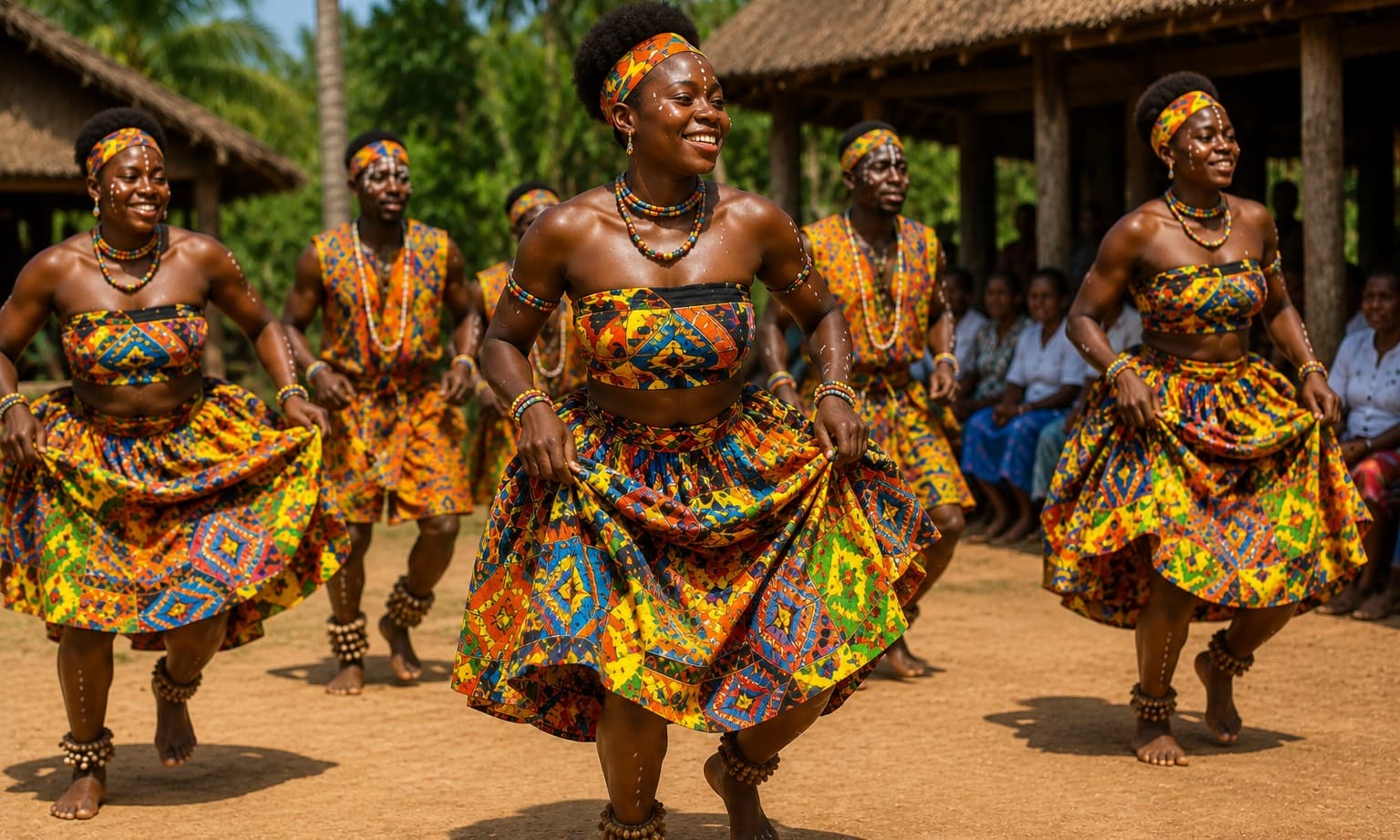
The ivanga is a traditional dance of the Fang people of Equatorial Guinea's mainland. Performed at celebrations, initiation ceremonies, and festivals, the ivanga is known for its energetic footwork, dramatic movements, and beautifully decorated costumes of natural materials. Dance is not just entertainment for the Fang — it is a way of expressing joy, welcoming newcomers, and marking important moments in life.

Tell me more

The Fang are the largest ethnic group in Equatorial Guinea and live across the mainland region of Río Muni. The ivanga is one of their most celebrated dances, often performed by groups of men and women in separate formations that weave together and apart. Dancers wear costumes made from raffia fibres, feathers, and natural dyes, and they paint their skin and faces with geometric patterns.

The footwork of the ivanga is intricate and fast — dancers stamp, shuffle, and leap, with the sound of their feet on the earth becoming part of the music itself. Drums and xylophones provide the main beat, while singers accompany the dancing with songs in the Fang language. Senior dancers teach the steps to younger ones, passing on not just the movements but the meaning behind them.

Different movements in the ivanga carry different meanings. A raised arm might signal greeting, while a low sweeping gesture might represent the forest or the river. Dancers who have learned these meanings can 'read' a performance the way you might read a story, understanding what the dancers are expressing without a single word being spoken.

At festivals and Independence Day celebrations, ivanga performances draw large audiences. People cheer for especially skilled footwork or a particularly expressive solo passage. The dance has also been performed at international cultural festivals, bringing the music and movement of the Fang people to audiences across Africa and beyond.

In the classroom

Walk your class through this in 15 minutes.

Talk together

Discussion prompts

  1. 01Dance can tell stories without words. Can you think of another art form that communicates without language?
  2. 02Why might costumes made from natural materials like raffia and feathers be significant for a dance connected to the forest?
  3. 03How does your own community or country use dance to celebrate important events?
  4. 04If you could invent a dance movement that represented your school, what would it look like and what would it mean?
Try this

Classroom activity

Invent three dance movements that each represent something about your local environment (for example: a river, a tree in the wind, an animal nearby). Give each movement a name and write one sentence explaining what it represents. Then chain all three together into a short sequence and teach it to a partner.