
Classroom lesson · Food · 🇬🇶 Equatorial Guinea

Plantain Dishes

The banana's savoury cousin — cooked every which way

Photo · Wikimedia Commons

What is it?

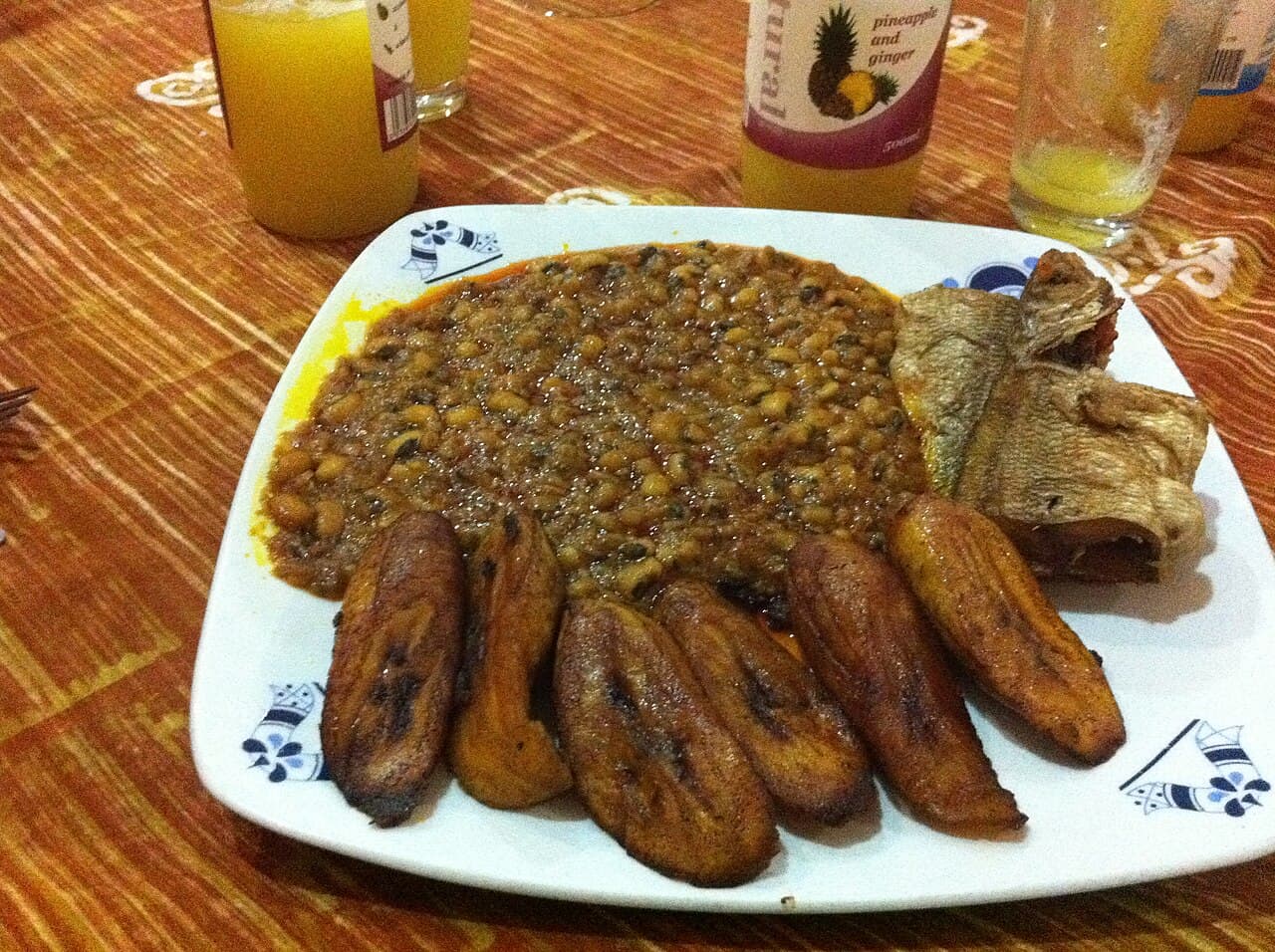
Plantains look like bananas but taste completely different when cooked. In Equatorial Guinea, plantains are one of the most important foods on the table and can be eaten at breakfast, lunch, or dinner. They can be boiled, fried, baked, or mashed — each method gives a totally different result, from crispy golden chips to soft creamy purée.

Tell me more

Plantains are larger and starchier than the bananas you might eat as a snack. When they are still green and unripe, they are firm and savoury, a bit like a potato, and are usually boiled or fried at this stage. As they ripen and turn yellow and black, they become sweeter and softer, perfect for frying into caramelised slices or mashing into a sweet side dish.

Fried plantains — known locally as 'kelewele' or simply as fried plantain — are one of the most popular street foods you can find. Sliced diagonally and fried in hot oil until the outside is golden and slightly crispy while the inside stays soft and sweet, they are eaten on their own as a snack or alongside grilled fish, beans, or rice. The smell of plantains frying is one of the great smells of a West and Central African market.

Boiled plantain is a simpler preparation — the whole plantain, skin on, is dropped into boiling water for about twenty minutes. Peeled and served alongside stew or soup, it soaks up flavour beautifully. In some parts of Equatorial Guinea, boiled plantain is mashed with a little palm oil and salt to make a smooth, golden side dish.

Plantain trees grow easily in tropical climates and can produce fruit almost year-round. A single tree produces one large bunch of fruit and then the trunk is cut down, but new shoots from the base grow into new trees. Families often have several plantain trees in their garden, providing a steady supply of food through all seasons.

In the classroom

Walk your class through this in 15 minutes.

Talk together

Discussion prompts

  1. 01Why might it be useful to have a food that tastes very different depending on how ripe it is?
  2. 02Plantains can be prepared in many different ways from the same ingredient. Can you think of another food that is used very differently depending on how it is prepared?
  3. 03What do you think is better about a fruit that can be eaten all year round compared to one that is only available in one season?
  4. 04How might the smell of food cooking in a market make you feel? Why do smells connect so strongly to memories?
Try this

Classroom activity

Create a 'plantain timeline' showing how one plantain changes from the day it is picked green to when it is fully black and ripe. Draw the plantain at four stages and write next to each: its colour, its texture, whether it tastes savoury or sweet, and the best way to cook it at that stage.