
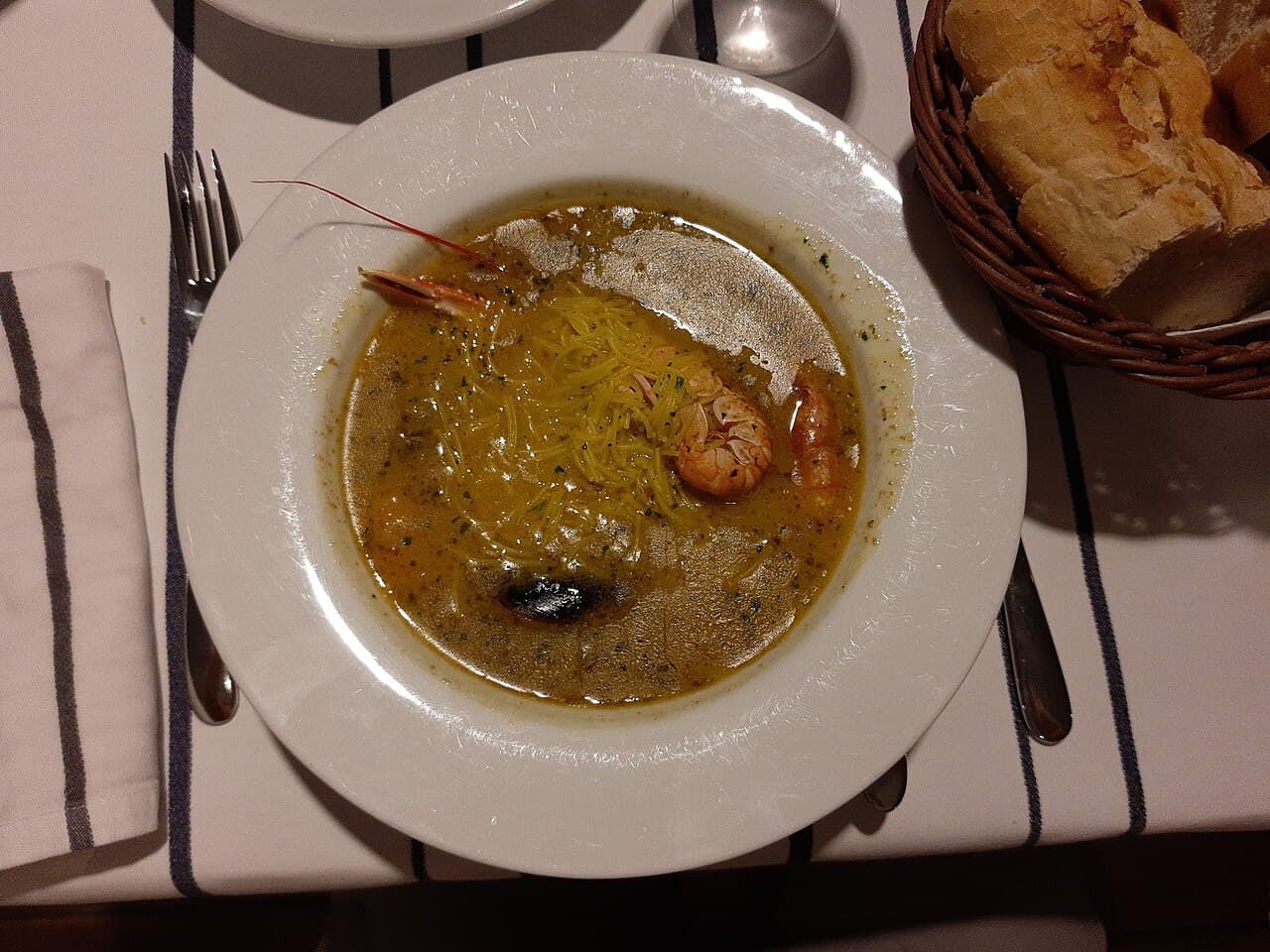
Equatorial Guinea's coastline and rivers provide a huge variety of fish: barracuda, snapper, grouper, tilapia, and many more. Fishermen go out early in the morning and return with their catch, and by lunchtime the same fish can be swimming in a pot of soup on the stove. The soup is made by gently simmering the fish with tomatoes, garlic, chilli, and sometimes plantain to give it a slightly sweet edge.
The Spanish word 'sopa' shows one of the interesting things about Equatorial Guinea: it was a Spanish colony for many years, and Spanish became one of the official languages alongside French and Portuguese (and many local languages). Food is one of the places where Spanish and African traditions mix deliciously. You will find Spanish-style spiced cooking alongside traditional Central African ingredients in the same bowl.
Different families make their sopa de pescado in slightly different ways - some add coconut milk for a creamier soup, others use more chilli for extra heat, and some add leafy greens at the end so they stay bright and fresh. In many homes, the recipe has been passed from grandmother to grandchild without ever being written down, simply learned by standing at the side of the pot and watching.
Fish soup is often eaten at family gatherings and celebrations. In coastal communities, a big pot of sopa de pescado made with the morning's freshest catch is a sign of abundance and welcome. Guests are always offered the largest piece of fish as a sign of respect.