
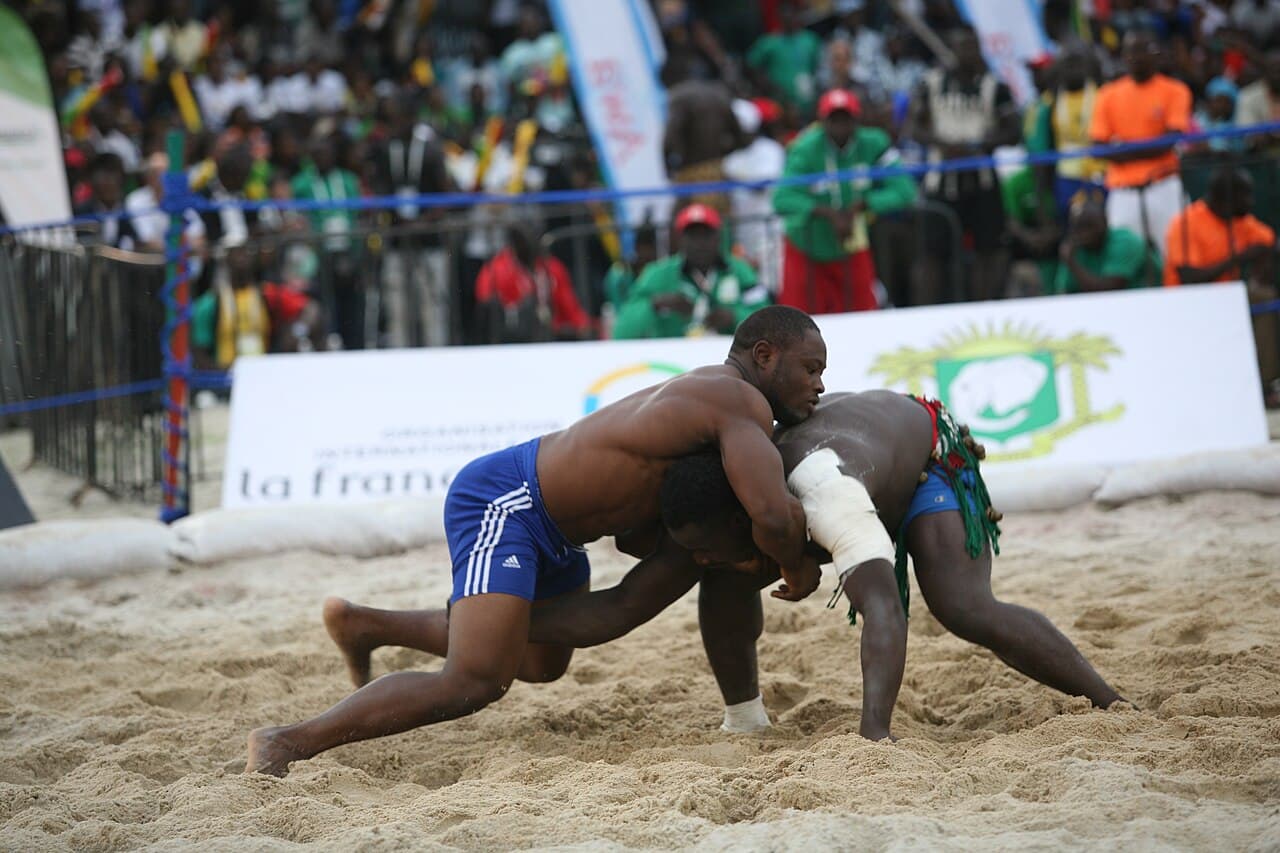
Traditional wrestling matches in Equatorial Guinea typically take place on bare earth or sand, in a circle marked out by spectators standing around the edge. Two wrestlers stand facing each other, and the object is to throw or force your opponent down to the ground. The rules vary between communities, but generally a match ends when a wrestler's back touches the earth.
The sport requires a combination of strength, balance, and cleverness. A smaller wrestler can defeat a much larger opponent by using the right technique at the right moment - timing a trip, shifting weight to unbalance an opponent, or waiting patiently for an opening. This is one reason traditional wrestling is respected as a sport of skill as much as raw power.
Matches at festivals are often organised by age group, so children, teenagers, and adults each compete separately. Young boys watch the adult matches carefully, studying techniques they will try to learn. Senior wrestlers are respected figures in the community, known both for their skill in the circle and for their wisdom outside it.
Wrestling is also a social event: families bring food, musicians play, and spectators cheer and laugh. The atmosphere is festive and welcoming. After the matches, winners are celebrated but so are competitors who showed great spirit - it is considered just as admirable to wrestle bravely and lose as to win without real effort.