
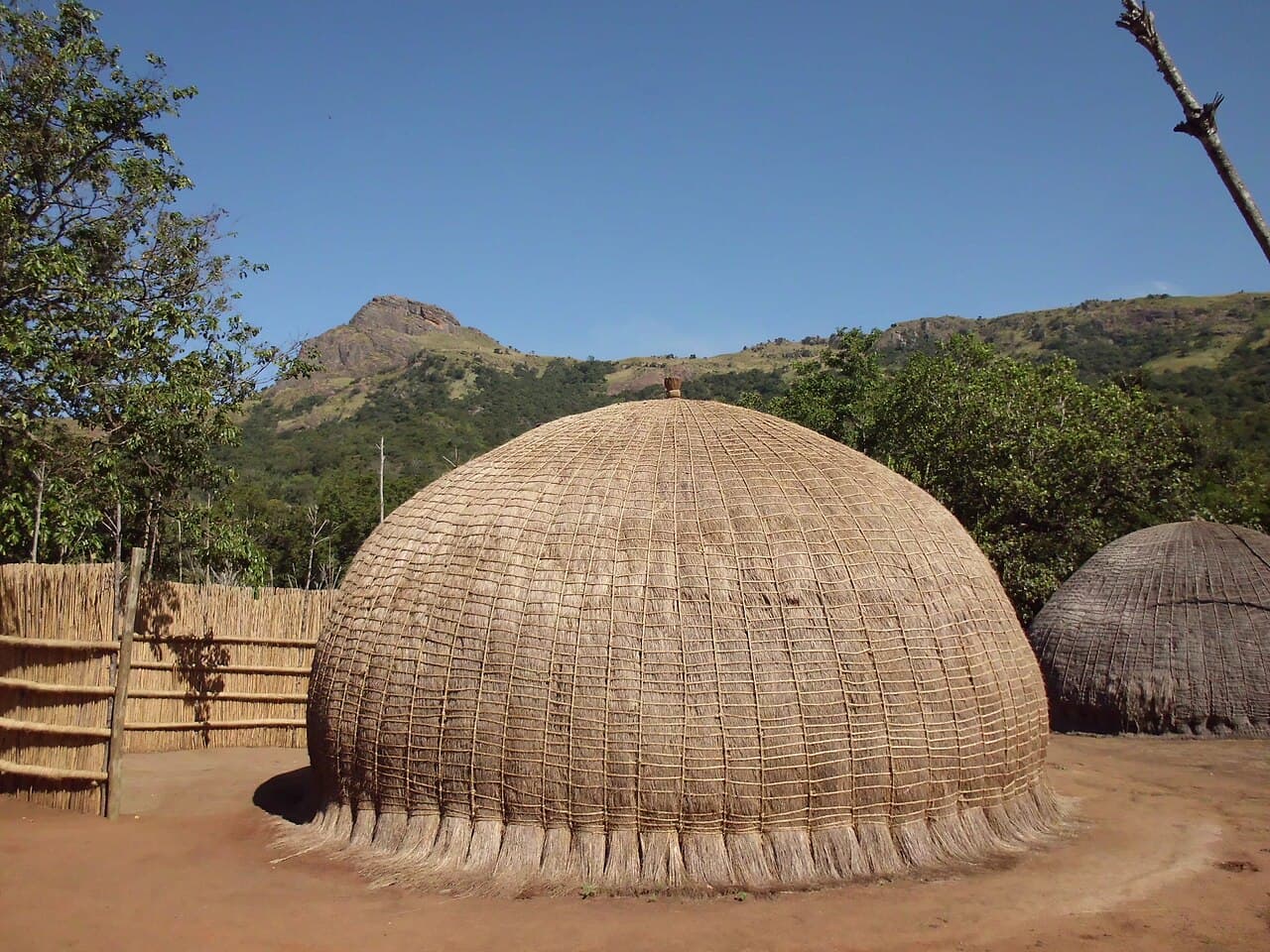
The village is made up of round, dome-shaped houses called 'beehive huts'. Each hut is built from a frame of thin, flexible branches woven together, then covered with thick layers of local grass. The result looks just like an enormous upturned birds' nest - and is surprisingly cool inside, even on a hot day.
Inside the village, guides dressed in traditional clothing show visitors how daily life worked. They explain how families cooked food over open fires, how craftspeople wove grass mats and carved wooden tools, and how the village was arranged to keep cattle safe at the centre. Children can try weaving a small piece of grass mat themselves.
Traditional Swazi singing and dancing are performed at the village regularly. Dancers wear colourful outfits and move to the rhythmic beat of drums. The dances often tell stories - about harvests, animals, or important moments in community life - and audiences are sometimes invited to join in.
Near the village, the Mantenga waterfall tumbles 95 metres down a rocky cliff into a pool where vervet monkeys come to drink. Walking to the waterfall through the nature reserve is a lovely way to end a visit to the cultural village and see a different side of this beautiful valley.