
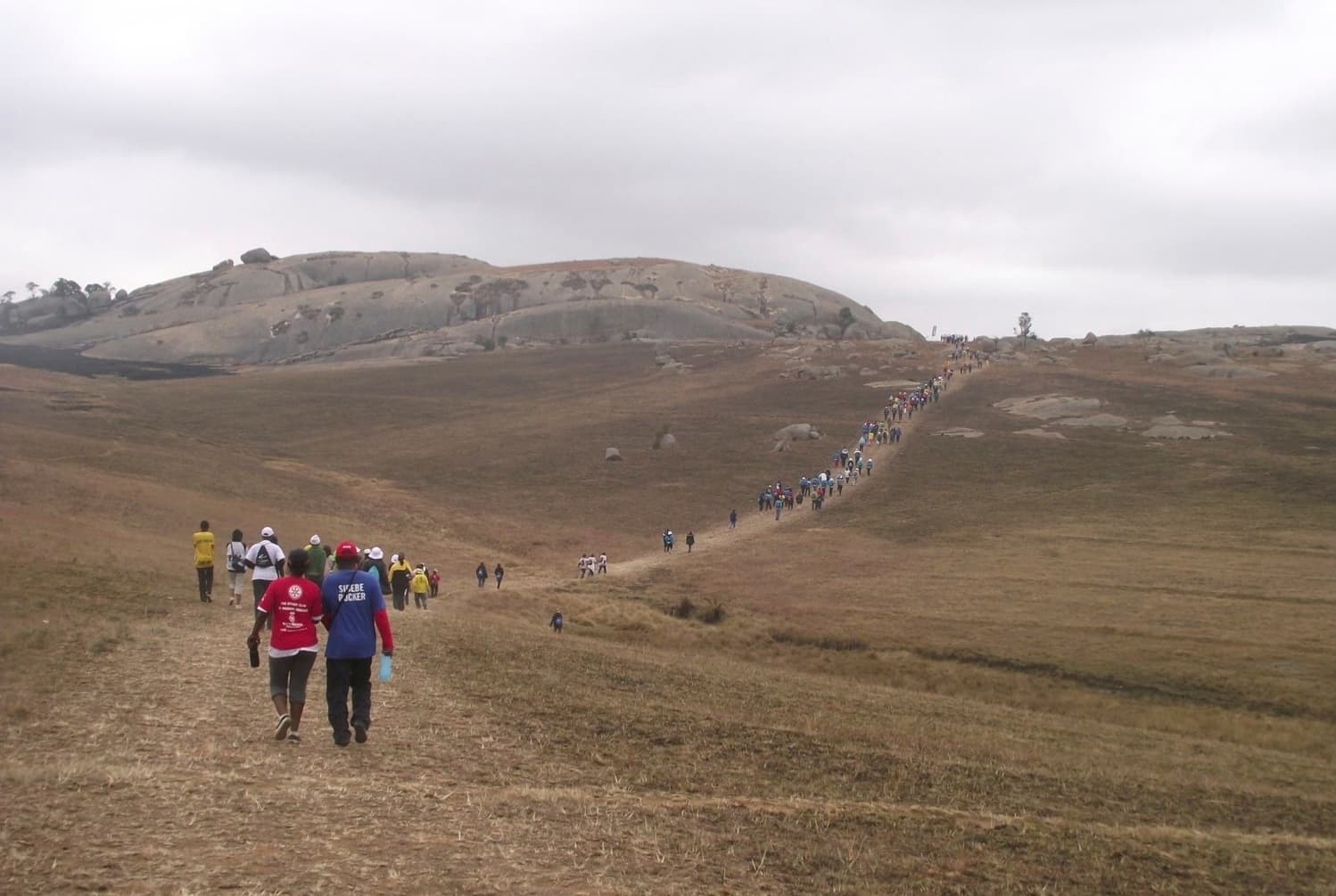
Geologists - scientists who study rocks - believe that Sibebe Rock formed deep underground about 540 million years ago. Over millions of years, wind and rain slowly wore away all the soil and softer rock around it, leaving this huge dome sitting on top of the landscape like an upturned mixing bowl.
The rock face is very steep and smooth in places, which makes the hike to the top an adventure for sporty visitors. The trail rises about 400 metres from the bottom to the summit. Parts of the route are so steep that hikers use ropes and must be careful where they place their feet.
Despite looking bare from a distance, Sibebe is actually home to many plants and small animals. Patches of grass cling to cracks in the rock, and colourful lizards dart across the warm granite surface. Aloe plants - which look like spiky green stars - grow in sheltered spots and flower bright orange in winter.
For the local Swazi people, Sibebe is more than just a rock - it is a landmark that has been part of stories and daily life for generations. Looking up at it from Mbabane, it is easy to understand why such a massive, ancient thing feels special.