
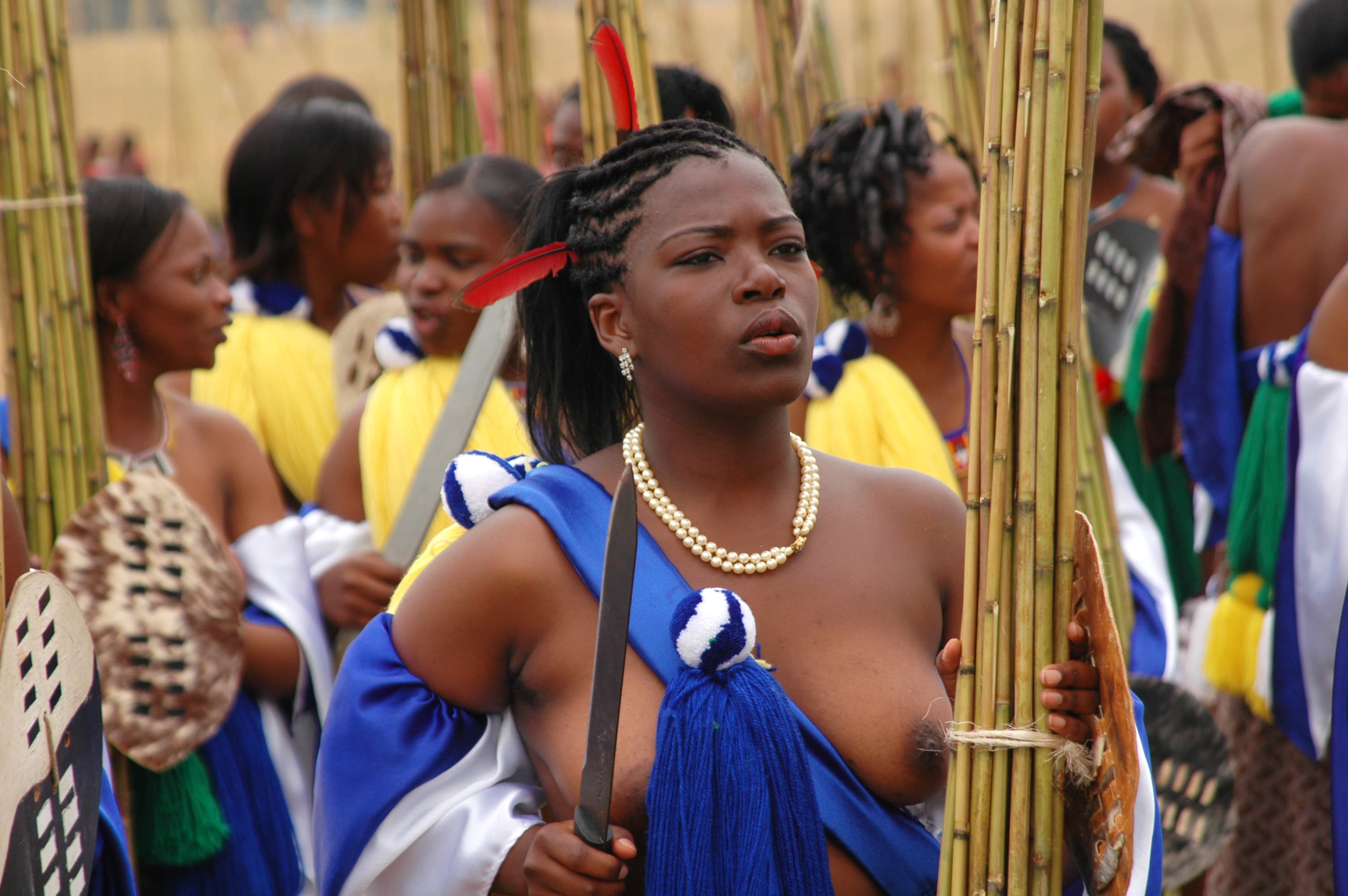
The word 'umhlanga' means 'reed' in siSwati. Reeds are tall, hollow grasses that grow along rivers and streams. Before the main ceremony, groups of girls walk to the nearest riverbeds and cut the reeds by hand - it is hard work, and the journey can be long. The reeds are then carried back and presented as a gift.
The day of the main procession is a spectacular sight. Participants wear colourful traditional clothing decorated with beads, and the beadwork patterns are often very detailed and beautiful. Groups from different parts of the country have their own distinctive colours and styles, so the procession is like a moving rainbow of outfits.
Music and dancing fill the air throughout the event. Girls and young women sing traditional songs and perform dances that have been passed down through generations. Watching tens of thousands of people moving and singing together creates an atmosphere of pure joy and pride.
The Reed Dance draws visitors from all over the world who come to see one of Africa's most vibrant cultural celebrations. For the participants, it is a time to meet friends from different areas, show pride in Swazi identity, and be part of something much bigger than themselves.