
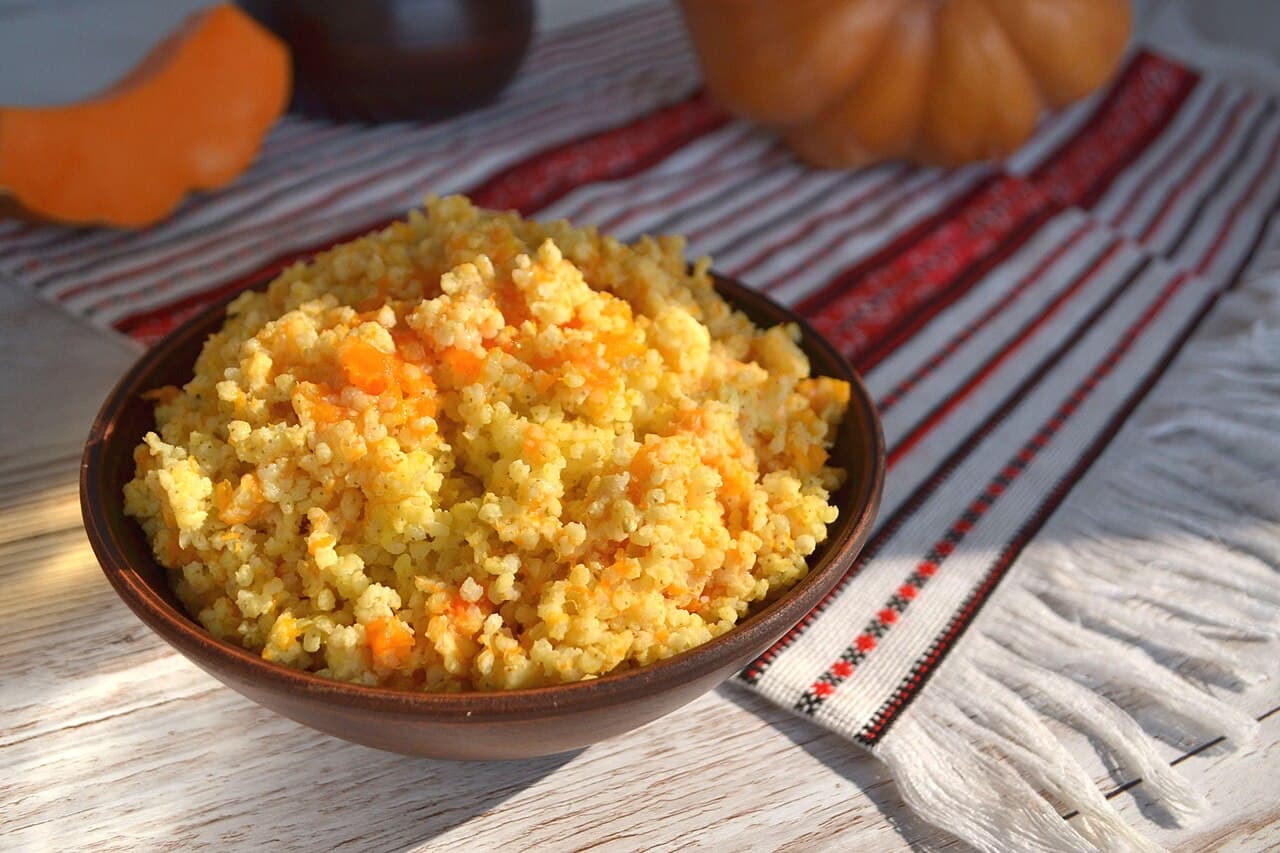
To make sidvudvu, pumpkin is first dried in the sun - a traditional way of preserving food that means you can enjoy pumpkin flavour even when pumpkins are not in season. Once dry, the pumpkin is ground into a fine powder, which keeps for a long time without going off.
The pumpkin powder is then mixed with maize meal (a flour made from ground maize, also called cornmeal) and cooked with water into a thick porridge. The result is a beautiful golden colour that comes entirely from the pumpkin - no food colouring needed!
Sidvudvu is often eaten for breakfast or as a side dish alongside a vegetable stew. It is filling and nutritious, providing energy for a busy day. In the past, dried foods like sidvudvu were very important in Eswatini because they could be stored for months, helping families through times when fresh food was hard to find.
Today sidvudvu is enjoyed as a connection to Swazi heritage. When children eat it, they are sharing the same taste that their grandparents and great-grandparents knew. Food is one of the strongest ways that culture is passed from one generation to the next.