
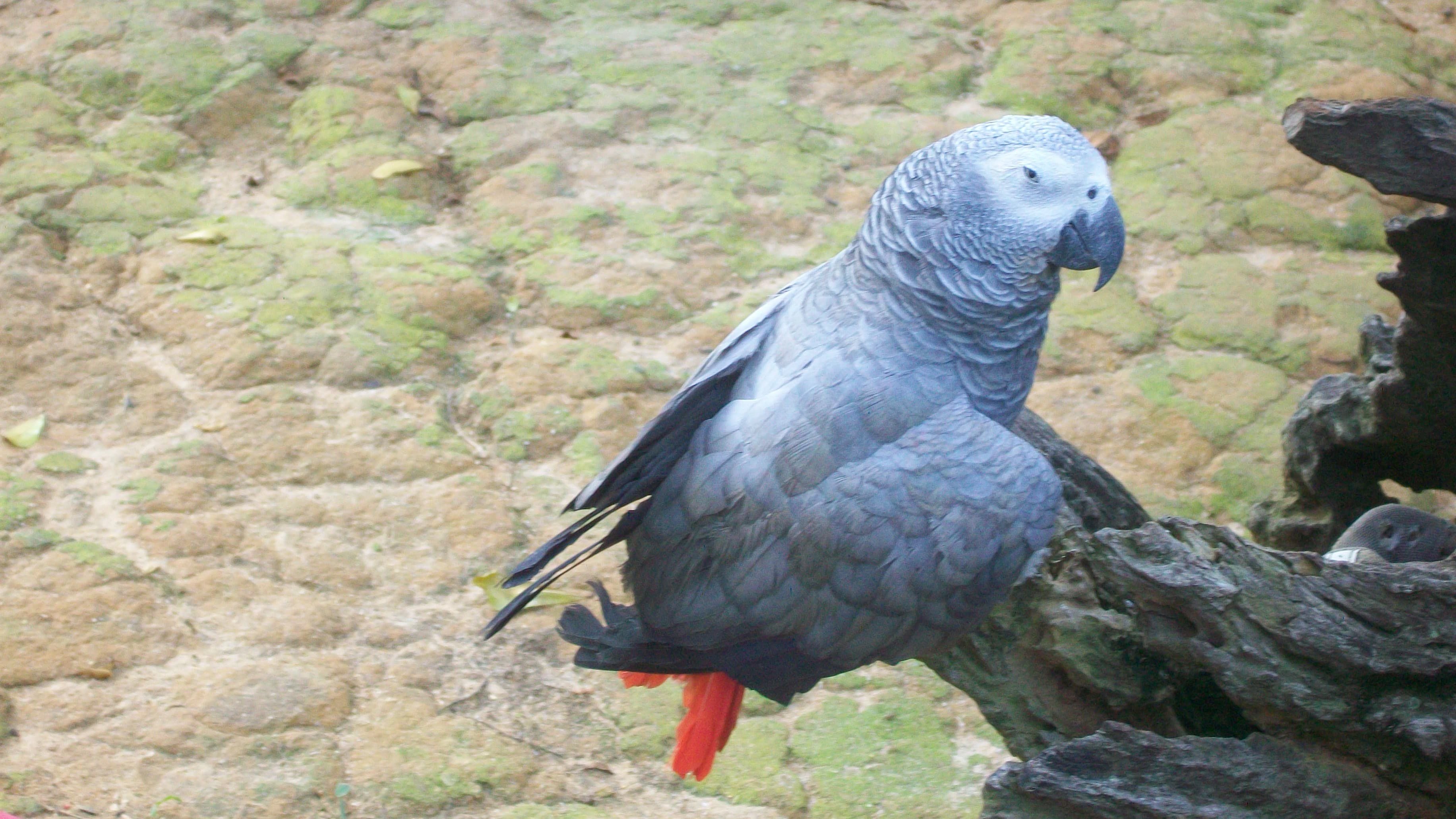
African greys are mostly covered in beautiful silver-grey feathers, with a striking bright red tail that flashes like a signal when they fly. They have strong, curved beaks - perfect for cracking open tough nuts and seeds. In the wild, they eat fruit, seeds, berries and leaves, often feeding high in the forest canopy.
Scientists have shown that African grey parrots can learn to use words correctly - not just repeat them. One famous parrot called Alex worked with a scientist called Dr Irene Pepperberg for over 30 years. Alex could name colours, shapes and materials, count small numbers and even say 'I'm sorry' when he felt he had made a mistake.
In the wild, African grey parrots are social birds that roost together in huge numbers at night, sometimes thousands in a single group of trees. They communicate using a complex mix of calls, whistles and mimicked sounds. Young parrots learn their calls from their parents and from the flock.
Gabon takes the protection of its parrots seriously. The country has large areas of forest where the birds can nest safely. African grey parrots need old, large trees with hollows to nest in, so protecting old-growth rainforest is essential for keeping their population healthy.