
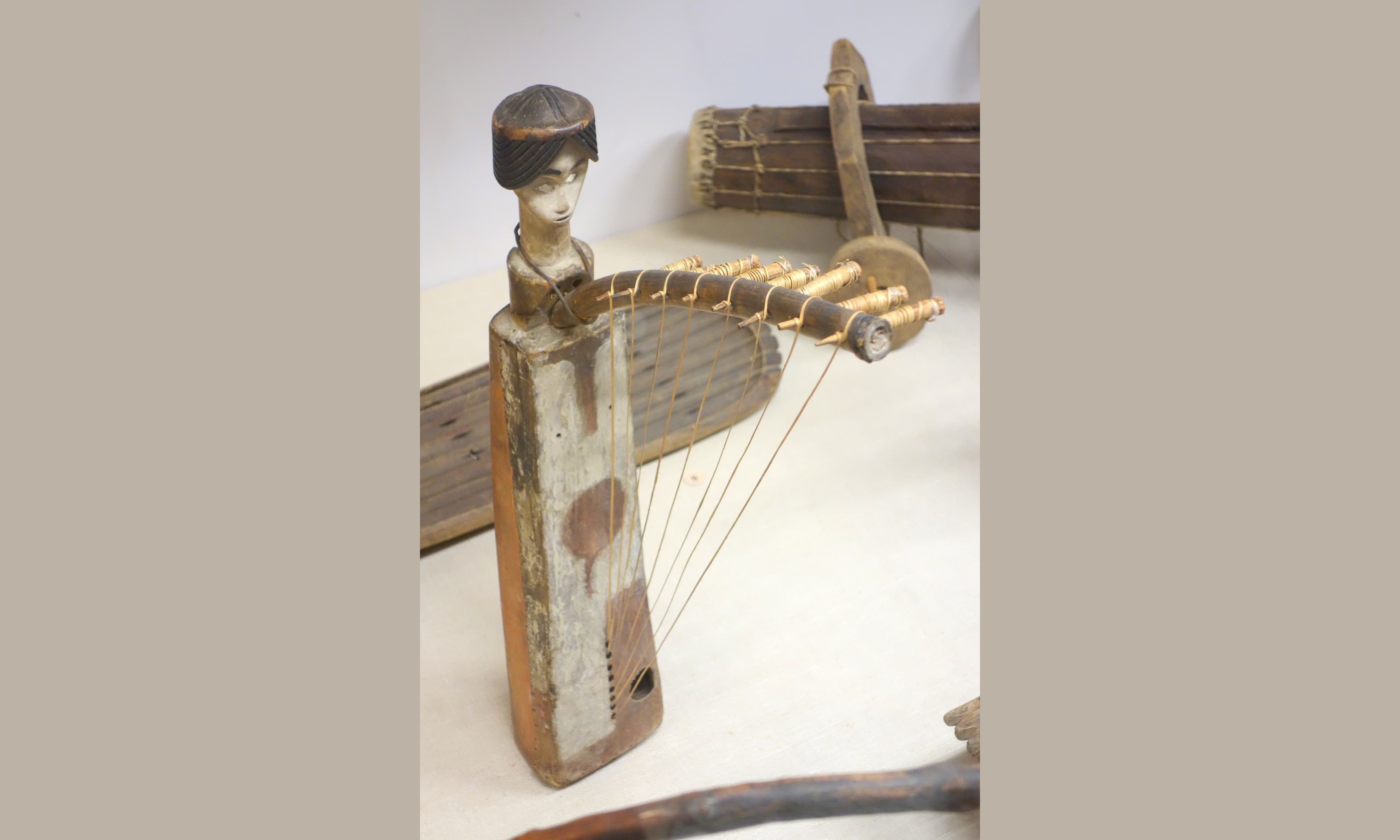
A mvet player is not just a musician - they are a storyteller, a historian and an entertainer all at once. Performances can last an entire night, with the player singing epic tales, plucking strings and shaking rattles attached to the instrument, while an audience calls back responses. Learning to play and recite properly takes many years of training.
The stories told through the mvet are called 'mvet epics'. They describe great heroes, battles, magical lands and extraordinary adventures. These stories have been passed down through generations by memory - a tradition called oral literature. Mvet players must memorise thousands of lines of song and story, like a living library.
The instrument itself is usually made from a stick of bamboo or raffia palm, with strings made from plant fibre. The resonator - the part that amplifies the sound - is made from a dry gourd. Different-sized strings produce different notes, and a skilled player can create melodies, rhythms and special sound effects all at the same time.
Today the mvet is recognised as part of the cultural heritage of several central African countries, and efforts are being made to teach younger generations so the tradition does not fade away. Some musicians are also mixing mvet with modern music, creating something entirely new.