
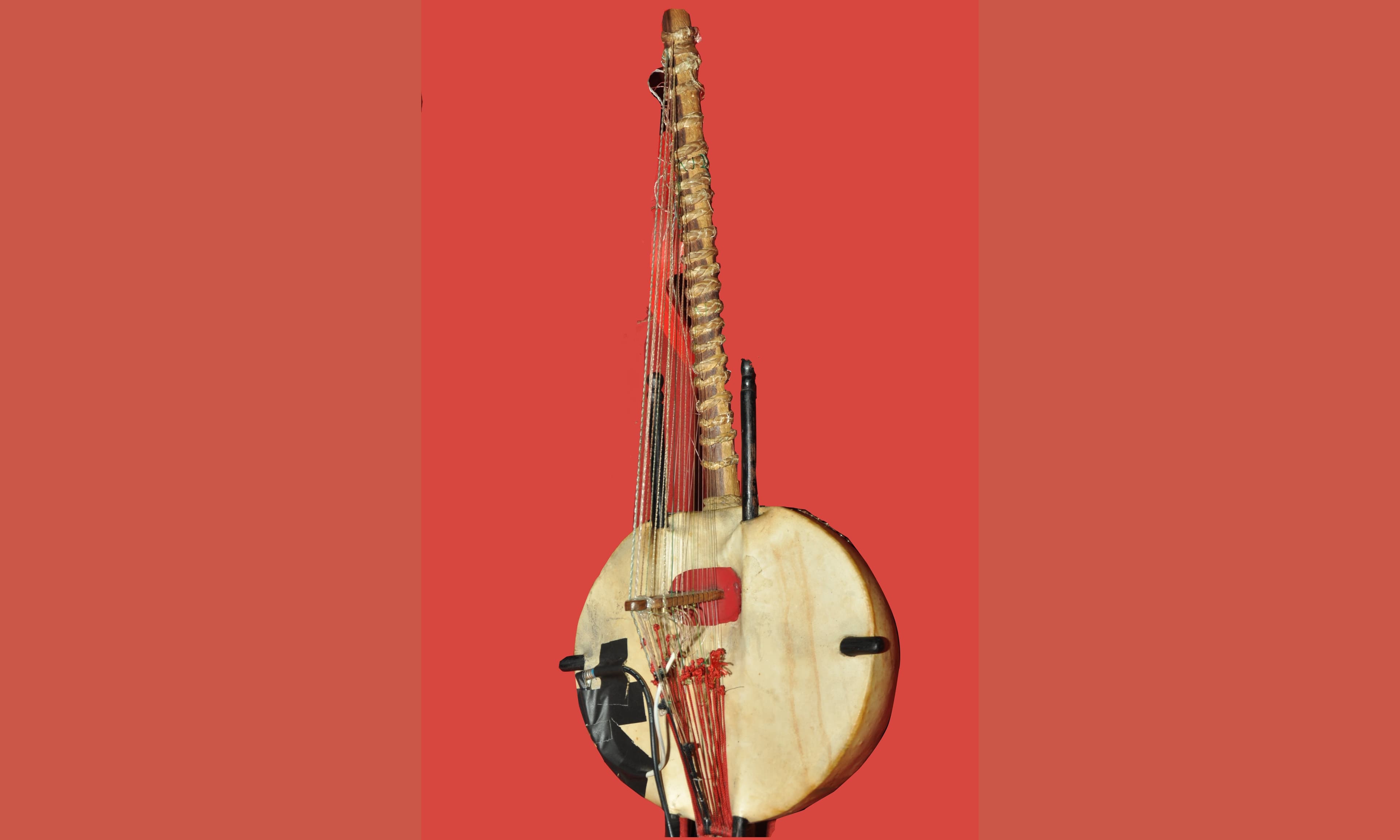
The kora is traditionally played by griots - musicians and storytellers who hold an important place in West African communities. Griots (also called jali in the Mandinka language) are the keepers of history. They remember and sing the stories, genealogies (family trees) and great events of their communities, passing knowledge from generation to generation through music and poetry.
One of the greatest kora players of all time was a Gambian musician called Foday Musa Suso, who was born around 1953 in Gambia. He learned to play from his family - kora playing is often passed from father to son within griot families. Foday Musa Suso went on to collaborate with musicians from all around the world, bringing the kora's unique sound to new audiences everywhere.
To play the kora, a musician holds the instrument upright with the gourd resting against the body. The two hands pluck different sets of strings at the same time - one hand plays the melody while the other plays a repeating pattern underneath. It takes years of practice to do this smoothly, and the music that results is astonishingly complex and flowing.
Today the kora is celebrated around the world and has been combined with jazz, classical music and electronic sounds by contemporary Gambian and Senegalese musicians. You can hear kora music at festivals, on streaming platforms and in concert halls from Banjul to Berlin.