
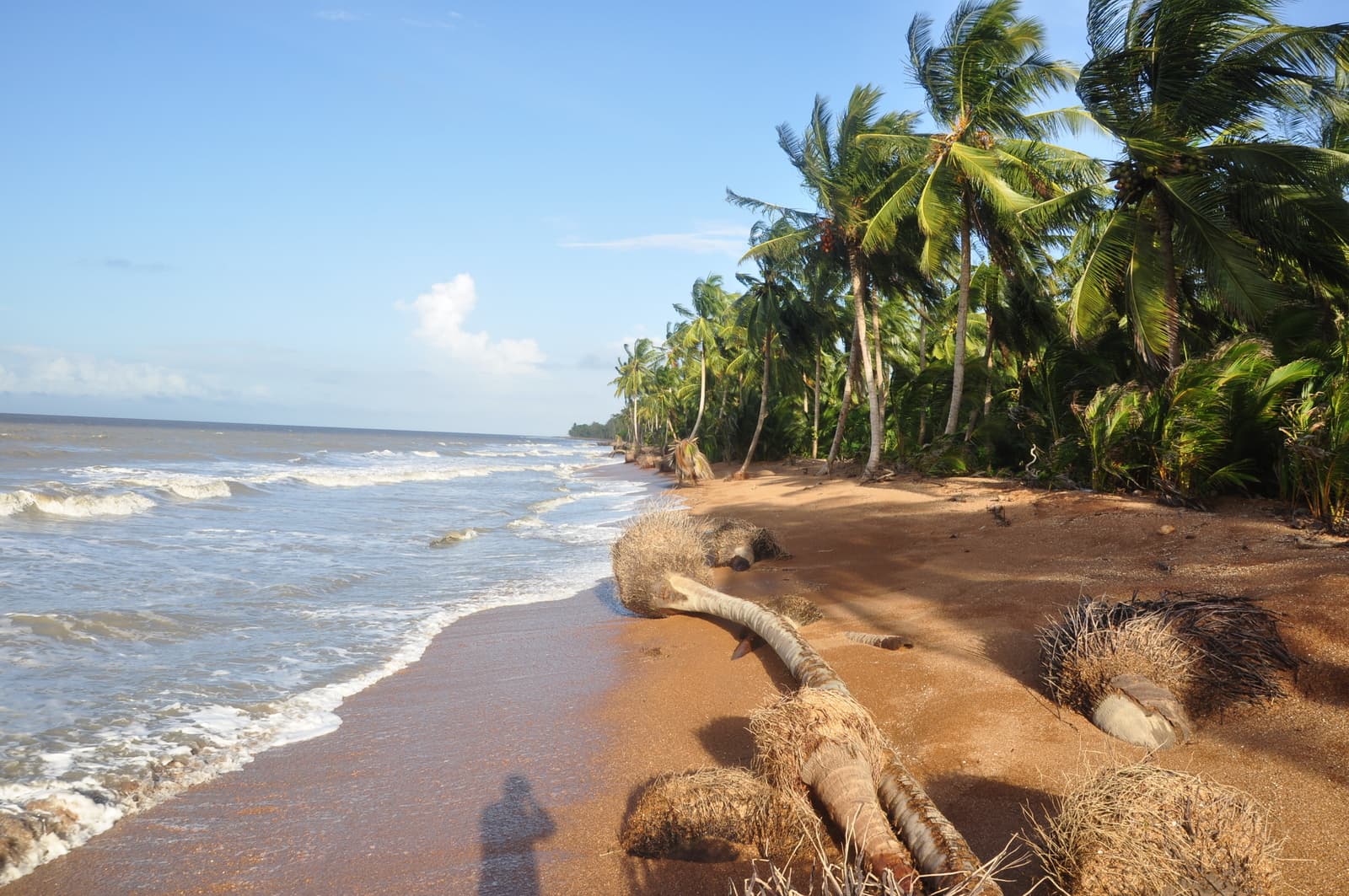
Four different species of sea turtle - leatherback, green, hawksbill and olive ridley - haul themselves up onto Shell Beach every year to lay their eggs in the sand. The leatherback is the largest, and can weigh as much as a small car. On a good night, you might see dozens of turtles on the beach at the same time, all going about the ancient business of nesting.
Shell Beach is so remote that there are no roads - you travel there by boat along canals and rivers, through thick mangrove forest. That remoteness is one reason the turtles keep coming back: there are no bright lights or buildings to confuse them, and the beach is quiet and safe. Rangers and local Arawak community members watch over the nesting areas around the clock.
Baby turtles hatch after about two months and make the scramble across the sand to the sea. Hundreds of tiny hatchlings spill out of each nest at once. Rangers make sure they reach the water safely. Scientists believe that female sea turtles return to the exact same beach where they were born when they are grown up and ready to lay their own eggs.
Shell Beach is also home to manatees in the rivers nearby, and scarlet ibis - brilliantly red birds - roost in the mangroves at dusk, turning the trees the colour of flames.