
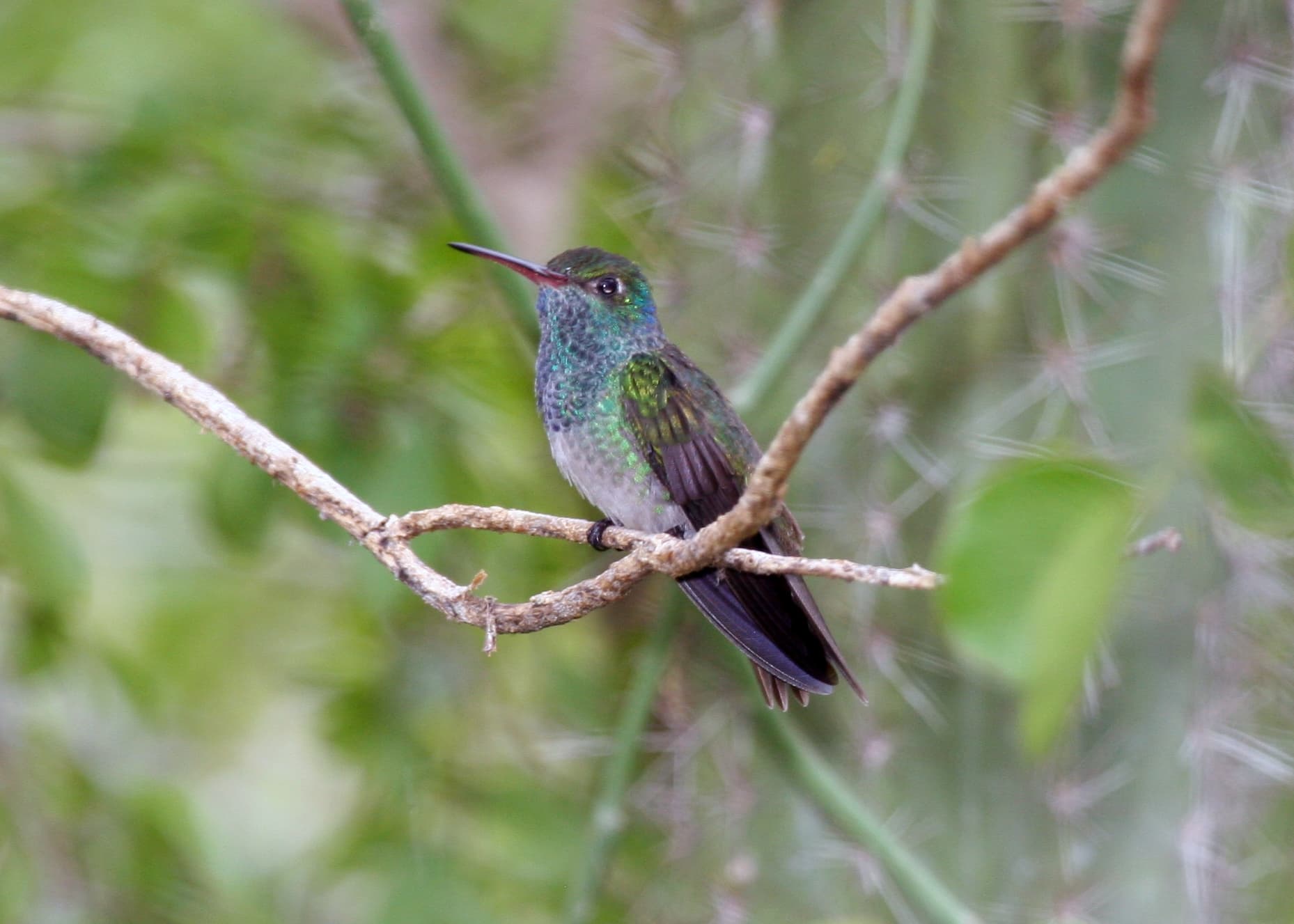
Hummingbirds are the only birds that can fly backwards - and the Honduran emerald is no exception. Its wings beat up to 60 times per second, making that familiar humming sound. Its heart beats roughly 1,200 times per minute when flying - about 15 times faster than yours.
The Honduran emerald is classified as critically endangered, which means it is very rare and needs protection. It lives in a small area of dry tropical forest in the Aguan Valley in northern Honduras. This is a very different habitat from the cloud forests and rainforests that cover much of the country.
Despite its tiny size - about 9 centimetres long and weighing just 4-5 grams (lighter than two paperclips!) - the Honduran emerald is a fierce defender of its feeding territory. It will chase off much larger birds to keep its favourite flowers for itself.
Hummingbirds are incredibly important pollinators. As the emerald drinks nectar, it gets pollen on its beak and carries it to the next flower, helping plants reproduce. Some plants in its dry forest home can only be pollinated by this one species.
Conservation groups in Honduras are working to protect the small dry forests where the Honduran emerald lives, and local communities help by monitoring nest sites. In 2006, researchers found new populations of the bird in areas where it had never been recorded before - a wonderful surprise.