
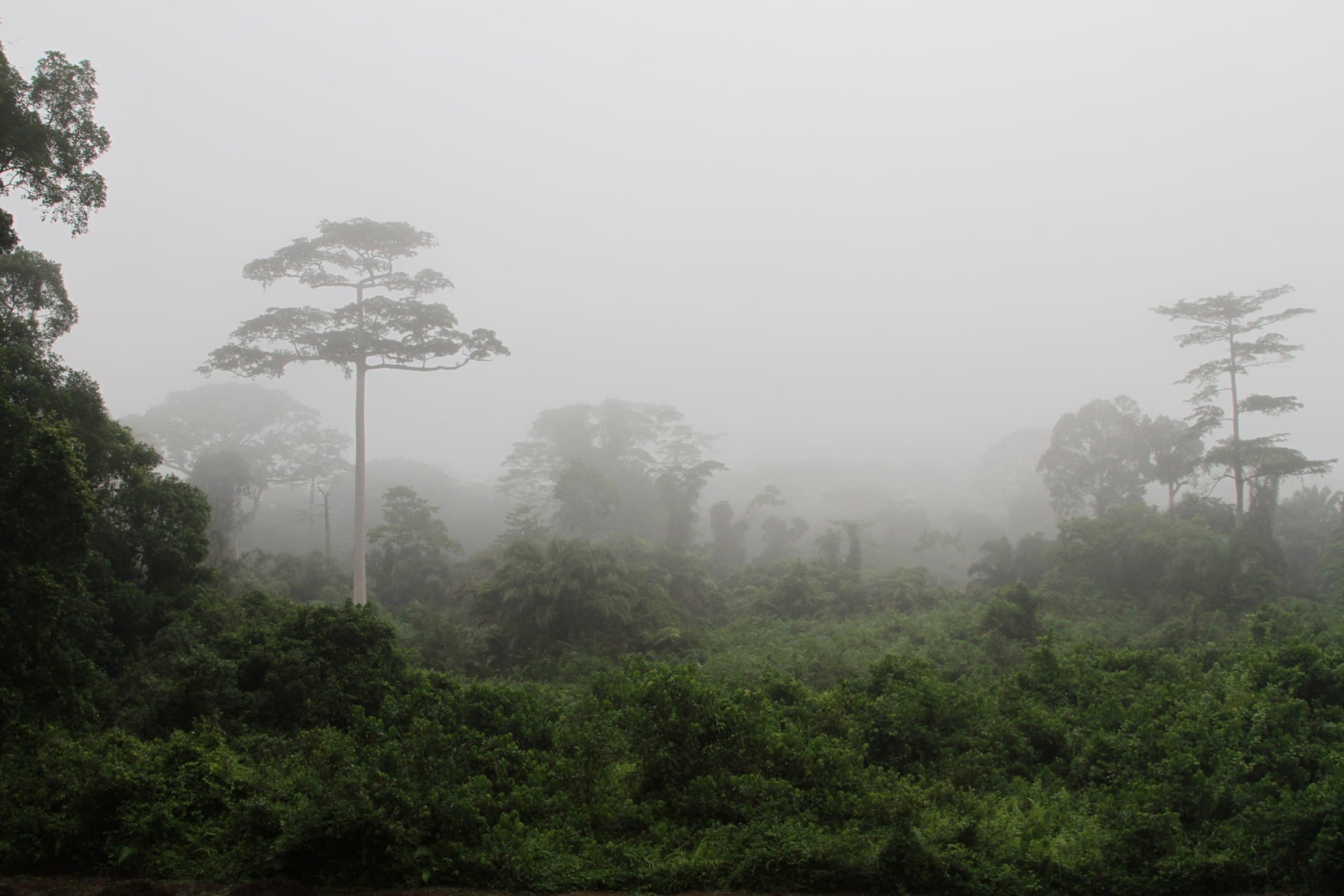
Classroom lesson · Taï National Park · 🇨🇮 Ivory Coast

Taï National Park

One of Africa's last great ancient rainforests

Photo · Wikimedia Commons

What is it?

Taï National Park is a vast ancient rainforest in the south-west of Côte d'Ivoire. It is a UNESCO World Heritage Site, which means the whole world has agreed it is so special it must be protected. The forest has been growing for millions of years and is home to hundreds of animals found nowhere else on Earth.

Tell me more

The forest in Taï is primary rainforest – that means it has never been cut down and replanted. Trees here are hundreds of years old and grow so tall and thick that the canopy blocks out much of the sunlight, keeping the forest floor cool and dark even on the hottest days.

Taï is especially famous for its chimpanzees. Scientists have studied the chimpanzees here for decades and discovered that they use stone tools to crack open nuts – a skill they teach their babies. This makes the Taï chimpanzees one of the best-studied groups of animals in the world.

The park is also home to pygmy hippos, forest elephants, and dozens of species of birds with brilliant colours. The sounds of the forest are extraordinary – frogs, insects, birds, and the distant calls of chimps all mix together into a constant, buzzing, chirping symphony.

In the classroom

Walk your class through this in 15 minutes.

Talk together

Discussion prompts

  1. 01Why might scientists want to study the same group of chimpanzees for many years rather than just a few weeks?
  2. 02A primary rainforest has never been cut down. Why do you think that makes it extra special compared with a younger forest?
  3. 03If you spent a day in Taï, what sounds do you think you would hear?
  4. 04What does it mean to protect a place for the whole world? Who should be in charge of looking after it?
Try this

Classroom activity

Draw a cross-section of a rainforest from the ground to the top of the canopy. Label at least four layers (forest floor, understorey, canopy, emergent layer) and draw one animal that might live in each layer. Use reference pictures to make your animals accurate.