
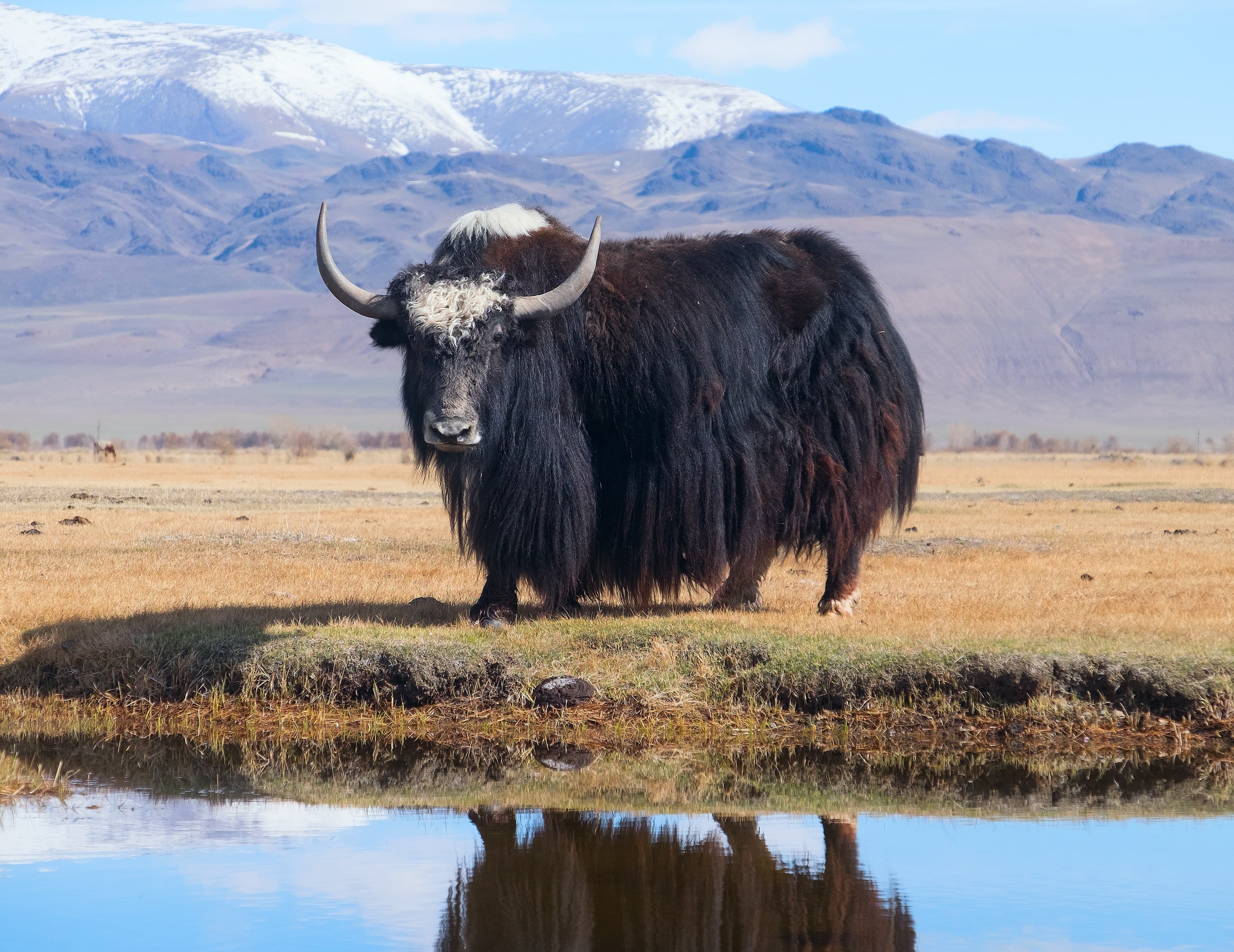
Yaks are perfectly adapted to life in the mountains. Their lungs are much larger than ordinary cattle, which helps them breathe properly in thin mountain air. Their blood is also special - it carries oxygen more efficiently so they can trot up steep mountain paths at 4,000 metres above sea level without getting tired or out of breath.
A yak provides almost everything a herding family needs. Yak milk is richer and creamier than cow's milk and is used to make butter, cheese and a slightly fermented drink. Yak wool is extremely warm and is spun and woven into blankets, rope and clothing. The thick yak skin can be used to make bags and containers. Even dried yak dung is used as fuel for fires when there is no wood in the mountains.
Yaks are also strong enough to carry heavy loads along mountain trails, making them useful as pack animals - a bit like a mountain taxi. They are sure-footed on rocky paths and completely untroubled by the cold and snow that would stop other animals in their tracks.
Young yaks are called calves, and they are playful and curious animals. A fully grown male yak can weigh nearly a tonne. Despite their huge size and impressive curved horns, domesticated yaks are generally gentle around people they know.