
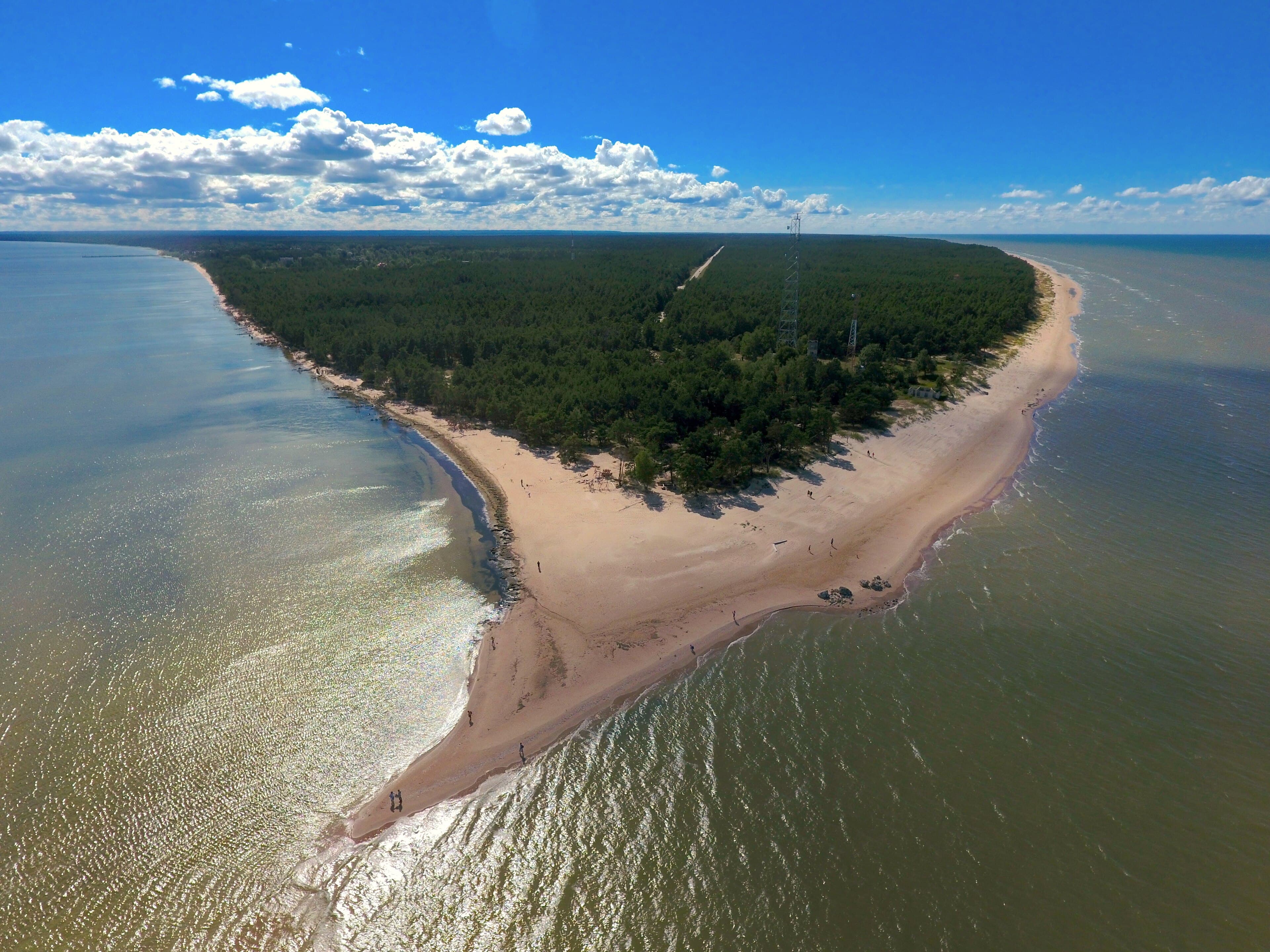
Standing at the cape feels like standing on the edge of two different seas at once. The Baltic Sea on the west is open and big, with longer waves. The Gulf of Riga to the east is smaller and calmer. Where they meet, the water can get quite choppy and swirly as the two sets of waves bump into each other - a bit like when you push two streams of water from a tap together.
The cape is part of the Slītere National Park, one of Latvia's protected wild areas. The beaches around Cape Kolka are wide and made of pale, almost white sand with dunes behind them covered in twisted pine trees bent by the sea wind.
Every year huge numbers of migrating birds fly over Cape Kolka on their way between their summer homes in northern Europe and their winter homes much further south. Bird-watchers come from all over Europe in autumn to count the birds as they pass overhead - sometimes hundreds of thousands in a single day.
Because the cape sticks so far out into the sea, it has always been a tricky spot for sailing ships. Old sailors called it 'Cape Fear' because of the hidden sandbanks just below the surface. Today there is a lighthouse to help ships find their way safely.