
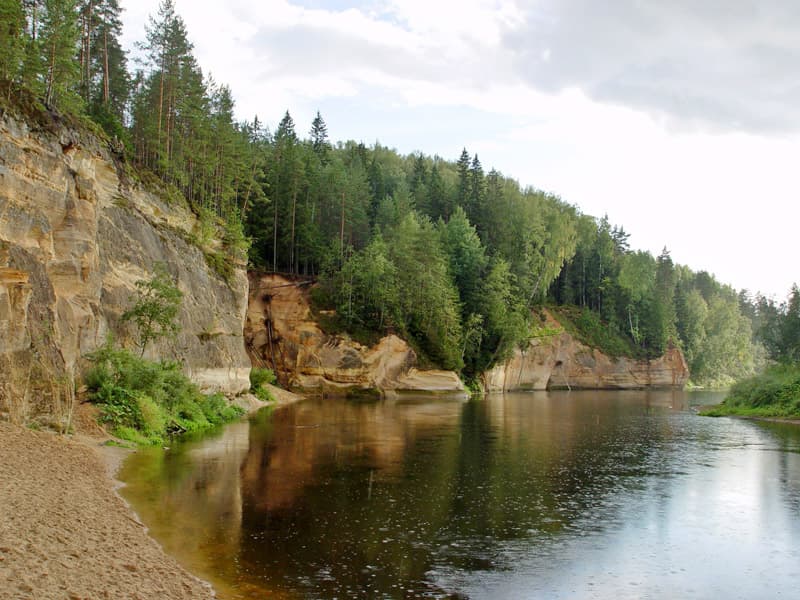
The park is named after the Gauja River, which carved out a deep, winding valley over thousands of years. The river's gentle but persistent work shaped the sandstone cliffs and created hidden caves that people have been exploring and sheltering in for centuries.
Oak, pine and silver birch trees cover most of the park. In spring the forest floor turns white and purple with wild flowers, and in autumn the leaves turn every shade of gold, orange and red - many Latvians say it is one of the best places in the country to see autumn colour.
Animals that are hard to spot elsewhere in Europe can be found here if you are patient and quiet. Brown bears, lynx, beavers, deer and wild boar all make their home in the park. The Gauja valley is also a corridor for wolves moving between Estonia and Lithuania.
There are also two medieval castles inside the park - Turaida and Cēsis - which means you can go hiking through ancient woodland and then come out to stand in the ruins of a castle all in the same afternoon. Not many national parks can offer that.