
Classroom lesson · Wildlife · 🇱🇷 Liberia

African Forest Elephant

A smaller, gentle elephant that lives in the rainforest

Photo · Wikimedia Commons

What is it?

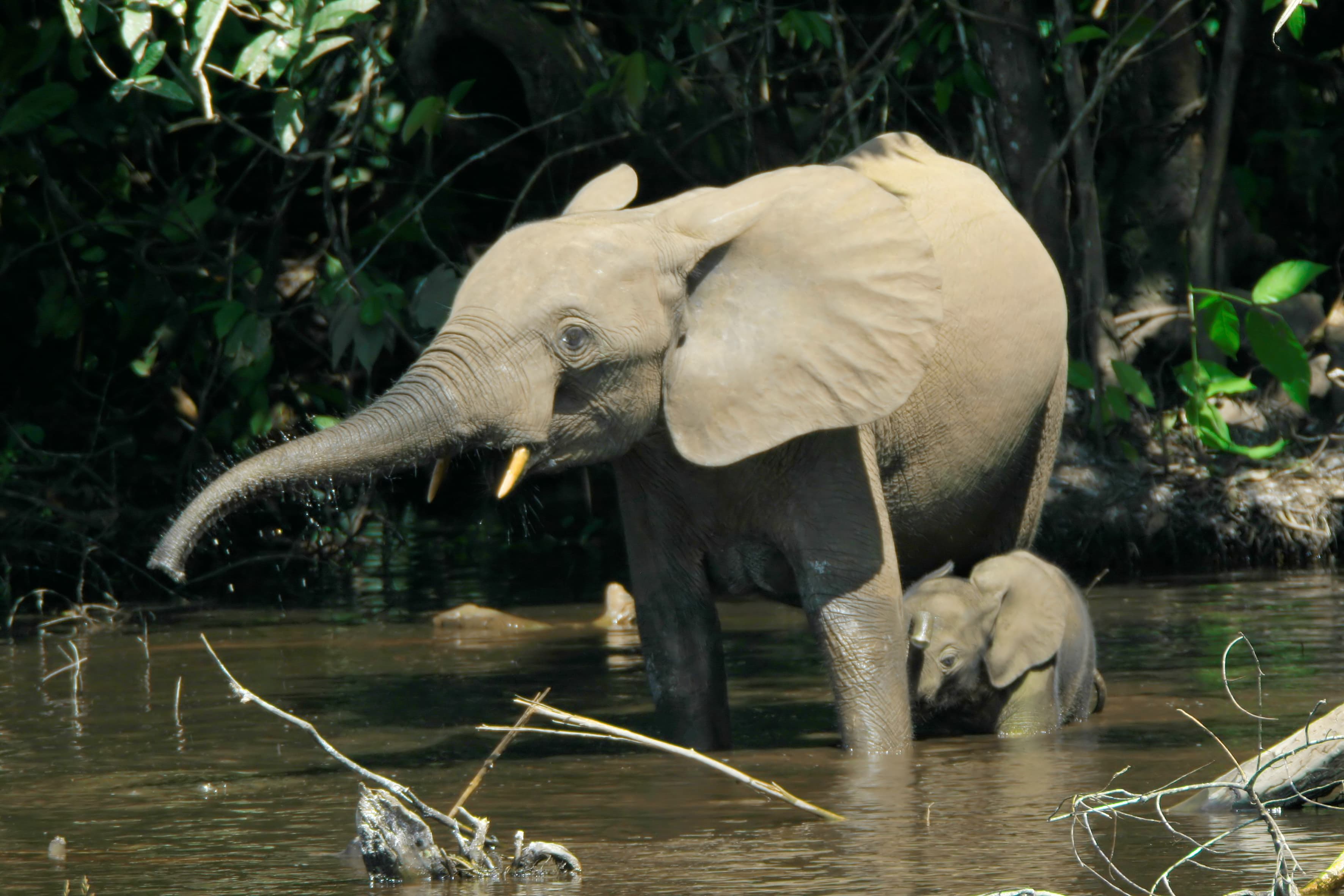
The African forest elephant is a separate species from the big savanna elephant most people know from pictures. It is smaller, with straighter, thinner tusks and rounder ears, and it lives deep inside West and Central African rainforests. Sapo National Park in Liberia is one of the few places where you can still find them living wild.

Tell me more

Forest elephants are wonderfully well adapted to life in the rainforest. Their narrower bodies help them push through dense trees and undergrowth without getting stuck, and their straighter tusks are useful for digging into the soil to reach mineral salts that supplement their diet. They eat fruit, leaves, bark and roots — whatever the forest offers.

These elephants are sometimes called the 'gardeners of the forest' because of the incredible role they play in spreading seeds. When an elephant eats fruit and then walks many kilometres through the jungle, the seeds come out in its dung far from the parent tree. Many of West Africa's big rainforest trees depend almost entirely on forest elephants to spread their seeds this way.

Forest elephants are shy and very quiet compared with savanna elephants — they can move through the forest with barely a sound despite weighing over 2,000 kilograms. They communicate using very low, rumbling calls that humans can barely hear, which travel long distances through the dense vegetation. Scientists call these sounds 'infrasound'.

In the classroom

Walk your class through this in 15 minutes.

Talk together

Discussion prompts

  1. 01What does it mean to call an elephant a 'gardener'? How do you think this helps the forest?
  2. 02Why might straight tusks be more useful in a forest than the curved tusks of a savanna elephant?
  3. 03If elephants disappeared from the forest, what might happen to the trees over time?
  4. 04Can you think of other animals that help spread seeds and act as 'gardeners' in nature?
Try this

Classroom activity

Become a forest gardener! Plant a seed in a small pot of compost. Write a daily journal for two weeks recording what you observe. Then write a paragraph explaining how an elephant does this job in the wild — at a much bigger scale.