
Classroom lesson ยท Wildlife ยท ๐Ÿ‡ฑ๐Ÿ‡ท Liberia

Leatherback Turtle

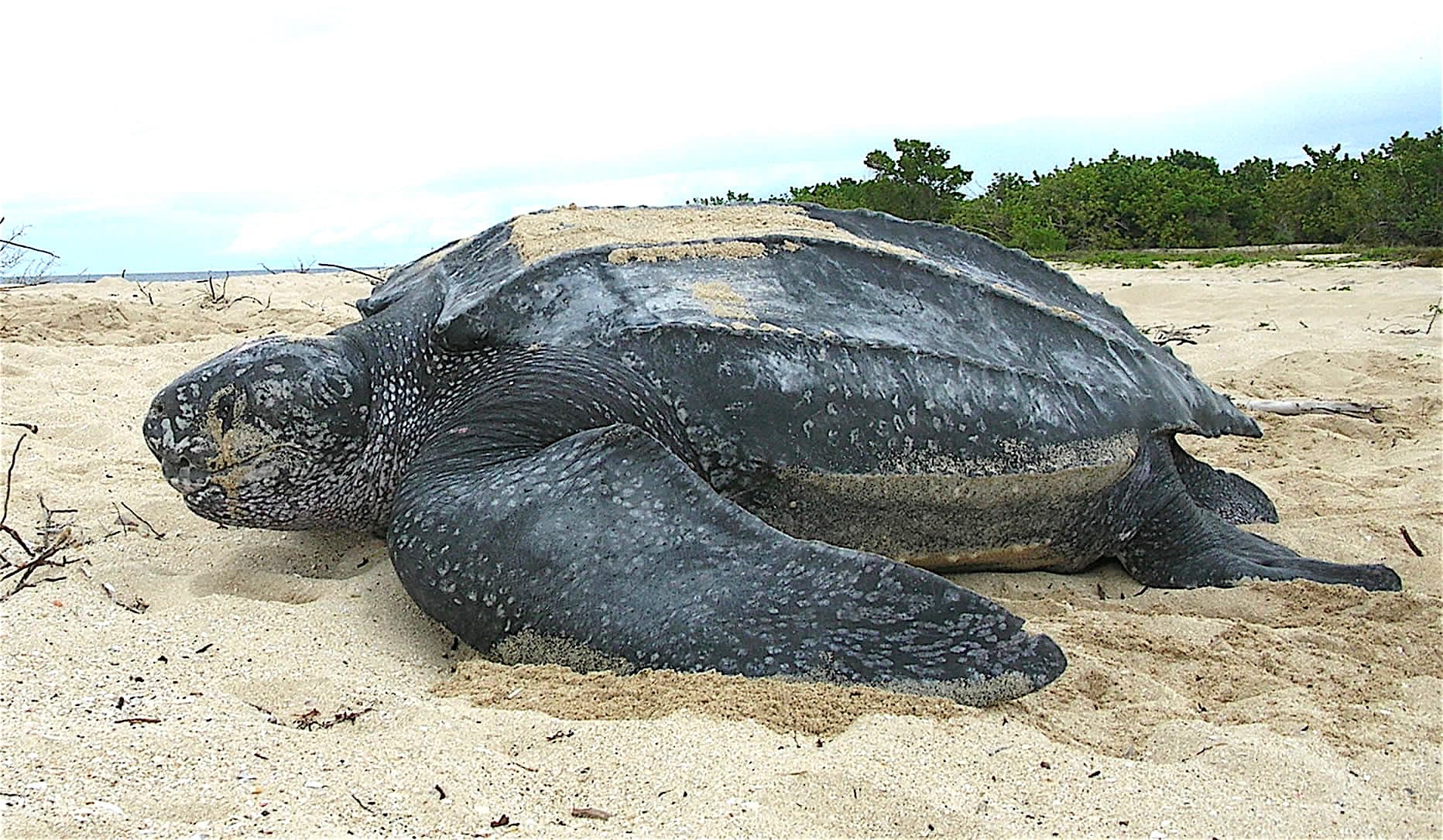
The world's largest turtle, nesting on Liberia's beaches

Photo ยท Wikimedia Commons

What is it?

The leatherback turtle is the biggest turtle in the world and one of the oldest types of animal on the planet โ€” sea turtles very similar to today's leatherbacks have been swimming the oceans for over 100 million years. Every year, female leatherbacks come ashore on Liberia's beaches at night to lay their eggs in the warm sand.

Tell me more

Leatherbacks are enormous: they can grow up to 2 metres long and weigh up to 900 kilograms โ€” about the same as a small car. Unlike other sea turtles, they do not have a hard shell. Instead they have a tough, leathery skin stretched over a flexible, rubbery carapace, which is where they get their name.

A leatherback turtle's life is one long journey. They swim thousands of kilometres across the open ocean, diving to depths of over 1,000 metres โ€” deeper than almost any other air-breathing animal. They feed almost entirely on jellyfish. Because jellyfish have very little nutrition, a leatherback has to eat enormous quantities โ€” sometimes its own body weight in jellyfish each day.

When a female leatherback comes ashore to nest, she hauls herself up the beach using her powerful front flippers. She digs a deep hole in the sand with her back flippers, lays around 80 eggs, carefully covers them and then heads straight back to the sea. About two months later, the tiny hatchlings dig their way out and scramble towards the moonlit water. It is one of nature's most magical sights.

In the classroom

Walk your class through this in 15 minutes.

Talk together

Discussion prompts

  1. 01Leatherback turtles have survived for 100 million years. What do you think makes them so successful?
  2. 02Why do you think female turtles return to the same beach where they were born to lay their eggs?
  3. 03If you were a tiny hatchling turtle, what challenges would you face trying to reach the ocean?
  4. 04What can people who live near nesting beaches do to help protect leatherback turtles?
Try this

Classroom activity

Draw the lifecycle of a leatherback turtle: egg in the nest, hatchling on the beach, young turtle in the ocean, adult at sea, adult returning to nest. Write one sentence under each stage explaining what happens. Then compare its lifecycle with a frog's lifecycle โ€” how are they similar or different?