
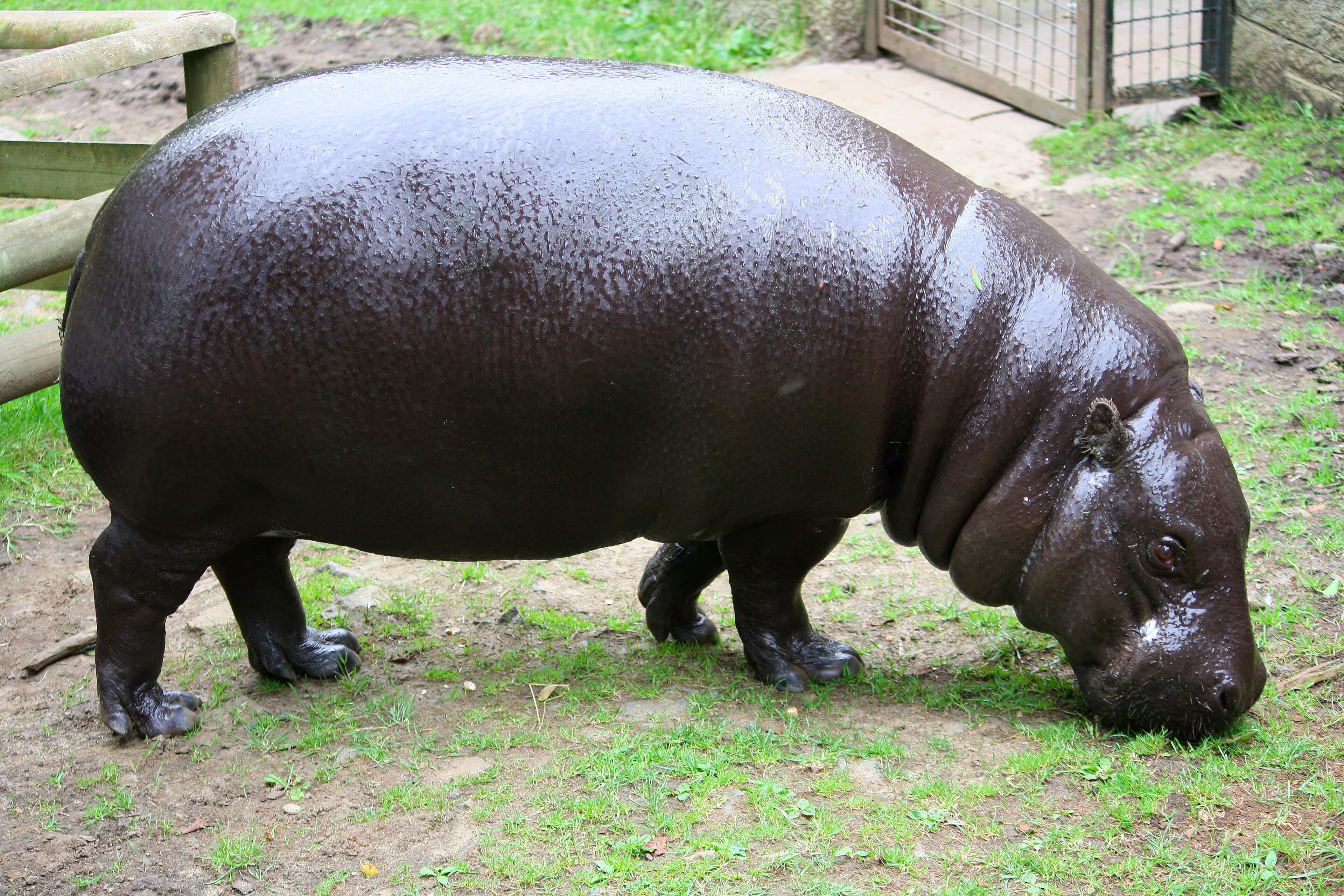
Pygmy hippos are much smaller than common hippos: they weigh about 270 kilograms, while a common hippo can weigh 3,000 kilograms - more than ten times as much! Despite the size difference, they are closely related and share the same barrel-shaped body, wide nostrils and thick hairless skin.
Instead of living in big rivers in the open grassland like common hippos do, pygmy hippos prefer the shadowy streams of the deep rainforest. They are mostly active at night, walking along forest paths and riverbanks looking for fallen fruit, roots, grasses and leaves to eat. During the day they rest in the water or under dense undergrowth.
Their skin produces a pinkish, oily liquid that acts like a natural sunscreen and moisturiser - both hippo species do this. Scientists used to think the oily substance was sweat or even blood, but it actually helps protect their sensitive skin from drying out and may help prevent infections too. It makes their skin look shiny and slightly rosy in the sunlight.
Because pygmy hippos are so rare and so shy, scientists still have a lot to learn about them. Camera traps set up in Liberian forests have captured some of the best images and video ever taken of wild pygmy hippos going about their lives - sniffing the air, wallowing in streams and even playing.