
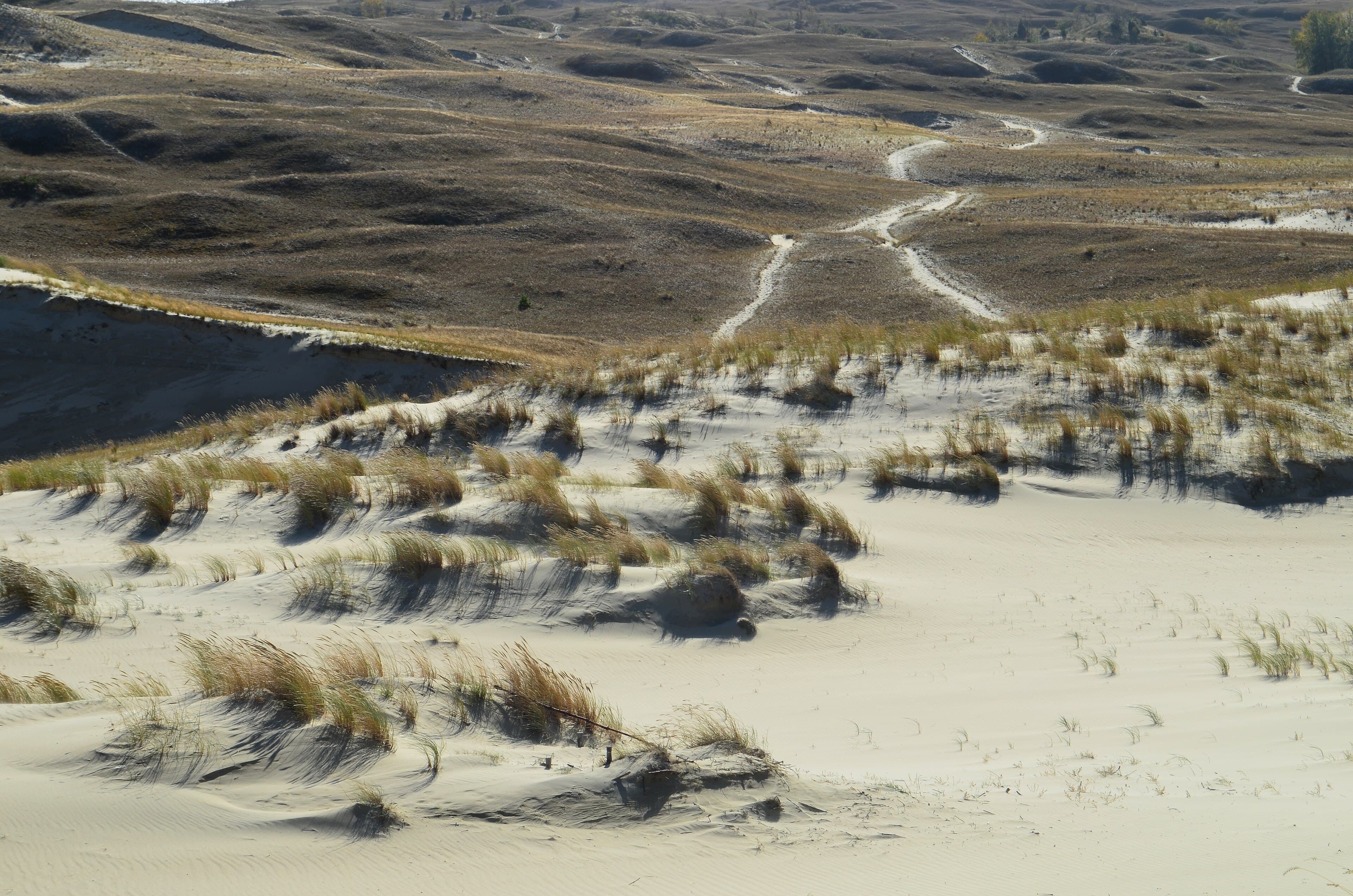
Sand dunes on the Curonian Spit can be up to 70 metres tall, making them some of the highest moving sand dunes in Europe. They are called 'wandering dunes' because the wind blows them forward by several metres every year. Centuries ago, entire villages were buried under the sand as dunes crept forward - today people plant grass and trees to slow the dunes down.
The spit is also a famous stopping point for birds. Every year, millions of migratory birds rest here as they travel between their summer homes in the far north and their winter homes in the south. Scientists set up nets and gently catch, measure, and tag the birds before releasing them - it is one of Europe's oldest bird-ringing stations.
The villages along the spit are charming and quiet, with wooden houses painted in bright colours. Fishermen have lived here for centuries, and you can still find smoked fish being sold at little market stalls near the harbour. The smell of smoked eel drifting through the village streets is part of the experience.
Like Vilnius Old Town, the Curonian Spit is a UNESCO World Heritage Site - so it is recognised as a precious place belonging to all the people of the world. Visitors walk barefoot on the warm sand and watch the sun set over the lagoon in shades of pink and gold.