
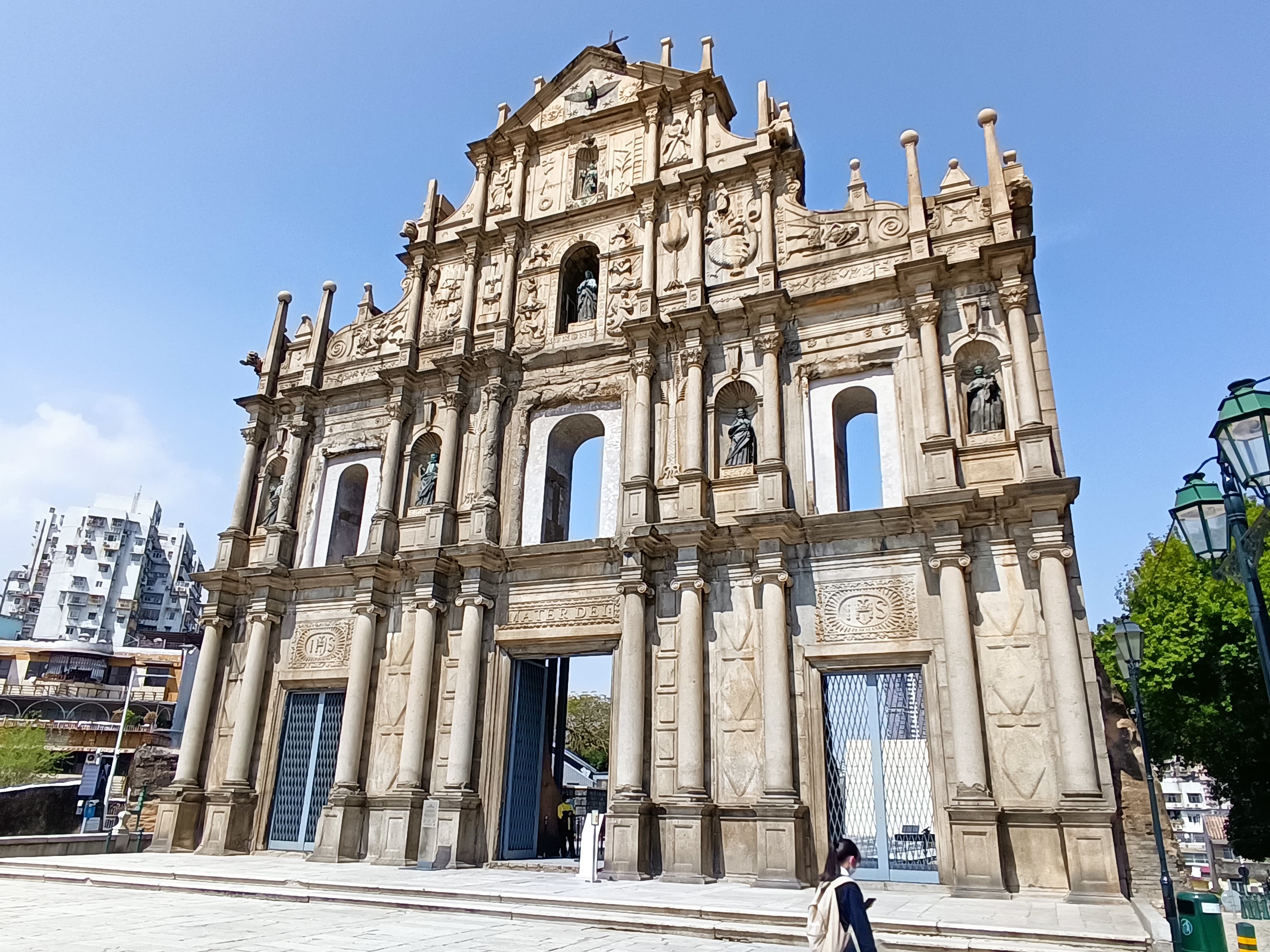
Imagine a city where a bright yellow Portuguese church stands right next to a red-and-gold Chinese temple. That is exactly what you find in Macau's historic centre. It happened because traders from Portugal arrived in the 1500s and lived peacefully alongside the local Cantonese community for many generations. The two cultures borrowed ideas from each other and built something brand new together.
Walking through the streets feels like flipping between two picture books at once. You might step across blue-and-white azulejo tiles - the painted ceramic tiles typical of Portugal - and then look up to see a curved Chinese roofline decorated with ceramic fish. The colours everywhere are vivid: ochre yellow, sky blue, terracotta red and gleaming white.
The historic centre also hides little courtyards called 'pátios'. These shady spots were places where families gathered, children played and merchants traded goods. Some still have original stone fountains from hundreds of years ago. Many buildings now house museums, galleries and pastry shops.
About thirty buildings and eight public spaces make up the UNESCO site. They include temples, churches, a library, a garden and an old fort. No single style wins - the whole point is the blend, and architects from around the world visit just to study how the two traditions mixed so naturally.