
Classroom lesson Β· Senado Square Β· πŸ‡²πŸ‡΄ Macau

Senado Square

A wavy mosaic plaza at the heart of Macau

Photo Β· Wikimedia Commons

What is it?

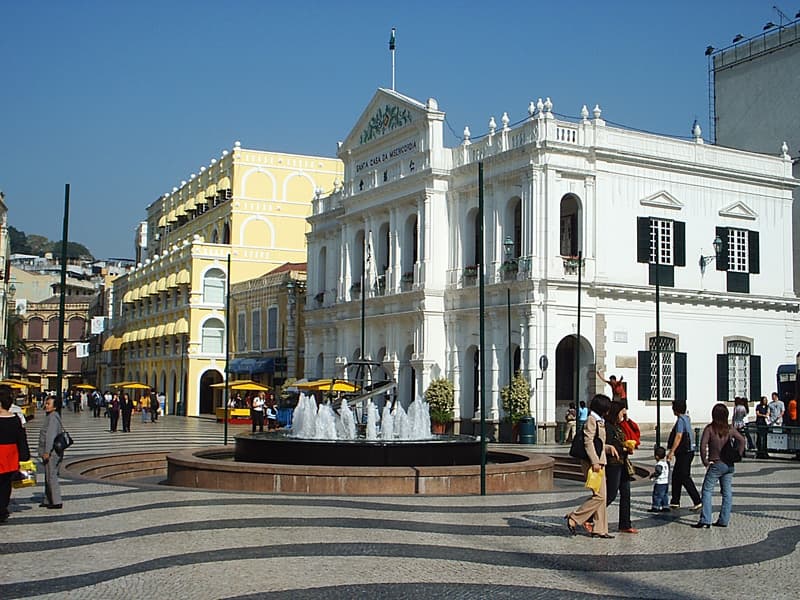
Senado Square is the central public square of Macau, and the first thing most visitors notice is the ground β€” it is completely covered in a flowing black-and-white wave pattern made from tiny stone cubes called cobblestones. The same wavy mosaic style is found in Lisbon, Portugal, which shows how strongly the two cities are connected. Colourful pastel buildings in yellow, pink and green surround the square on all sides.

Tell me more

The wave pattern on the ground is not painted on β€” it is made from thousands of small stones called 'calΓ§ada portuguesa', or Portuguese cobblestones. Each stone is placed by hand, one at a time, to create the flowing design. It is a bit like a giant puzzle on the ground, and skilled workers must plan the pattern carefully before laying a single stone.

The square itself is quite large β€” roughly the size of three or four tennis courts β€” and acts as a kind of outdoor living room for Macau. On ordinary days, people stop there to eat ice cream, take photos, or sit on the low walls and watch the world go by. On festival days, performers, lanterns and food stalls fill every corner.

The buildings around the square are painted in bright shades typical of Portuguese architecture. Many of them have shuttered windows and ornate plaster decorations around the doors and rooflines. Looking straight across the square, at the far end, the old Senate building with its green-and-white tiled facade is often the first building children photograph.

The word 'Senado' means 'Senate' in Portuguese, and a senate is a place where important local decisions were discussed. The square was used for public meetings and announcements for centuries. Today it is simply a great place to stand at the centre of everything Macau has to offer.

In the classroom

Walk your class through this in 15 minutes.

Talk together

Discussion prompts

  1. 01The ground in Senado Square is a work of art that people walk on every day. Can you think of other examples where art is part of everyday life rather than hanging in a gallery?
  2. 02Why might a city want to keep the same design traditions (like mosaic cobblestones) even after hundreds of years?
  3. 03If you were designing a public square for your town, what would you put on the ground and what colours would you paint the buildings?
Try this

Classroom activity

Create a small mosaic on paper. Draw a wave shape in pencil, then fill it in by sticking small squares of torn black and white paper inside the lines β€” leaving tiny gaps between squares to look like grout. Compare your finished mosaic with a photo of Senado Square.