
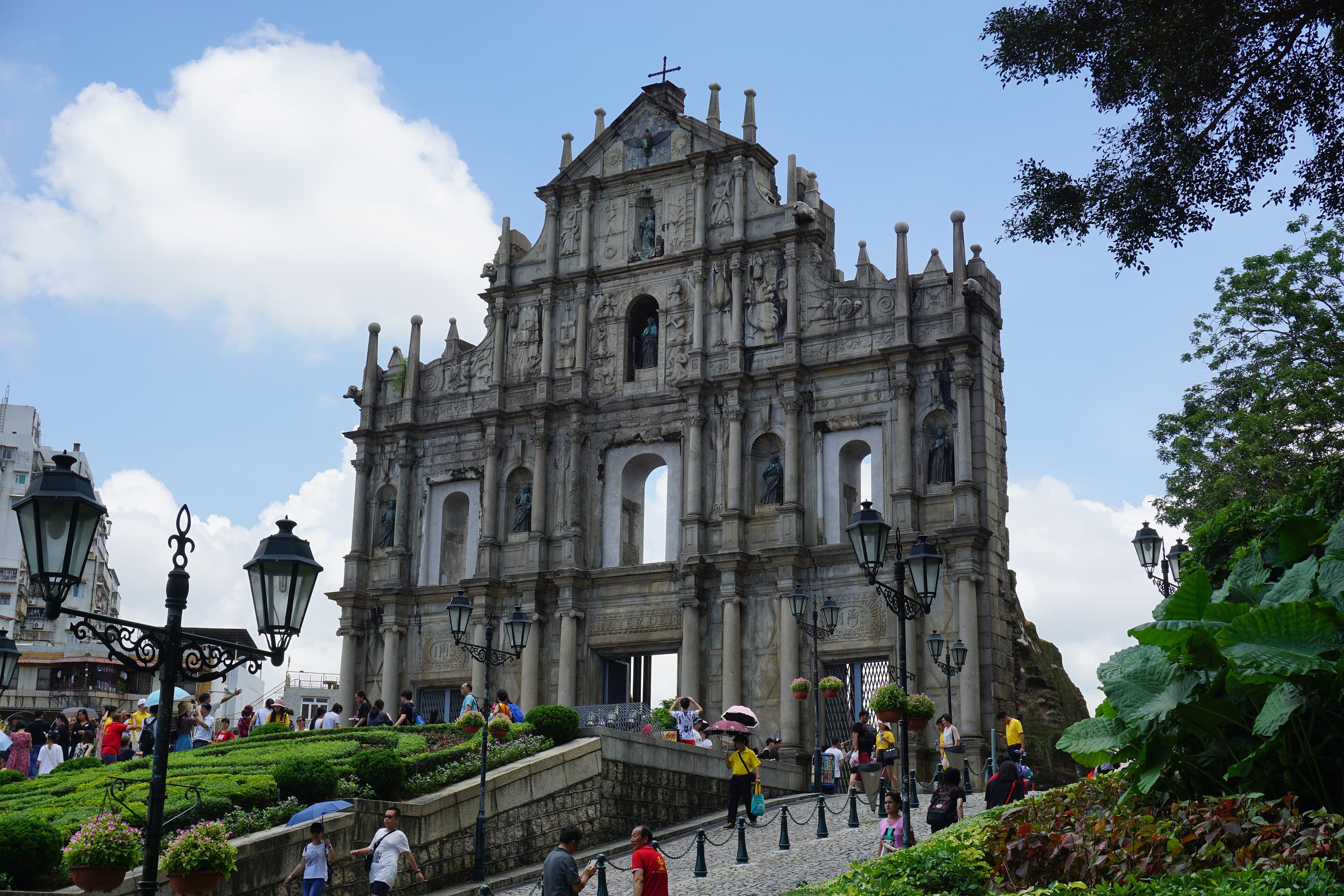
When builders designed the original church, they filled the stone front with pictures and carvings that told stories. The carvings include flowers, ships sailing on waves, a skeleton (which was a common symbol in European art at the time, meaning treasure is more important than things that don't last), mythical animals, and a statue of a woman standing on a dragon - a mix of European and Chinese imagery side by side in stone.
The facade is divided into five rows of carvings, almost like a giant stone storybook. At the very top is a dove with sunbeams. Below that come angels, saints, and scenes from the sea. Craftsmen from different countries added their own details, so eagle-eyed visitors can spot where Japanese, Chinese and Portuguese carving styles appear on the very same wall.
Today, a museum and historic site sit behind the facade. An underground crypt beneath the steps contains a small collection of old bones from early missionaries, displayed respectfully in glass cases. The stairs leading up to the facade are a favourite meeting point for students, tourists and local families.
Although often called 'ruins', the facade itself is in excellent condition - maintained carefully by Macau's preservation teams. It is one of the most photographed spots in all of Asia, and at night, floodlights make the carved stone glow gold against the dark sky.