
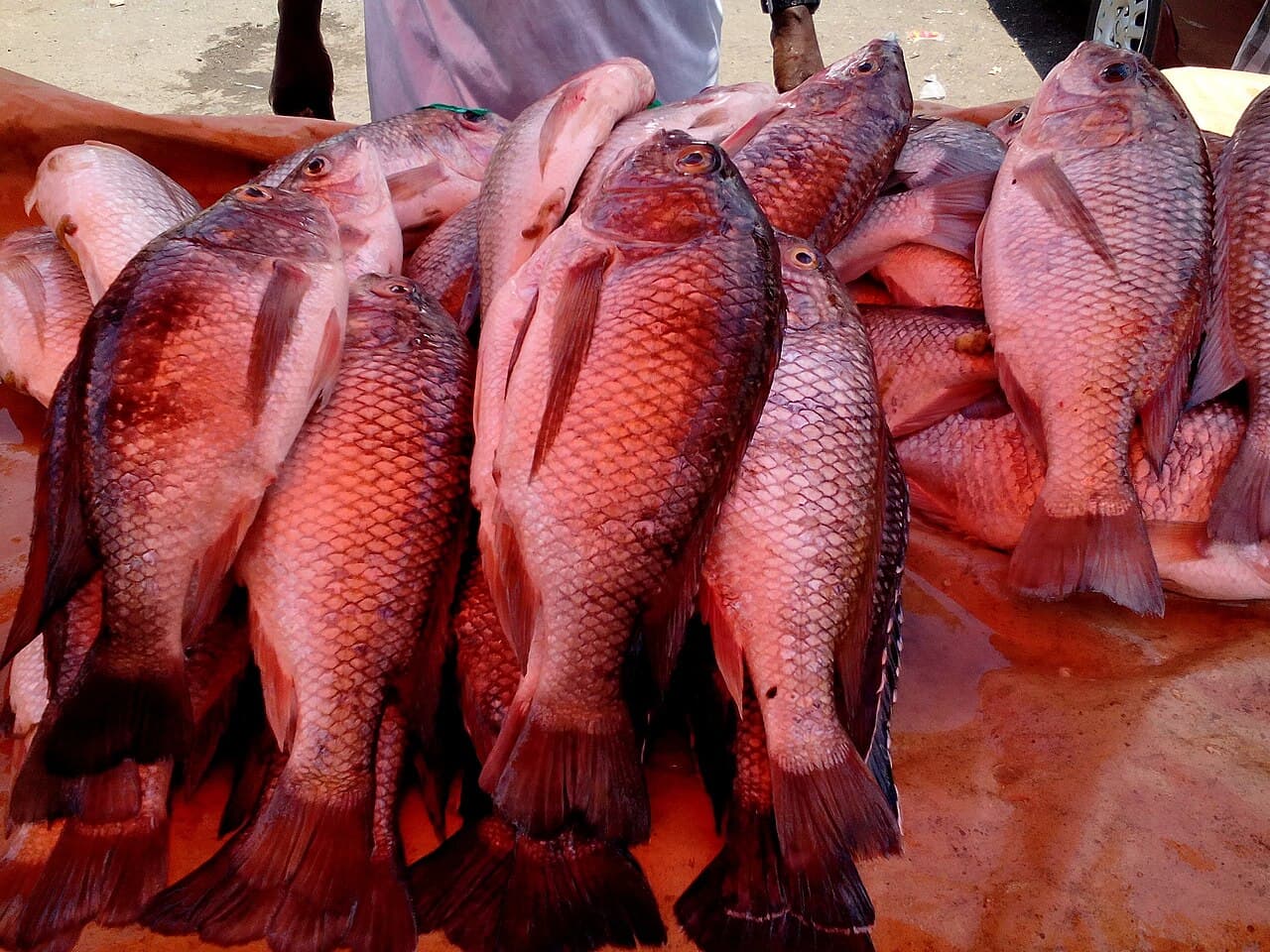
Chambo belongs to the Oreochromis family of tilapia-related fish. It can grow to about 40 centimetres long and has silver-grey scales that flash in the sunlight. Fishermen set out in their wooden canoes at dawn, casting nets into the cool morning water, and return in the morning with their catch. The sight of canoes coming in loaded with silvery chambo is a classic Lake Malawi scene.
The most popular way to cook chambo is to clean the whole fish, rub it with salt and sometimes spices, then grill it slowly over hot charcoal. As it cooks, the skin crisps up and the flesh inside becomes flaky and tender. It is usually served with nsima and ndiwo (vegetables), making a complete and nutritious meal.
Chambo fishing supports thousands of families along the lakeshore. Fish markets in towns like Mangochi and Nkhata Bay are busy and buzzing from early morning, with fresh chambo laid out on tables or hanging dried in the sun. Dried chambo (called usipa or dried chambo depending on the type) can be stored for longer and is used in cooking throughout Malawi.
Scientists and conservation groups work with fishing communities to make sure chambo stocks stay healthy. Overfishing can reduce the number of fish in the lake, so there are rules about the size of nets used and the times of year for fishing. Healthy fish populations mean families can keep enjoying chambo for generations to come.