
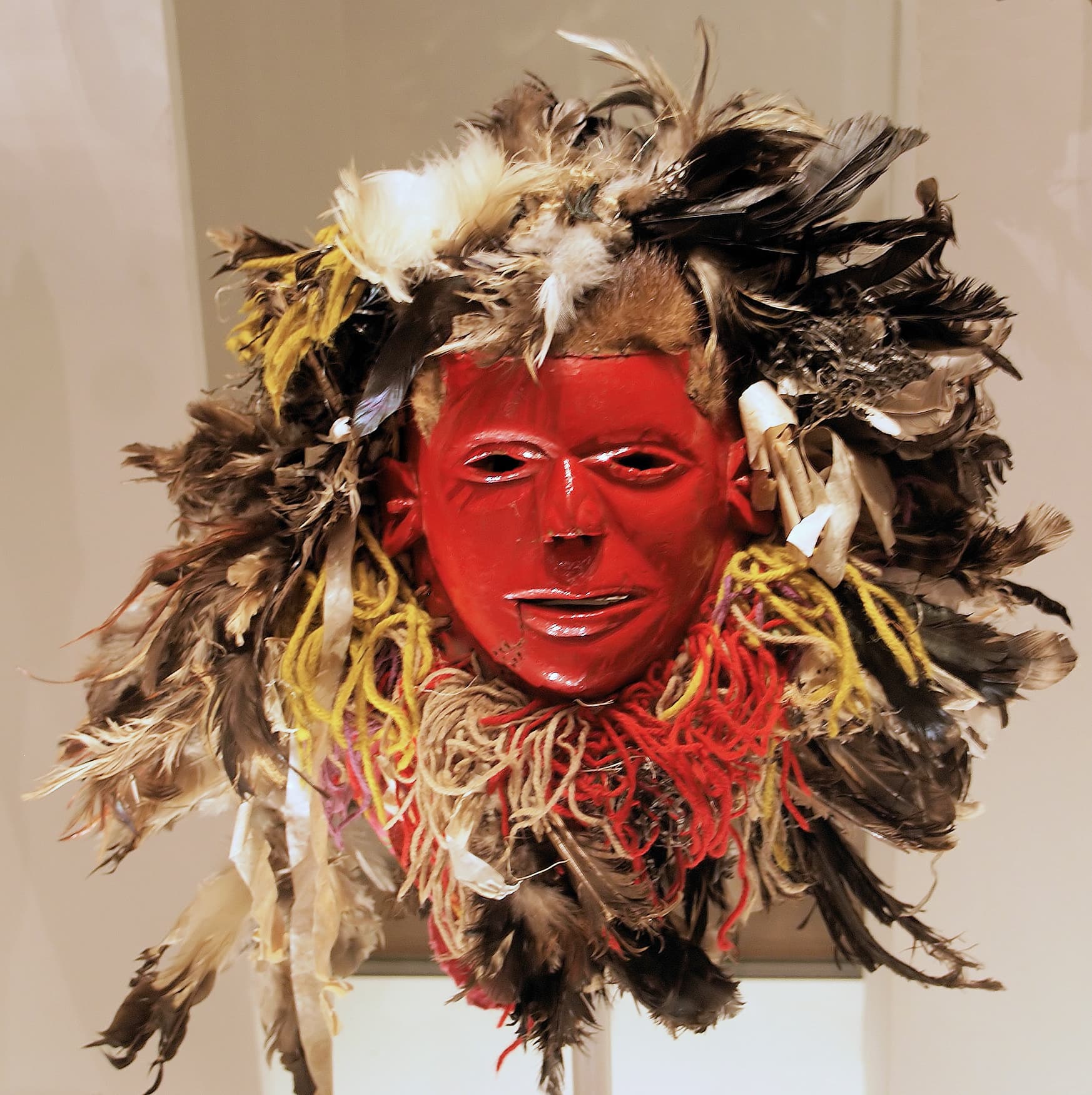
The name 'Gule Wamkulu' means 'the great dance' in the Chewa language. Performers are called nyau and are members of a secret society that has kept the tradition alive for hundreds of years. Each mask and character has a specific name, story and meaning - some represent animals, some ancestral spirits, and some moral lessons about how to live well.
The costumes are astonishing to see. Some masks are tiny and delicate; others are enormous towering structures made of straw and wood, sometimes taller than two adults. Performers move, leap and spin in ways that seem impossible given the size and weight of their costumes. The energy and colour of a gule wamkulu performance is something people never forget.
Drumming is central to the dance. Teams of drummers keep complex rhythms going for hours as the nyau performers respond to the beat. The drums used are called chiwoda and are often decorated with paint or carvings. The combination of costume, movement and drumming creates an immersive, dramatic spectacle.
Today gule wamkulu is performed at major celebrations and festivals, and schools in Malawi learn about it as part of their cultural education. While the secret society aspects are kept private, the public performances are a shared moment of pride and joy for whole communities - a living link between the present and the distant past.