
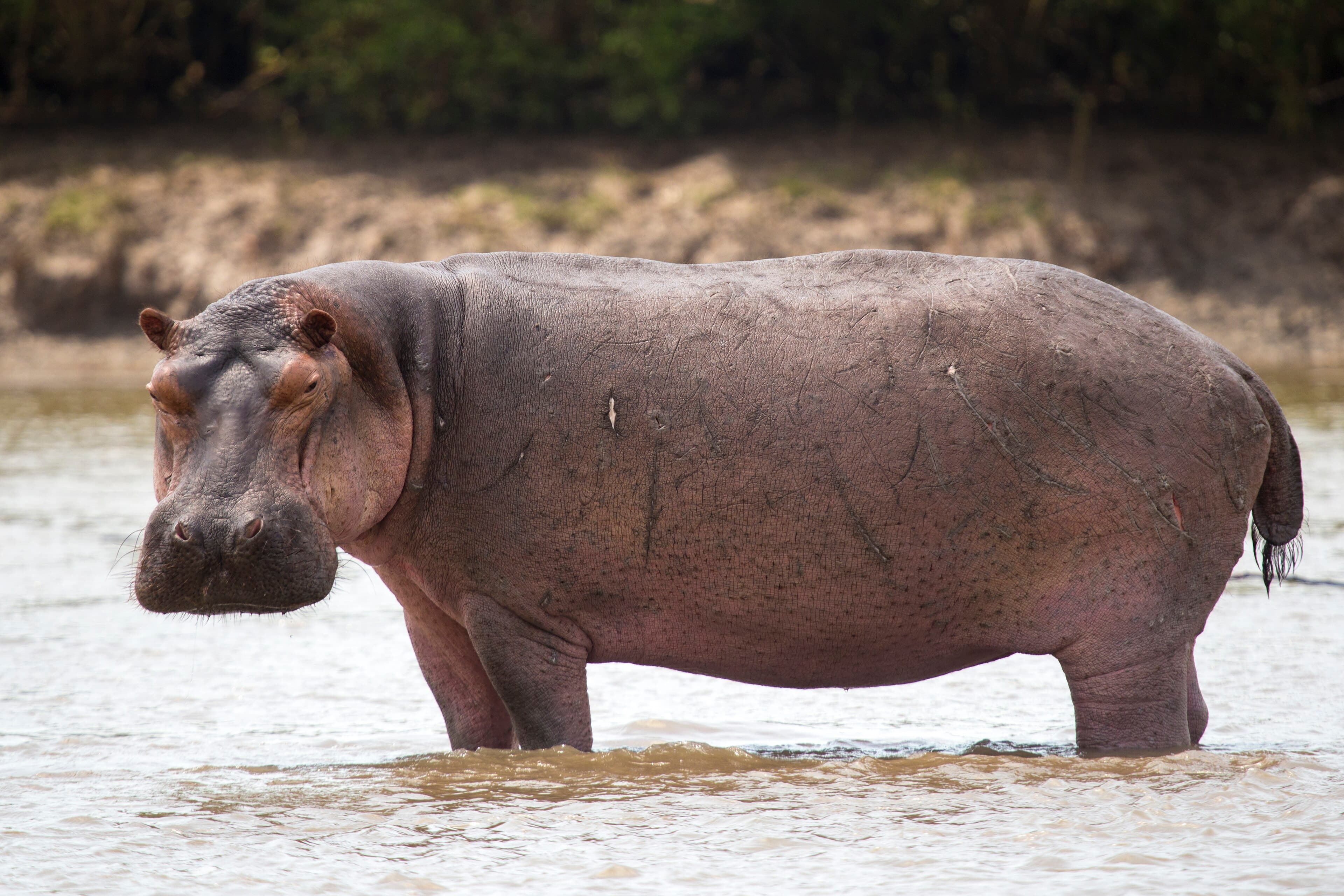
Hippos spend most of the hot daylight hours submerged in water to stay cool - only their eyes, ears and nostrils poke above the surface. They can hold their breath for up to five minutes and even sleep underwater, bobbing up automatically to breathe without fully waking up. At dusk they come ashore to graze on grass through the night.
A hippo's skin produces a natural pinkish-red oily liquid that acts like sunscreen and also fights off germs. Scientists call it 'blood sweat' - although it is neither blood nor sweat! It keeps the hippo's skin moist and protected even when the animal is out of the water on hot days.
Hippos are highly social and live in groups called pods or bloats, usually led by a dominant male. They communicate with each other using loud honking and grunting calls that carry far across the water. When a hippo opens its enormous mouth wide, it is usually giving a warning rather than a friendly yawn.
In Malawi, hippos are a key part of the Shire River ecosystem. Their dung provides nutrients that feed fish and tiny water creatures, which in turn feed larger fish and birds. Fishermen and local communities have lived alongside hippos on the river for hundreds of generations.